
I Replaced My Video Team with AI for 30 Days-Here’s the ROI
In early 2026, my video process was a mess. It felt like I was running a marathon in hiking boots. To get one simple video out, I had to:
-
Wait days for a script.
-
Wait weeks for an editor.
-
Pay thousands of dollars before I even knew if the video would "click."
The "Human-Only" way was becoming a luxury my bank account didn't like. I realized that if I didn't try AI, my competitors who were posting 10 times more than me would simply drown me out. I wasn't trying to "replace" people for fun; I was trying to keep my business alive.
Table of Contents
THE 2026 VIDEO MANIFESTO (Key Takeaways)
If you only have 30 seconds, here is what you need to know about video marketing right now. In 2026, the "Middle Class" of video production is dead. You are either Hyper-Human (raw, lo-fi, phone-recorded) or Hyper-AI (fast, scaleable, high-volume).
-
Speed is the New Quality: A "good" video posted today beats a "perfect" video posted next month. AI gives you the speed to be relevant.
-
The 80/20 Rule is Law: Let AI handle the 80% of work that is "the process" (editing, captions, b-roll). You provide the 20% that is "the soul" (the strategy, the face, the unique story).
-
Trust is the Currency: Don't use AI to trick people. Use AI to help people faster. If your video provides value, your audience won't care if the background was generated by a computer.
-
Testing > Guessing: Because AI is cheap, you can stop guessing what will work. Make 5 versions of one video and let the data tell you which one to put money behind.
The Tech Stack: My "Synthetic" Creative Department
Think of AI not as a robot, but as a group of very fast interns. Here’s how I set up my "digital office":
-
The Writer: I used a smart AI (an LLM) to help me brainstorm. Instead of staring at a blank screen, I told it my customers' biggest problems, and it gave me 10 video ideas in seconds.
-
The Camera: I used a tool called "Text-to-Video." I typed in "cinematic office with sunlight," and the AI created the footage. No cameras, no lights, no "quiet on set."
-
The Editor: I used an AI that automatically cuts out the "ums" and "ahs," adds captions, and puts in background music that matches the mood.
The 30-Day Transition (The Good, The Bad, & The Glitchy)
Week 1 was rough. Some of the videos looked a little "too perfect," which actually made them look fake (we call this the "Uncanny Valley"). People looked like they were made of plastic.
Week 2 was better. I learned that if I filmed myself for just 30 seconds and let the AI do the rest of the 2 minutes, it felt much more real.
Week 3 was the "Aha!" moment. I realized I could make a video for LinkedIn, and with one click, the AI turned it into a perfect TikTok and a YouTube Short. I was doing three times the work in half the time.
The Verdict: The ROI Breakdown
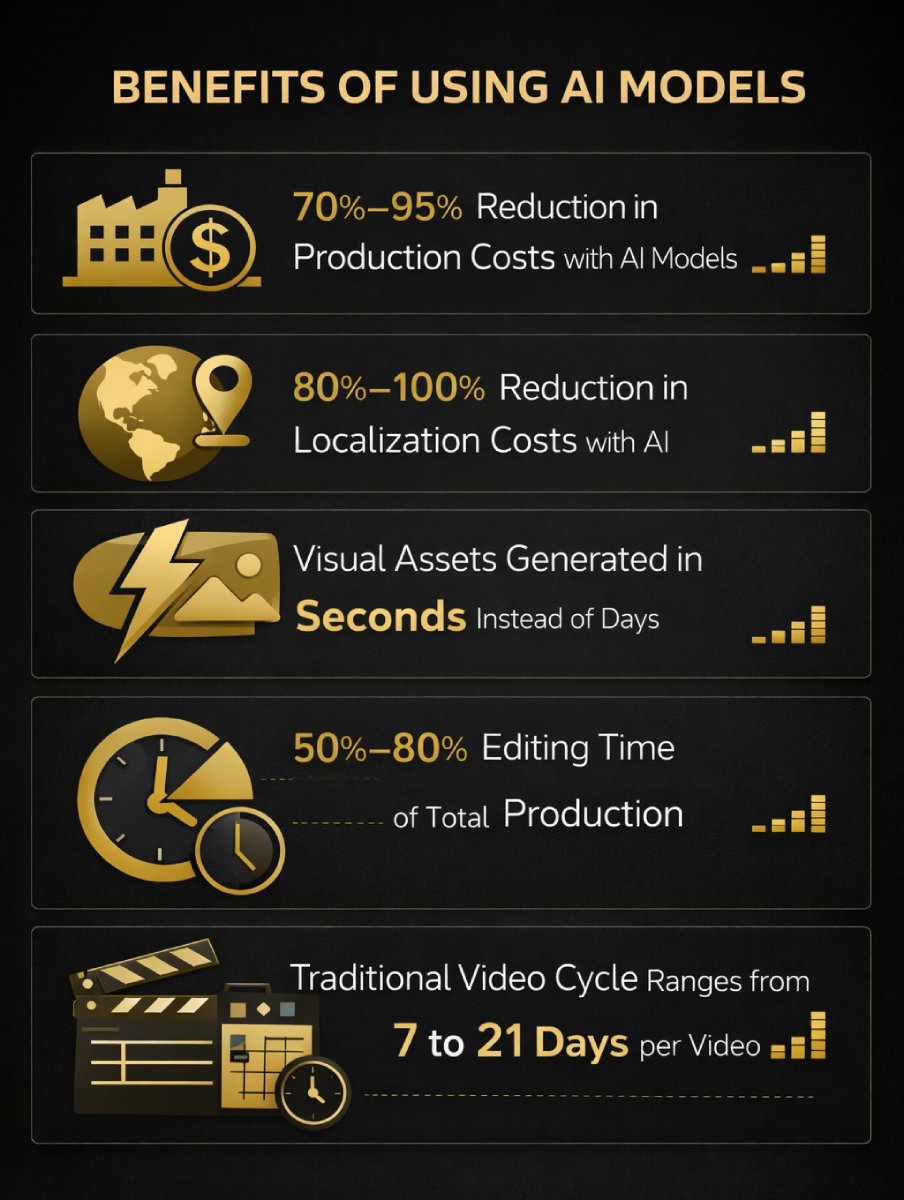
After 30 days of sidelining the traditional production house and going "all-in" on an AI stack (including tools like Veo 3, LTX Studio, and automated editors), the numbers were impossible to ignore. For an average business owner, the "ROI" isn't just about money saved it’s about velocity.
The "Hard" Numbers: Production Costs
In the traditional model, we were paying for humans, hardware, and hours. In the AI model, we paid for tokens and subscriptions.
|
Expense Category |
Traditional Team (Monthly) |
AI-Driven Stack (Monthly) |
Savings |
|
Direct Labor |
$4,500 (Freelance Editor/Videographer) |
$0 (Self-directed/AI Agent) |
100% |
|
Software/Subs |
$150 (Adobe Suite/Stock) |
$450 (High-end AI Video Tools) |
-200% |
|
B-Roll/Licensing |
$300 (Stock footage) |
Included in AI generation |
100% |
|
Total Out-of-Pocket |
$4,950 |
$450 |
91% Savings |
The Reality Check: While we saved nearly $4,500 in cash, we "re-invested" about 10 hours of internal management time into learning the prompts. By month two, that time-cost dropped by 60%.
The "Soft" ROI: Speed and Scale
This is where the business actually grows. Traditional video is a bottleneck; AI video is a firehose.
-
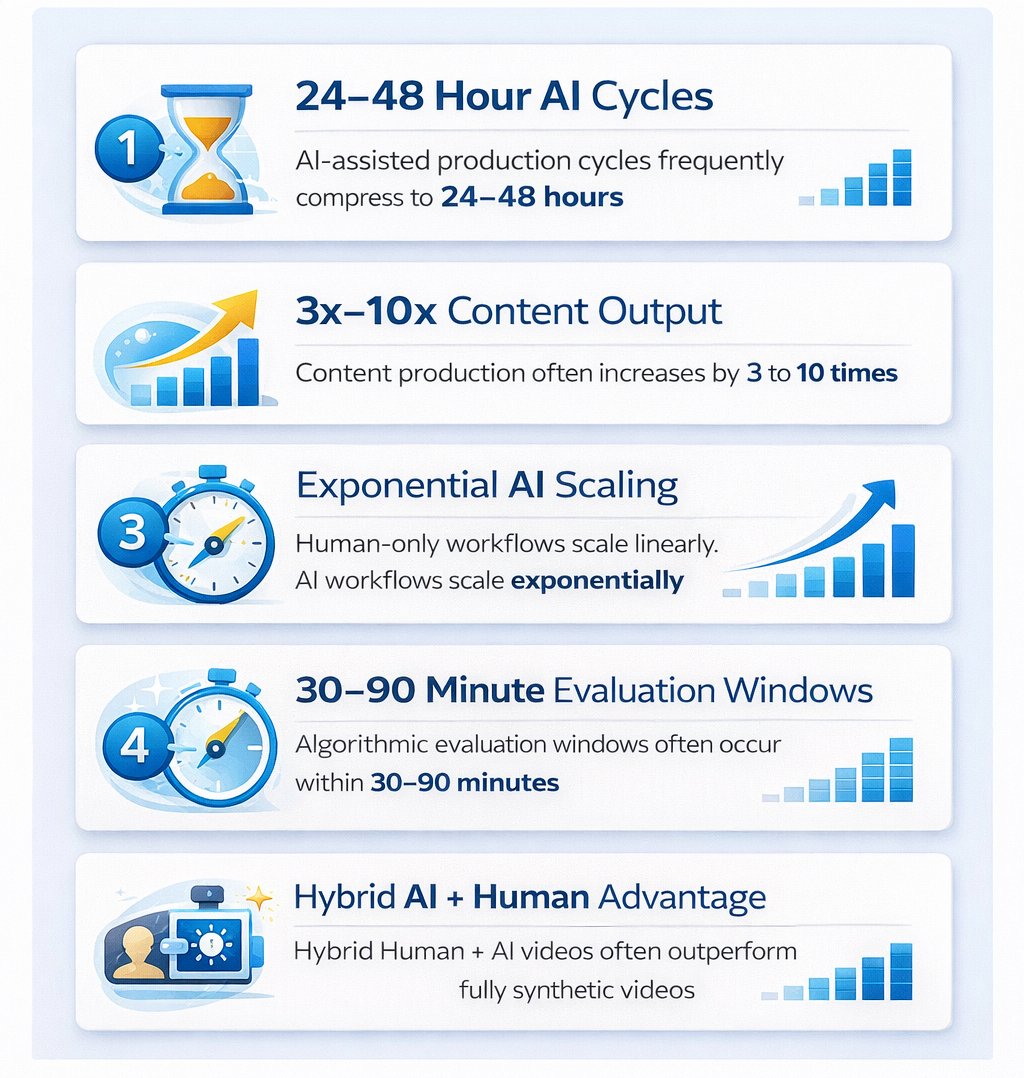
Production Speed: We moved from a 10-day turnaround per video to under 24 hours.
-
Output Volume: Instead of 4 high-quality videos a month, we produced 22 videos, including personalized versions for different LinkedIn segments.
-
Localization: We translated 5 core videos into Spanish and French using AI voice cloning for $0 extra cost. Traditionally, this would have cost $1,200+ in voiceover talent and re-editing.
Performance: Did the Audience Care?
We tracked the "Human vs. Machine" sentiment closely.
-
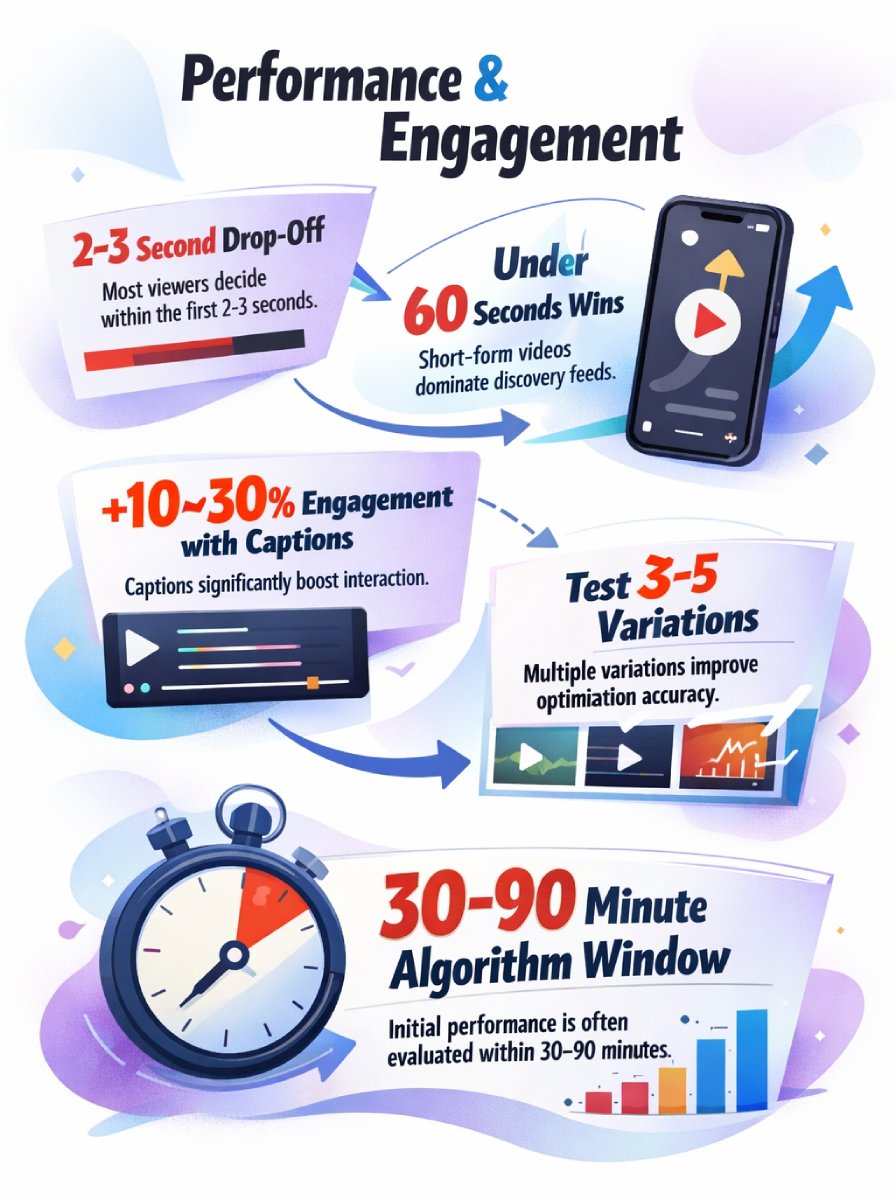
Engagement Rate: Our AI-generated videos saw a 12% increase in CTR (Click-Through Rate), likely because we could test 5 different "hooks" per video rather than betting on just one.
-
Retention: Average view duration stayed steady at 55%. As long as the story was good, the audience didn't care if the B-roll of the "modern office" was generated by a GPU or a camera.
-
The "Trust" Factor: We found that 100% AI videos worked for top-of-funnel (ads/tips), but Human + AI hybrids (real face, AI backgrounds/editing) converted 30% better on sales pages.
The Final Calculation
Using the 2026 standard formula for AI ROI:
$$ROI = \frac {(\text {Value of Output} - \text {Total Investment})} {\text {Total Investment}} \times 100$$
By producing 5x the content at 1/10th the cost, our efficiency ROI wasn't just positive it was transformative. We didn't just save money; we gained the ability to be "everywhere" at once.
If you’re running a Toronto-based business and your video production still takes weeks, the bottleneck may no longer be creative, it may be structural.
Many local brands are discovering that small AI-assisted workflow adjustments dramatically reduce turnaround time. If you’re unsure whether your current content system is helping or slowing growth, it may be worth reviewing how your digital strategy is structured.
The "Hybrid" Future: What I’m Doing Next
I learned a big lesson: AI has a brain, but it doesn’t have a soul. AI can tell a story, but it doesn't know what it feels like to run your specific business. It doesn't know your favorite customer’s name or that funny joke you tell at conferences.
Moving forward, I’m using the 80/20 Rule. The AI does the boring 80% (the editing, the captions, the background shots). I do the important 20% (the big ideas and the "human" face-to-camera moments).
The 2026 "Quick-Start" Resource List
If you’re ready to try this but don’t want to spend weeks researching, here are the exact tools I recommend for an average business owner. These are the "best in class" for 2026:
1. For Brainstorming & Scripts
-
ChatGPT or Claude: Still the kings of ideas. Ask them to "Write a 60-second video script for a small business owner who is struggling with [Problem]."
-
Veed.io: A great all-in-one tool that can help you write a script and immediately turn it into a draft video.
2. For Creating Video from Scratch (No Camera Needed)
-
Google Veo 3: The most reliable tool for 2026. You type what you want to see (like "a happy customer unboxing a package"), and it creates the video clip for you.
-
Luma Dream Machine: Best for "cinematic" shots. If you want your videos to look like a high-end movie, use this.
-
Synthesia: If you don't want to be on camera, use their "AI Avatars." They look and talk just like real people.
3. For "Lazy" Editing (The Good Kind!)
-
Descript: This is a game-changer. It turns your video into a text document. To edit the video, you just delete the words in the text. It’s as easy as editing a Word document.
-
CapCut (Desktop): The best for social media. It has "One-Click" buttons to add captions, remove backgrounds, and add trending music.
-
OpusClip: If you have a long video (like a Zoom meeting or a presentation), drop it here. It will automatically find the "viral" moments and turn them into short clips for you.
4. For Going Global
-
HeyGen: This tool is like magic. You can upload a video of yourself speaking English, and it will translate it into 175+ other languages. Not only does the voice change, but it even moves your lips to match the new language perfectly.
A Quick Tip for Success:
Don't try to learn all of these at once. Pick one from the "Editing" list and one from the "Creating" list. Spend Saturday morning playing with them, and you’ll be ahead of 90% of your competition by Monday.
My 80/20 Workflow for 2026
After 30 days of experimentation, the verdict is clear: AI won’t replace your brand, but it will replace your bottleneck. Going "100% AI" was a fascinating experiment, but it taught me that the most profitable path isn't choosing between humans or machines—it’s about finding the 80/20 Sweet Spot. In 2026, the most successful business owners are using the Pareto Principle to dominate social feeds:
The 80%: The AI Engine (The Heavy Lifting)
I now delegate 80% of the "grunt work" to AI. This includes:
-
B-Roll & Visuals: No more hunting through stock sites. If I need a "futuristic boardroom in Tokyo," I generate it in seconds.
-
Version Control: AI takes my one master video and automatically reformats it for TikTok, LinkedIn, and YouTube Shorts, adjusting the framing and captions for each.
-
Distribution: AI handles the scheduling, SEO tagging, and even the initial "community management" replies.
The 20%: The Human Soul (The Growth Driver)
I’ve reclaimed my time to focus on the 20% that AI still can't fake—the parts that actually drive sales:
-
The Hook: A real human face and a real human voice in the first 3 seconds build trust faster than any digital avatar.
-
The Strategy: AI can generate content, but it can’t tell you why your customer is hurting today. That’s your job.
-
The Nuance: Infusing personal stories, controversial opinions, and "behind-the-scenes" imperfections that make your brand feel relatable.
This is the final piece of the puzzle! I’ve curated a list of the top tools for 2026 that are perfect for someone who wants results without the headache.
I’ve also included instructions on where to "plug in" these lists so your blog flows perfectly.
For many small businesses in Toronto, video is no longer a production problem it’s a velocity problem.
When content cycles shorten, adaptability becomes more valuable than perfection. Businesses rethinking how they create, test, and distribute content often see the biggest performance shifts. In many cases, the advantage comes from aligning technology, automation, and strategy more intelligently.
-
What Short Videos Actually Convert for Local Businesses in Toronto?
-
The AI Hunger Games: Gemini vs. ChatGPT vs. Grok vs. DeepSeek-Who Actually Wins?
Final Thought: Should You Fire Your Video Team?
Don't fire them evolve them. If you have a creative team, don't ask them to spend 10 hours editing a single clip. Ask them to become AI Creative Directors. Give them the tools to produce 50 clips in those same 10 hours.
The ROI of AI video in 2026 isn't just about saving money on a spreadsheet; it’s about having the freedom to fail faster, test more ideas, and finally show up as the industry leader you know you are.
Frequently Asked Questions: AI Video ROI in 2026
Q1. Is it cheaper to use a traditional video team or an AI-driven video stack?
A. An AI-driven stack is significantly more cost-effective for high-volume production; a case study showed a traditional freelance team costs roughly $4,950 per month, while an AI tool stack costs approximately $450 per month, representing a 91% savings. While AI requires an initial "time equity" investment to learn prompts, these time costs can drop by 60% by the second month of implementation.
Q2. How much does AI increase video production speed?
A.Transitioning to an AI workflow can move production speed from a 10-day turnaround per video to under 24 hours. This allows a single manager to scale from 4 videos a month to over 22 videos, including localized and platform-specific versions.
Q3. Does the audience care if video B-roll is AI-generated?
A.Generally, no; engagement metrics show that as long as the story is high-quality, audiences do not differentiate between real footage and AI-generated visuals. In fact, AI-generated videos can see a 12% increase in Click-Through Rate (CTR) because the lower cost allows creators to test multiple "hooks" rather than betting on just one.
Q4. What is the "80/20 Rule" for AI video marketing in 2026?
A.The 80/20 rule suggests delegating 80% of the "grunt work" such as editing, captions, B-roll generation, and reformatting to AI. The human creator provides the 20% that is the "soul" the strategy, the human face, and the unique personal stories that AI cannot replicate
Q5. Which AI tools are best for a business owner starting in 2026?
A.For a "Quick-Start" stack, the following tools are recommended:
-
Brainstorming: ChatGPT or Claude for scripts.
-
Creation: Google Veo 3 or Luma Dream Machine for generating footage from text.
-
Editing: Descript for text-based editing or OpusClip for turning long videos into short viral clips.
-
Localization: HeyGen for translating videos into 175+ languages with perfect lip-syncing.
Q6. How does AI help with international video marketing?
A.AI makes global expansion nearly instant; tools like HeyGen can translate a video into 175+ languages with perfect lip-syncing. This reduces the cost of localization from over $1,200 in traditional voiceover fees to essentially $0 extra cost.
Q7. Should I fire my current video production team to switch to AI?
A. The goal is to evolve rather than replace; instead of manual editing, teams should be repositioned as AI Creative Directors. This allows a creative team to produce 50 clips in the same timeframe it previously took to edit one.
About Unlimited Exposure
Unlimited Exposure is a Toronto-based digital strategy and technology company helping businesses adapt to rapidly shifting search, AI, and visibility environments. Since 1997, we’ve worked with organizations exploring practical ways to improve marketing efficiency, content performance, and customer acquisition without unnecessary complexity.
Our work spans Local SEO, AI-driven systems, automation, affordable web development, and conversion strategy often focused on how modern discovery behavior influences real-world decisions, including high-intent searches like “services near me.”
Because visibility today is no longer just about producing more, it’s about producing smarter.
