
Why More Toronto Businesses Are Realizing Their Website Was Never Built to Convert
A lot of Toronto businesses don’t actually have a “bad” website.
They have a website that was built to look decent
but never truly built to turn visitors into calls, bookings, quotes, or paying customers.
That’s why many businesses experience something frustrating:
Traffic looks okay.
Google rankings improve.
social media stays active.
Yet revenue barely moves.
Because the real issue is often not visibility alone.
It’s conversion.
Table of Contents
Why So Many Business Websites Underperform
A lot of business owners assume their website is “good enough.”
It looks modern.
The logo is clean.
The colors match the brand.
Maybe the website even cost thousands of dollars to build.
So naturally, they expect results.
But then something confusing starts happening.
People visit the site
yet inquiries stay inconsistent.
Visitors browse pages
but rarely take action.
Google rankings improve
yet sales barely change.
And eventually the frustration kicks in.
Restaurants across Toronto wonder why online orders slowed down.
Clinics question why visitors leave without booking consultations.
Contractors wonder why competitors with weaker work somehow generate more leads.
In many cases, the issue is not traffic.
It’s what happens after the click.
The Difference Between a Beautiful Website and a Converting Website
This is where many businesses get caught off guard.
Because appearance and performance are not the same thing.
A website can look expensive while still confusing visitors.
And honestly, this happens everywhere across Toronto and the GTA.
Many websites were designed around visuals instead of customer behavior.
The focus became:
-
animations
-
trendy layouts
-
oversized banners
-
cinematic intros
-
flashy effects
But visitors rarely care about any of that first.
When people land on a business website, they usually have immediate questions in their mind:
-
Can I trust this company?
-
Do they serve my area?
-
How much does this usually cost?
-
Are they active?
-
Can I contact them quickly?
-
Why should I choose them over competitors?
If the website delays those answers, hesitation starts building.
And online, hesitation usually means people leave.
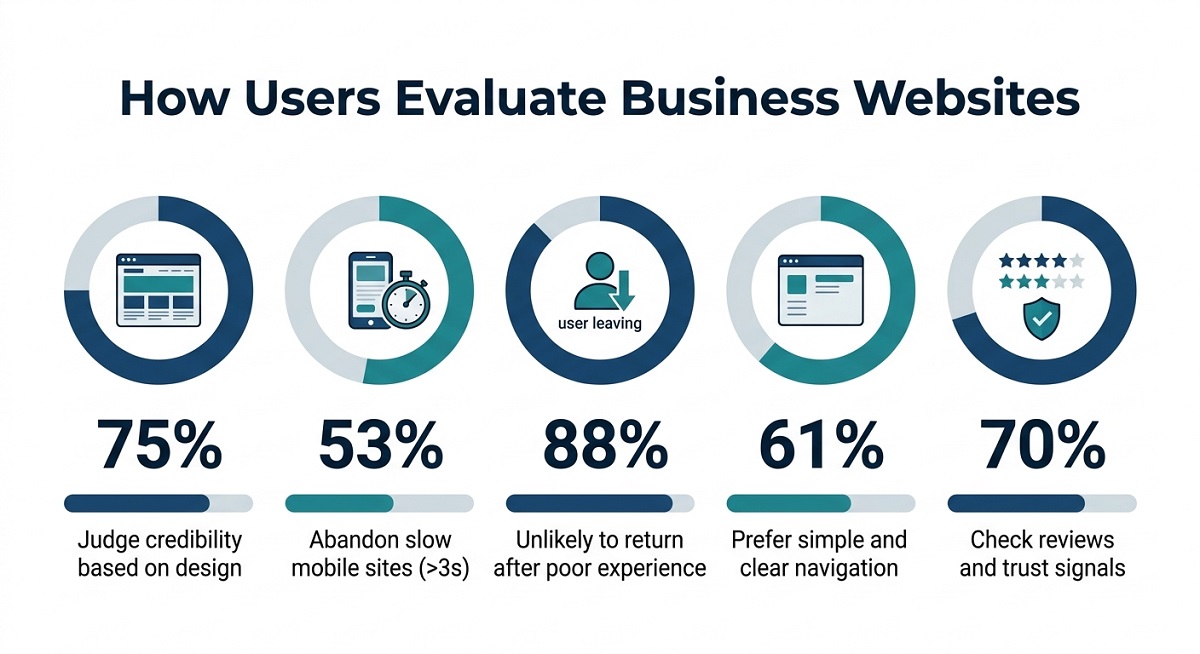
What Toronto Customers Actually Do When They Visit a website
Most businesses imagine customers carefully reading every page.
That’s not reality.
People scan.
Fast.
Especially on mobile.
Someone searching for a Toronto restaurant, clinic, contractor, or local service business often decides within seconds whether they trust the business enough to continue.
They look for:
-
clarity
-
trust
-
simplicity
-
professionalism
-
proof
-
convenience
That’s it.
If the website feels confusing, outdated, cluttered, slow, or uncertain, visitors quietly move on.
Even if the actual business is excellent.
This is one reason many Toronto businesses are finally realizing something uncomfortable:
Their website was never actually designed to convert customers consistently.
It was simply designed to exist online.
Those are two very different goals.
The Hidden Conversion Problems Most Businesses Ignore
Weak Calls-to-Action
A surprising number of websites never clearly guide visitors toward the next step.
People land on the homepage and see:
-
vague slogans
-
giant stock photos
-
generic marketing phrases
-
oversized headers
But no obvious action.
Good websites reduce uncertainty.
Simple calls-to-action work because they remove friction:
-
Book a Consultation
-
Call Now
-
Request a Quote
-
View Pricing
-
Check Availability
-
View Menu
Sounds basic.
But many businesses bury these actions or make them difficult to find.
Too Much Focus on the Business Instead of the Customer
This is extremely common.
Businesses spend entire pages talking about:
“Our mission.”
“Our passion.”
“Our vision.”
Meanwhile, the visitor is wondering:
“Can you solve my problem?”
Customers care about their situation first.
That’s normal human behavior.
High-converting websites understand this immediately.
They quickly communicate:
-
what the business does
-
who they help
-
where they operate
-
why people trust them
-
how to take action
Without forcing visitors to search for basic answers.
Weak Trust Signals
Modern customers are cautious.
Especially in competitive Toronto industries.
Before contacting a business, people often check:
-
reviews
-
recent activity
-
before-and-after examples
-
photos
-
responsiveness
-
consistency
-
professionalism
If those trust signals feel outdated or weak, conversions usually drop.
This especially affects:
-
clinics
-
restaurants
-
contractors
-
home services
-
local retail businesses
Sometimes the issue isn’t the actual quality of the business.
It’s the online perception.
And perception heavily influences buying behavior.
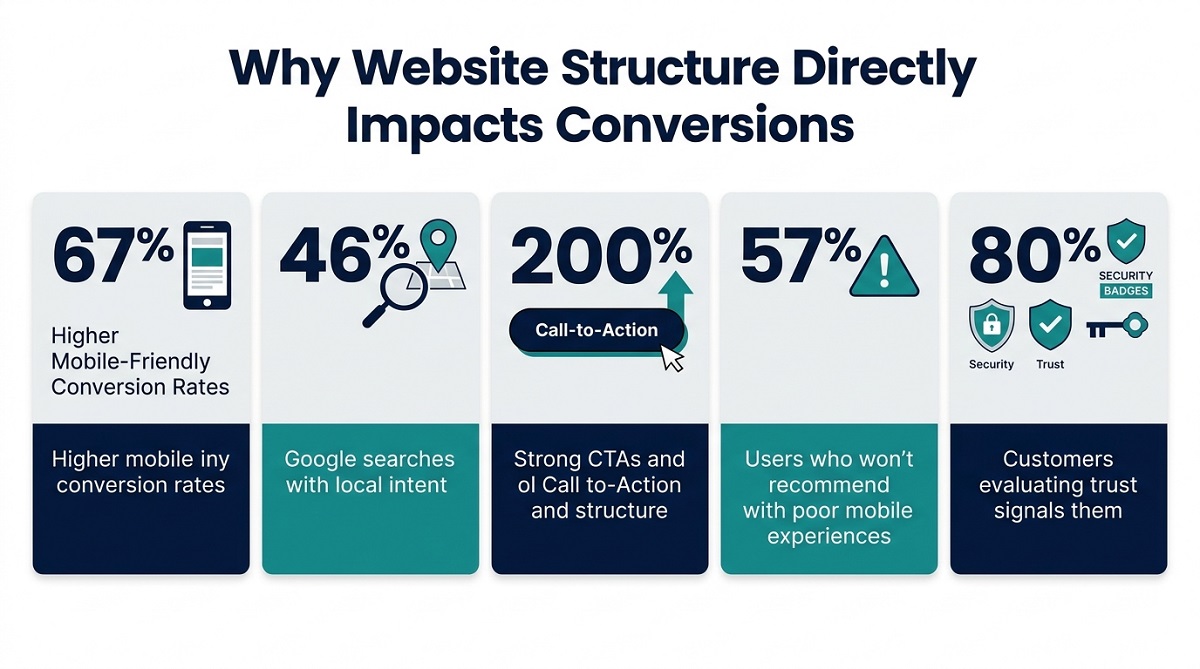
Why Mobile Experience Matters More Than Ever
A huge percentage of local searches now happen on phones.
And mobile users are impatient.
Nobody wants to:
-
pinch and zoom
-
wait for slow pages
-
fight through confusing menus
-
fill out giant forms
-
search endlessly for contact information
If mobile feels frustrating, people leave quickly.
This is why responsive web design has become far more important recently for Toronto businesses.
Businesses are realizing something critical:
Mobile convenience directly impacts conversions.
Not just rankings.
Even small issues quietly cost businesses leads every day:
-
buttons too small
-
slow-loading images
-
broken layouts
-
tiny text
-
confusing navigation
-
cluttered pages
Most business owners never notice these problems because they already understand their own website.
Customers don’t.
A lot of businesses across Toronto and the GTA are dealing with this right now.
Sometimes the problem isn’t your service.
It’s the gap between how good your business actually is and how trustworthy it feels online.
That’s usually the first thing we help businesses fix at Unlimited Exposure Online.
How AI Search Is Changing Website Expectations
Search behavior is changing fast.
Google AI Overviews.
Voice search.
AI-powered recommendations.
ChatGPT-style search experiences.
These systems increasingly prioritize:
-
clarity
-
structure
-
usefulness
-
trust
-
relevance
Not flashy design.
Modern websites now need:
-
structured content
-
fast loading speed
-
clear answers
-
strong local relevance
-
helpful information
-
consistent trust signals
A confusing website hurts more than ever now.
Especially for Toronto businesses competing in crowded local markets.
This is why many businesses are beginning to rethink not only SEO, but the entire customer experience after someone lands on the website.
Because traffic alone is no longer enough.
What High-Converting Websites Usually Have in Common
Interestingly, the best-performing websites are rarely the flashiest.
They are usually:
-
simple
-
clear
-
easy to navigate
-
emotionally reassuring
-
locally relevant
-
conversion-focused
They guide visitors naturally instead of overwhelming them.
For example:
A contractor website that immediately shows:
-
service areas
-
reviews
-
recent projects
-
financing options
-
quote request buttons
will often outperform a cinematic homepage filled with vague branding language.
The same applies to clinics.
The same applies to restaurants.
The same applies to retail businesses.
Because clarity almost always outperforms confusion.
The Biggest Mistake Business Owners Keep Making
Many businesses assume more traffic automatically solves everything.
So, they invest heavily into:
-
ads
-
SEO
-
social media
-
boosted posts
-
content marketing
But send visitors into a weak website experience.
That creates leakage.
It’s like pouring water into a bucket full of holes.
This is one reason many Toronto businesses feel stuck.
Marketing costs rise.
Traffic increases.
But results stay inconsistent.
Without conversion structure, even strong marketing struggles to perform properly.
-
Your Website Might Look Fine to You, But Confusing to Customers
-
If Your Website Looks Like This in 2026, You’re Already Losing Customers
-
Google Knows You Exist, So Why Can’t Customers Find You? The Local Visibility Problem
-
Why Your Business Isn’t Showing Up on Google Maps (And How Much It’s Costing You Daily)
Why This Problem Is Growing Across Toronto and the GTA
Competition is increasing everywhere.
Almost every business now has:
-
a website
-
Google reviews
-
social media
-
local listings
-
online advertising
Which means customers compare businesses faster than ever.
And expectations keep rising.
People subconsciously compare your website to every smooth digital experience they’ve recently had online.
Not just competitors.
That means:
-
speed matters
-
trust matters
-
simplicity matters
-
messaging matters
A slow or confusing website no longer feels like a minor inconvenience.
It feels risky.
And online, perceived risk destroys conversions.
A Small Shift That Changes Everything
One important mindset shift:
Your website is not just branding.
It’s behavior.
Every section of your website either:
-
reduces hesitation
-
or increases it
That’s why businesses often see better results after improving:
-
clarity
-
trust signals
-
navigation
-
mobile usability
-
content structure
-
conversion paths
Sometimes without increasing traffic at all.
And honestly, most businesses across Toronto and the GTA are dealing with some version of this right now.
If your business has been getting fewer calls, weaker engagement, or customers who “almost” convert but disappear, there’s a good chance the issue isn’t your actual service.
It’s how your business feels online.
And small improvements in visibility, consistency, and trust signals can completely change that.
Unlimited Exposure Online helps businesses across Toronto and the GTA strengthen the online presence customers already judge before making a decision.
FAQs
Why does my website get traffic but not leads?
Usually because visitors don’t feel enough trust, clarity, or confidence to take action. Weak messaging, slow mobile experience, poor calls-to-action, or outdated trust signals can reduce conversions.
What makes a website convert better?
Clear messaging, fast loading speed, strong trust signals, mobile-friendly design, easy navigation, and obvious next steps all improve conversions.
Does website design affect Google rankings?
Yes. Google increasingly values websites that offer strong user experience, mobile responsiveness, speed, structure, and useful content.
Why do simpler websites often perform better?
Because visitors want fast answers. Simpler websites reduce confusion and make people feel more comfortable taking action.
How important is mobile optimization for Toronto businesses?
Extremely important. A large percentage of local searches happen on mobile devices, and frustrating mobile experiences cause visitors to leave quickly.
What are the most common website conversion mistakes?
Common problems include:
-
unclear messaging
-
slow loading speed
-
weak trust signals
-
confusing navigation
-
poor mobile experience
-
hard-to-find contact information
-
focusing too much on branding instead of customer needs
Can improving website structure increase leads without increasing traffic?
Absolutely. Many businesses improve results simply by making their website easier to use, easier to trust, and easier to navigate.
Final Thoughts
A lot of Toronto businesses are finally realizing something important:
Their website was never truly designed to convert visitors consistently.
It was simply designed to look acceptable online.
But today’s customers move fast.
Competition keeps growing.
AI search is changing expectations.
And trust now influences decisions more than ever.
Businesses that simplify the customer journey usually perform better long term.
Not because they’re louder.
Because they’re easier to trust.
And in crowded Toronto and GTA markets, trust often determines which business gets contacted first.
Unlimited Exposure is a Toronto-based digital marketing and web development company that helps businesses across the city grow their online presence, attract more qualified customers, and increase conversions. In a competitive market like Toronto, many business owners search for terms such as “digital marketing agency near me” or “web development company near me,” hoping to find a partner that prioritizes measurable business growth rather than surface-level metrics.
Since 1997, Unlimited Exposure has worked with companies throughout Toronto and the Greater Toronto Area (GTA), delivering practical digital strategies designed to improve visibility, reach diverse audiences, and drive real results.
