
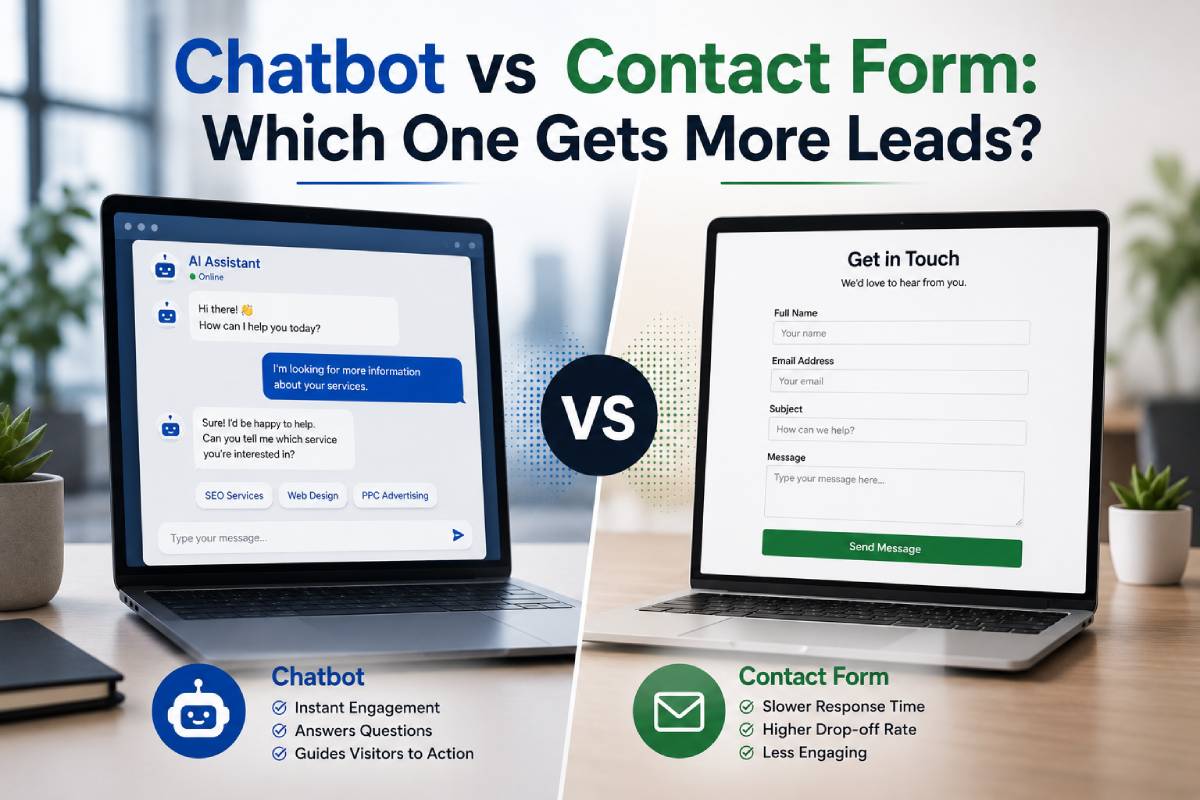
Chatbot vs Contact Form: Which One Gets More Leads?
Most websites do not have a traffic problem.
They have a conversation problem.
Visitors arrive. They look around. They read a service page. They may even be interested. But then they leave without calling, booking, or submitting a form.
For business owners, this is frustrating because traffic costs money. Whether visitors come from Google, social media, paid ads, local SEO, referrals, or AI-powered search results, every visit is an opportunity.
The real question is: are you making that opportunity easy enough to turn into a lead?
For years, the contact form was the standard answer. Add a form. Ask for a name, email, phone number, and message. Wait for submissions.
That still works in some cases.
But today’s users expect faster communication. They want quick answers. They do not always want to fill out a long form just to ask one simple question.
That is why many businesses are now comparing chatbots and contact forms.
So, which one gets more leads?
In many cases, a chatbot can generate more leads because it engages visitors instantly, answers questions in real time, and reduces friction. But the strongest lead generation strategy often uses both tools together.
Table of Contents
Quick Answer
If your goal is to generate more leads, a chatbot will often outperform a traditional contact form because it provides instant responses, engages visitors in real time, and reduces friction in the customer journey.
However, the highest-converting websites typically use both. A chatbot helps start conversations and qualify leads, while a contact form remains useful for detailed inquiries and project requests.
The best choice depends on your industry, customer behavior, and lead generation goals.
Why Website Visitors Leave Without Becoming Leads
You may already know the feeling.
Your analytics show people are visiting your website.
Your service pages are getting views.
Your homepage looks professional.
Your SEO may even be improving.
But the number of leads does not match the amount of traffic.
This usually means the problem is not visibility. The problem is conversion.
Modern customers are impatient. They compare several businesses at once. If one website gives them an instant answer and another asks them to fill out a form and wait, the easier website often wins.
This is especially true for local businesses in Toronto and the GTA where users may be comparing clinics, contractors, restaurants, agencies, retail stores, or service providers at the same time.
People leave websites for simple reasons:
They cannot find the answer quickly.
They are not ready to fill out a form.
They do not want to wait for a reply.
They are unsure if the business serves their area.
They want pricing, availability, or booking information right away.
This is where chatbot development, AI chatbot integration, website design and development, conversion rate optimization, and UX/UI optimization become important.
Getting traffic is only the first step.
Turning that traffic into conversations is where growth happens.
What Contact Forms Still Do Well
Contact forms are not outdated.
They are still useful, familiar, and practical.
A well-designed contact form can collect important details such as name, email address, phone number, service request, project description, location, budget, and preferred contact method.
For visitors who already know they want to reach out, a contact form works well.
For example, a homeowner requesting a renovation quote may be willing to provide details. A business owner asking for website design and development may need to explain their project. A clinic patient may want to request a consultation. A company looking for digital marketing services may prefer submitting a detailed inquiry.
Contact forms can also work very well with CRM integration and marketing automation. Once someone submits the form, their information can go directly into a sales pipeline, email follow-up sequence, or customer database.
So, the issue is not that contact forms are bad.
The issue is that many websites rely on contact forms as the only lead capture tool.
Where Contact Forms Often Lose Leads
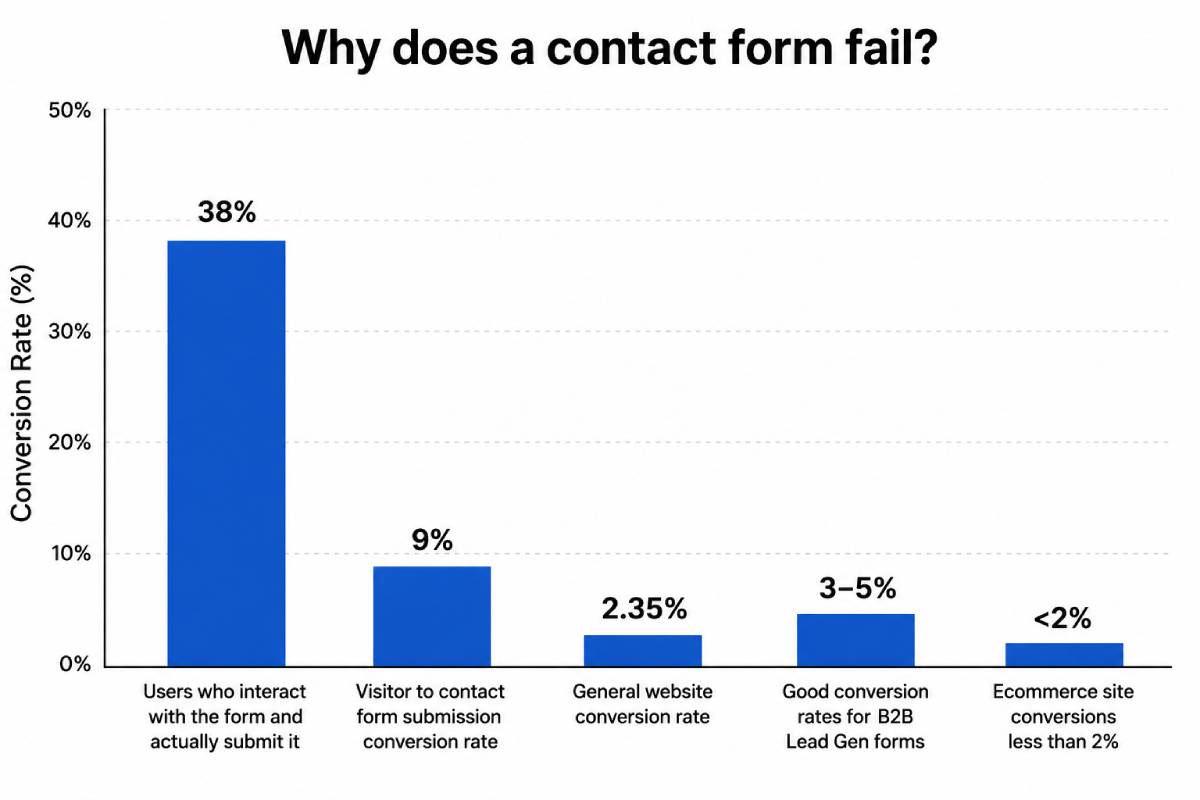
Most contact forms ask too much too soon.
A visitor may only want to ask:
Do you serve my area?
How much does this usually cost?
Are you available this week?
Can I book a consultation?
Which service is right for me?
But instead of getting a quick answer, they see a form asking for multiple required fields.
That creates friction.
And friction lowers conversions.
Many visitors are still in the research stage. They may be interested, but they are not ready to submit a formal request. They want reassurance before sharing their contact information.
A traditional contact form cannot answer questions immediately. It collects information and waits for a human response.
That delay can cost you leads.
If another business offers faster communication, the visitor may never come back.
What Makes a Chatbot Different?
A chatbot changes the experience from a form submission into a conversation.
Instead of making visitors fill out fields, the chatbot can ask a simple question:
“How can we help you today?”
That small change feels more natural.
A visitor can ask about pricing, availability, service areas, appointment booking, customer support, product information, or service recommendations.
A modern AI chatbot can respond instantly and guide the visitor toward the next step.
AI chatbot integration can help businesses:
Answer common questions
Qualify leads automatically
Collect contact details naturally
Book appointments
Route inquiries to the right team
Connect with CRM systems
Support customers after business hours
Improve customer support automation
Strengthen sales funnel optimization
This creates a smoother customer journey because the visitor does not feel abandoned.
Why Chatbots Often Generate More Leads
Chatbots often generate more leads because they reduce the effort required from the visitor.
People do not always want to “submit an inquiry.”
Sometimes they just want a quick answer.
A chatbot feels easier, faster, and more conversational.
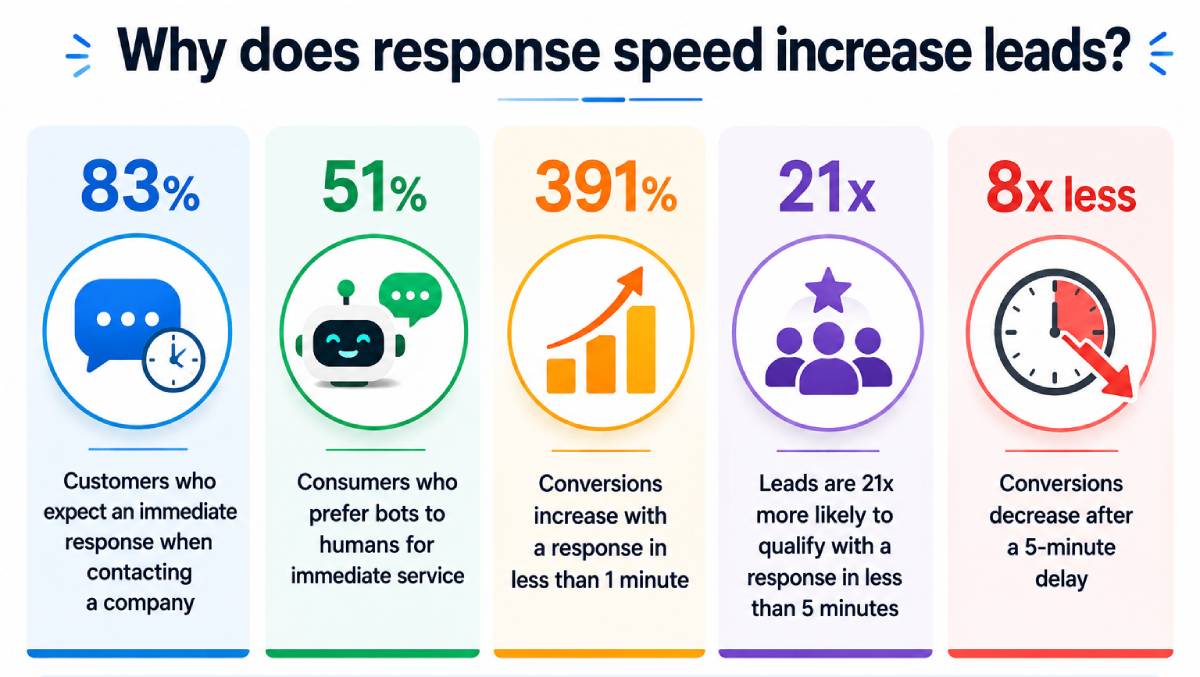
1. Chatbots Give Instant Answers
Speed matters.
When someone is actively looking for a service, they may contact the business that responds first.
A chatbot can answer questions immediately, even when your team is busy or your office is closed.
For example, if a visitor asks, “Do you offer chatbot development in Toronto?” the chatbot can respond instantly, explain the service, and offer to schedule a consultation.
That is much stronger than asking the visitor to fill out a form and wait.
2. Chatbots Feel Like Lower Commitment
Typing a short question feels easier than completing a contact form.
This matters because many leads begin with curiosity, not commitment.
A visitor may not be ready to request a quote, but they may be willing to ask a simple question.
Once the conversation starts, the chatbot can naturally collect the visitor’s name, phone number, email address, and service interest.
This makes lead capture feel less forced.
3. Chatbots Help Qualify Leads
Not every visitor is ready to buy.
A chatbot can ask useful qualifying questions such as:
What service are you interested in?
What city are you located in?
When do you need help?
Are you looking for pricing, booking, or support?
Would you like someone to contact you?
This helps your team focus on better opportunities.
For businesses using CRM integration, chatbot leads can be organized automatically and sent to the right sales or support process.
4. Chatbots Work 24/7
Your website does not close.
Your lead capture system should not close either.
Many visitors search after business hours, especially in the evening or on weekends. A chatbot can continue collecting leads when your team is not available.
This is useful for clinics, home service companies, restaurants, retail stores, agencies, and local businesses across Toronto and the GTA.
5. Chatbots Improve User Experience
A chatbot can guide visitors through your website instead of leaving them to figure everything out alone.
It can recommend services, answer common questions, and direct people to the right page.
This supports conversion rate optimization because it removes confusion.
And when visitors feel less confused, they are more likely to take action.
Chatbot vs Contact Form: A Simple Example
Imagine two local service businesses in Toronto.
Both receive 1,000 website visitors per month.
Business A uses only a contact form.
A visitor wants to know if the company serves Richmond Hill. They cannot find the answer quickly. The contact form asks for name, email, phone number, address, service type, and message.
The visitor leaves.
No lead.
Business B uses a chatbot.
The visitor asks, “Do you serve Richmond Hill?”
The chatbot replies, “Yes, we serve Richmond Hill and surrounding GTA areas. What service are you looking for?”
Now the conversation has started.
The chatbot collects the visitor’s details and offers to book a call.
Same visitor.
Different experience.
Different result.
This is why chatbot development and lead generation services are now closely connected.
A Real Example From the GTA
Imagine a cosmetic clinic in Toronto that receives 2,000 website visitors per month.
Before adding a chatbot, the clinic relied entirely on a contact form. Visitors interested in Botox, dermal fillers, skin rejuvenation, or laser treatments had to complete a form and wait for a response.
Many never did.
Some visitors simply wanted quick answers:
-
How much does treatment typically cost?
-
Is there any downtime?
-
How long does the appointment take?
-
Do I need a consultation first?
After implementing an AI chatbot, those questions were answered instantly.
Instead of leaving the website, visitors started conversations. The chatbot collected contact information, booked consultations, and connected interested prospects with the clinic team.
The website traffic did not increase.
What changed was the visitor experience.
And when communication became easier, lead generation improved naturally.
This is why many businesses today focus not only on attracting traffic, but also on reducing friction between interest and action.
The Biggest Mistake Business Owners Make
Many businesses think more traffic automatically means more leads.
It does not.
A website can rank well on Google.
A website can look beautiful.
A website can get clicks from ads.
But if visitors do not know what to do next, the website will still lose opportunities.
The biggest mistake is treating lead generation only as a traffic problem.
In reality, it is often a communication problem.
You can invest in SEO, Google Ads, social media, local SEO, content marketing, and website design. But if your website does not make communication easy, potential customers may leave.
This is why website audit services, conversion rate optimization, UX/UI optimization, AI-powered customer engagement, marketing automation, and business process automation matter.
Your website should not only attract visitors.
It should help visitors become customers.
Is Your Website Losing Leads Without You Realizing it?
Many businesses invest in SEO, Google Ads, social media, and website design, but still do not get enough leads.
Often, the problem is not traffic. It is what happens after visitors arrive.
At Unlimited Exposure Online, we help Toronto and GTA businesses improve website conversions with AI chatbot integration, CRO, CRM integration, and smarter lead generation strategies.
Request a website consultation today and discover where your website may be losing customers.
Which Businesses Benefit Most from Chatbots?
Chatbots can help many types of businesses, especially those that receive repeated questions.
Medical and Aesthetic Clinics
Patients often have questions before booking.
They may want to know about treatment options, pricing ranges, consultation availability, recovery time, or whether a service is right for them.
A chatbot can answer basic questions and guide users toward booking a consultation.
Contractors and Home Service Businesses
Homeowners often ask about service areas, pricing, timelines, availability, and emergency support.
A chatbot can pre-qualify the lead before your team follows up.
Restaurants
Restaurant visitors may ask about reservations, catering, menu items, business hours, delivery, or locations.
A chatbot can answer quickly and help reduce missed opportunities.
Retail Businesses
Shoppers often want product information, stock availability, recommendations, returns, or support.
A chatbot can improve customer support automation and help turn shoppers into buyers.
Professional Service Businesses
Law firms, accountants, consultants, marketing agencies, and financial service providers can use chatbots to answer common questions and direct visitors to the right service.
For example, a digital marketing agency can use a chatbot to ask whether the visitor needs SEO, website design and development, AI chatbot integration, CRM integration, or lead generation services.
-
The Businesses Winning Online in 2026 Are Doing These 5 Things
-
Missed Calls = Missed Money: How AI Chatbots Turn Every Visitor into a Lead
-
Why Integrating Chatbots with Your CRM Can Transform Sales and Marketing
-
How to Add a Chatbot to Your Website, Instagram, and Google-Step-by-Step
Should You Use Both a Chatbot and a Contact Form?
For most businesses, yes.
The best website communication strategy usually includes both.
A chatbot is best for quick questions, lead qualification, appointment booking, customer support, after-hours conversations, and guiding visitors through services.
A contact form is best for detailed requests, complex project descriptions, document submissions, formal inquiries, and longer consultation requests.
Think of the chatbot as your digital receptionist.
Think of the contact form as your structured intake form.
One starts the conversation quickly.
The other collects detailed information when needed.
Together, they create a stronger lead generation system.
The Role of AI in Modern Lead Generation
AI is changing how customers interact with websites.
Today’s AI-powered chatbots can understand natural language, provide relevant answers, and personalize conversations based on what the visitor needs.
This is important because search behavior is changing too.
People now use Google, voice search, ChatGPT, Gemini, AI Overviews, and other AI-powered tools to find answers quickly.
That means your website must be clear, helpful, well-structured, and easy to understand.
A strong digital marketing strategy now includes:
AI chatbot integration
Website design and development
Conversion rate optimization
CRM integration
Marketing automation
Customer support automation
Local SEO
AI-aware content strategy
Sales funnel optimization
Business process automation
Businesses that adapt can respond faster, guide users better, and convert more website visitors into qualified leads.
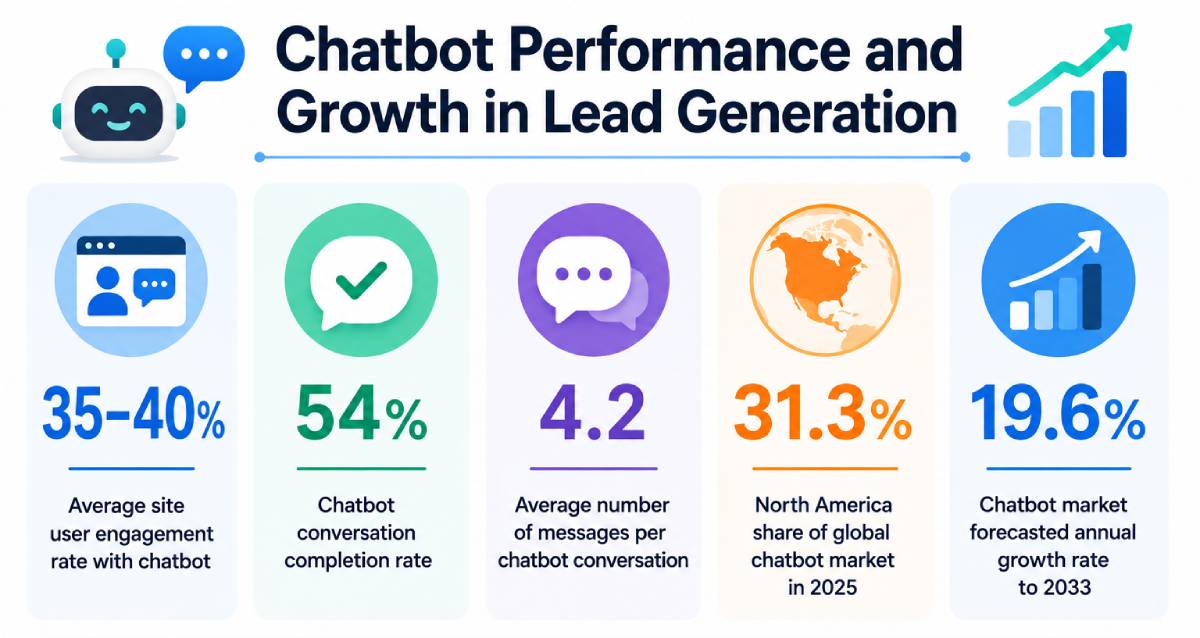
Chatbot or Contact Form: Which One Gets More Leads?
A chatbot often gets more leads because it removes friction and starts conversations instantly.
But that does not mean you should remove your contact form.
The smarter approach is to use each tool for the right purpose.
Use a chatbot when visitors need fast answers, guidance, appointment booking, or simple support.
Use a contact form when visitors need to send detailed information or make a formal request.
If your website gets traffic but does not generate enough leads, the problem may not be your service.
It may be your communication flow.
Make communication easier, and conversions often improve.
Ready to Turn More Website Visitors into Leads?
If your website is getting traffic but not generating enough calls, appointments, or inquiries, it may be time to look beyond rankings and focus on conversions.
The right chatbot strategy, combined with effective website design, CRM integration, and conversion rate optimization, can help transform your website into a more powerful lead generation tool.
Don't let potential customers leave without a conversation.
Contact Unlimited Exposure Online today for a website and lead generation assessment and discover how AI-powered customer engagement can help your business capture more opportunities.
Frequently Asked Questions
Do chatbots really generate more leads than contact forms?
In many cases, yes. Chatbots often generate more leads because they engage visitors instantly and make communication easier. Instead of asking users to complete a long form and wait for a reply, a chatbot can answer questions, collect details, qualify leads, and guide users toward booking a consultation or requesting a quote.
Are contact forms still useful?
Yes. Contact forms are still useful for detailed inquiries, formal requests, project descriptions, and complex service needs. The issue is relying only on a contact form when many visitors want quick answers before they are ready to submit their information.
Can a chatbot connect with my CRM?
Yes. With proper CRM integration, chatbot leads can be sent directly into your sales pipeline. This helps your team follow up faster, organize inquiries, automate marketing follow-ups, and improve the overall lead generation process.
Will a chatbot replace my staff?
No. A chatbot should support your team, not replace it. It can handle repetitive questions, collect basic information, and qualify leads. Your staff should still handle complex conversations, sales calls, relationship building, and personalized support.
Is a chatbot good for local businesses in Toronto and the GTA?
Yes. Local businesses can benefit from chatbots because visitors often ask location-based questions such as service areas, availability, hours, pricing, and booking options. A chatbot can answer these questions instantly and help capture more local leads.
Should every business website have a chatbot?
Not every website needs one, but many service-based businesses can benefit from it. If your website gets traffic but not enough calls, bookings, or inquiries, a chatbot may help improve conversion rates and turn more visitors into leads.
Final Thoughts
The chatbot vs contact form debate is not really about technology.
It is about customer behavior.
People want fast answers.
They want fewer steps.
They want communication that feels simple.
A contact form still has value, but a chatbot can start conversations that may never happen through a traditional form.
For many businesses, the best solution is not choosing one tool.
It is building a smarter lead generation system that uses both.
If your website already gets visitors but not enough leads, improving your communication flow may be one of the fastest ways to increase conversions.
About Unlimited Exposure Online
At Unlimited Exposure Online, we help businesses throughout Toronto and the GTA improve website performance, increase lead generation, and create better customer experiences.
Whether your goal is to generate more inquiries, improve conversion rates, automate customer interactions, or turn more website visitors into paying customers, our team can help you identify opportunities for growth and build a strategy that aligns with your business goals.
If your website is attracting visitors but not generating enough leads, now may be the perfect time to evaluate how customers interact with your business online.
