

Social Media Marketing for Small Businesses: What Actually Works in 2026
Social media marketing didn’t stop working - the rules changed.
For small businesses in Toronto and the GTA, success in 2026 isn’t about posting more or chasing trends. It’s about being clearly understood by customers, platforms, and AI-driven search and recommendation systems that now influence which Toronto and GTA businesses get discovered.
This guide breaks down what actually works for small businesses today, focusing on clarity, trust, and consistency instead of hype, hacks, or influencer-style tactics that don’t fit real operations.
Table of Contents
Why Social Media Marketing Feels Harder Than Ever for Small Businesses
The Big Shift: From Posting Content to Building Trust Signals
Common Social Media Mistakes That Cost Small Businesses Visibility
A Simple Social Media Strategy Small Businesses Can Actually Maintain
Quick Self-Check: Is Your Social Media Helping or Hurting Your Business?
- FAQs
1. Why Social Media Marketing Feels Harder Than Ever for Small Businesses
Many small businesses are posting consistently and still seeing less reach, fewer leads, and minimal engagement.
That’s not failure - it’s friction.
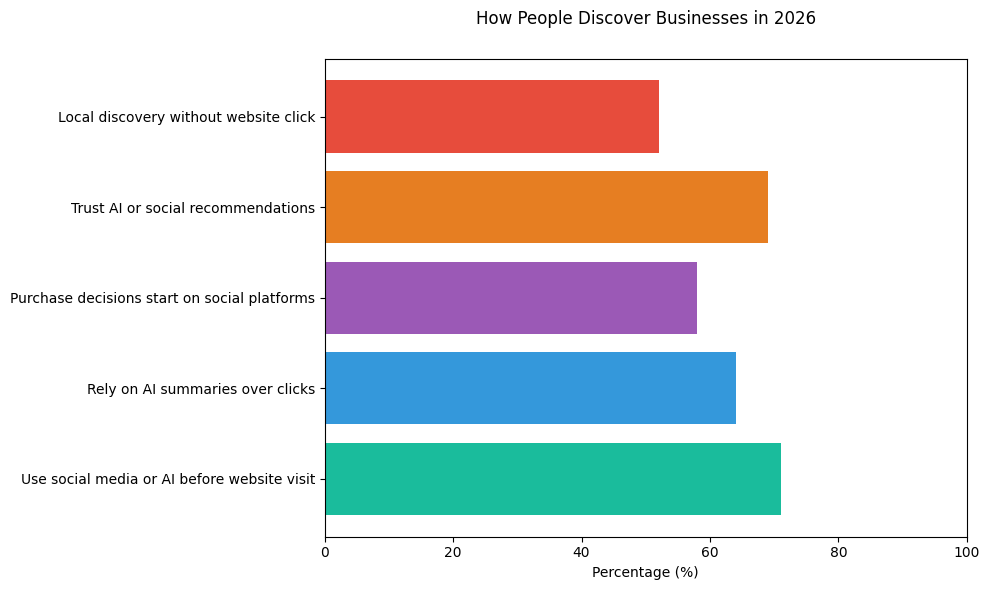
Platforms are saturated, attention is fragmented, and AI-driven feeds prioritize businesses that feel credible, consistent, and useful. Posting alone is no longer enough.
2. The Big Shift: From Posting Content to Building Trust Signals
Social platforms now function as trust engines, not distribution tools.
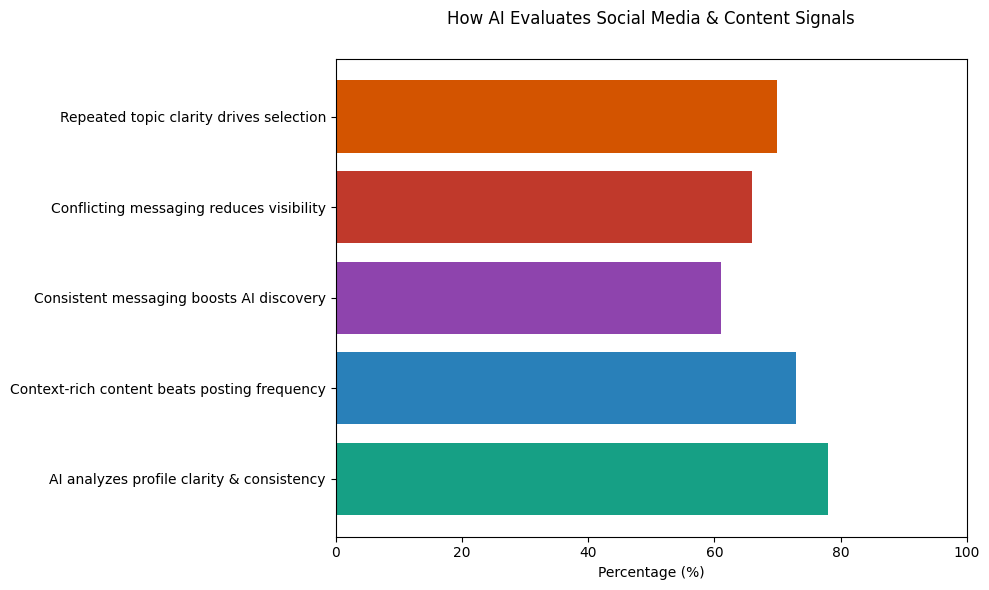
AI systems analyze:
-
profile clarity
-
caption consistency
-
comment quality
-
audience signals
-
off-platform mentions
Every post contributes to how clearly your business is understood.
3. What Social Media Platforms Actually Reward in 2026
What gets visibility today isn’t volume - it’s signals.
Platforms reward:
-
saves and shares
-
meaningful comments
-
profile visits
-
repeat engagement
-
clarity of business purpose
Random posting creates noise. Focused posting creates momentum.
4. Why Likes and Followers Don’t Equal Customers
Likes are passive. Followers are optional.
Conversions come from:
-
trust
-
familiarity
-
clarity
-
timing
Small businesses win when their content answers real questions and reduces decision friction.
5. How AI Uses Social Media to Decide Who Gets Recommended
AI doesn’t “rank” social accounts - it evaluates confidence.
It asks:
-
Is this business clearly defined?
-
Is the message consistent over time?
-
Do people engage meaningfully?
If AI understands your role, it’s more likely to surface you in discovery and recommendations.
6. Platform-by-Platform: Where Small Businesses Should Focus
You don’t need every platform.
Most small businesses perform best by choosing one primary platform and one support channel, based on where customers already spend attention - not where trends point.
7. What to Post When You Don’t Have a Marketing Team
The most effective content is simple:
-
explanations
-
before-and-after examples
-
FAQs
-
behind-the-scenes decisions
-
customer questions
If it helps a customer decide faster, it works.
8. The Role of Consistency (and Why It Beats Virality)
Virality is unpredictable. Consistency compounds.
Clear, repeatable messaging trains platforms and customers to recognize what you do and why you matter.
9. Turning Social Media Attention into Real Leads
Attention alone doesn’t convert.
Lead-focused content:
-
directs people to the next step
-
reinforces expertise
-
removes uncertainty
Social media should support sales conversations, not replace them.
10. How Local Small Businesses Can Win on Social Media
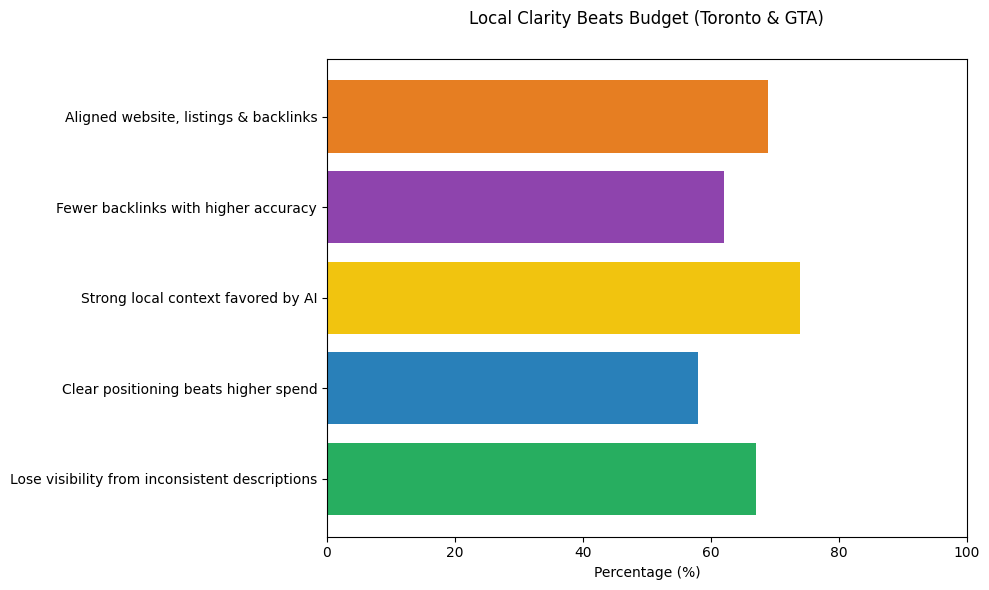
Local relevance beats global reach.
AI and platforms prioritize:
-
location signals
-
community engagement
-
local context
Small businesses that show where they operate and who they serve win visibility without big budgets.
11. Common Social Media Mistakes That Cost Small Businesses Visibility
The biggest mistakes aren’t technical:
-
vague bios
-
inconsistent messaging
-
trend chasing
-
posting without intent
Confusion is the fastest way to disappear.
12. A Simple Social Media Strategy Small Businesses Can Actually Maintain
A sustainable strategy focuses on:
-
2–3 content themes
-
2–3 posts per week
-
one clear call to action
-
monthly review
If it fits your workflow, it works long-term.
-
The 3-Second Rule for Social Media (It's Not What You Think)
-
Finally! Simple Social Media That Actually Grows Your Business
13. How to Measure What’s Actually Working
Track:
-
profile visits
-
saves and shares
-
inbound messages
-
calls and bookings
If content shortens sales conversations, it’s doing its job.
14. Quick Self-Check: Is Your Social Media Helping or Hurting Your Business?
Ask:
-
Can someone explain my business after one visit?
-
Is my message consistent across posts?
If not, clarity is the missing piece.
15. What Small Businesses Should Do Next
Stop chasing algorithms.
Start building understanding.
Social media works when it supports how customers decide - not how platforms trend.
FAQs
Does social media marketing still work for small businesses in 2026?
Yes, social media marketing still works for small businesses, but only when it focuses on clarity, trust, and relevance. In 2026, platforms and AI systems prioritize businesses that clearly explain what they do and consistently help customers make decisions.
What social media platforms are best for small businesses today?
The best social media platform for a small business depends on where its customers already spend time. Most small businesses succeed by focusing on one main platform and one supporting channel instead of trying to be everywhere.
How does AI affect social media marketing for small businesses?
AI analyzes social media profiles, posts, comments, and engagement patterns to decide which businesses are credible and relevant. Clear messaging and consistent content help AI understand and recommend a business more often.
Why don’t like and followers turn into customers anymore?
Likes and followers show awareness, not intent. Customers convert when content answers questions, builds trust, and reduces uncertainty. In 2026, social media works best as a trust-building tool, not a popularity contest.
How often should a small business post on social media?
Posting two to three times per week is enough for most small businesses, as long as the content is clear and helpful. Consistency and usefulness matter far more than posting every day.
How can a small business tell if social media is actually working?
Social media is working when it leads to profile visits, messages, calls, bookings, or easier sales conversations. If content helps customers decide faster, it’s doing its job.
Can local small businesses compete on social media without big budgets?
Yes. Local small businesses often outperform larger brands by being more specific about their services, location, and audience. AI and social platforms favor clarity and relevance over advertising spend.
Does social media marketing work differently for Toronto small businesses?
Yes. Toronto and GTA markets are more competitive, so platforms and AI systems prioritize businesses that are clear about their services, location, and audience rather than those that simply post more often.
This helps voice search a lot.
Why Local Toronto & GTA Businesses Trust Unlimited Exposure in the AI Era
For over 28 years, Unlimited Exposure has helped Toronto and GTA businesses adapt as digital discovery evolved -from websites, to search engines, and now to AI-driven search, social, and recommendations.
Today, our focus is simple: helping businesses be clearly understood across search engines, social platforms, AI systems, and real customer conversations - not just seen.
We support this through:
-
Social media marketing designed for trust, clarity, and discovery
-
Content structured for search, voice, and machine understanding
We also support Toronto and GTA businesses with inbound marketing and high-quality, context-driven backlinks that help search engines and AI systems confidently understand and recommend their services.
If you’re ready to move beyond outdated tactics and build a digital presence that works across search, social, and AI-driven discovery:
Search for “digital marketing agency near me”, call 416-477-0594, or book a free consultation - because in 2026, clarity beats clicks.
