
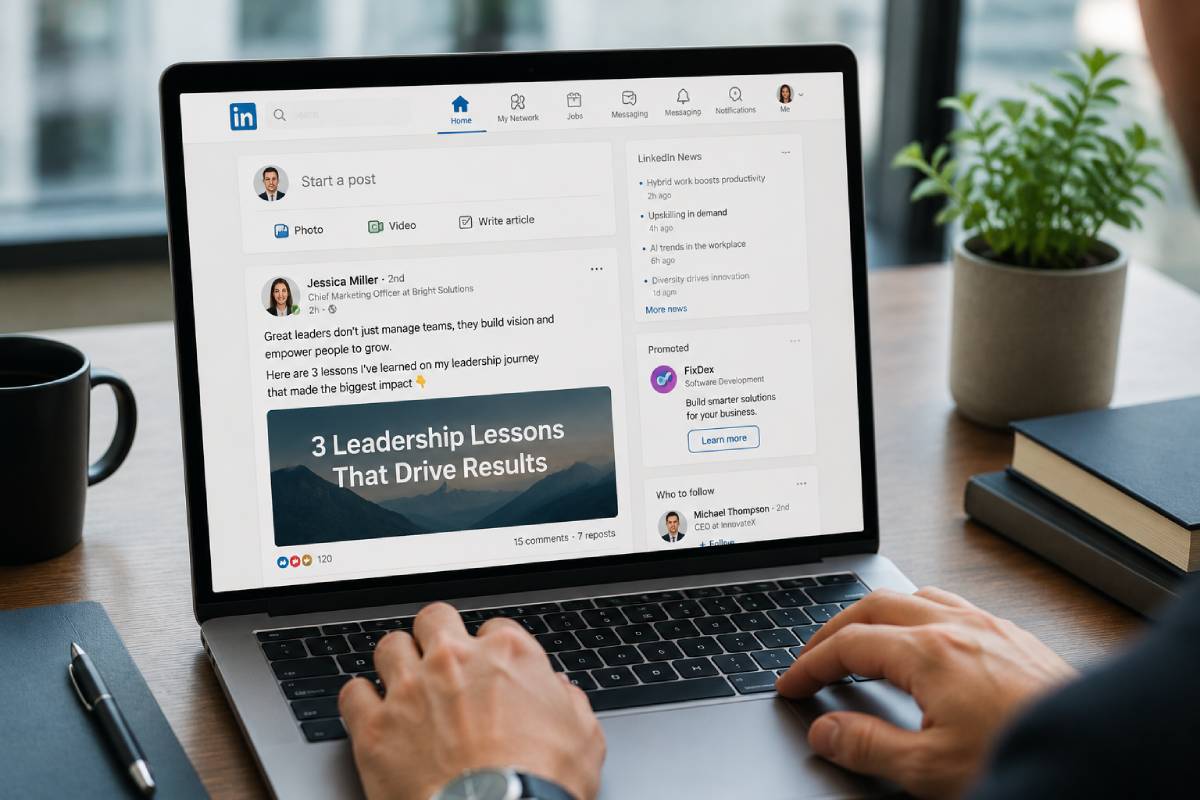
The LinkedIn Content Strategy That Makes Executives Look Like Industry Leaders
Most executives don’t fail on LinkedIn because they lack expertise. They fail because they don’t have a structured LinkedIn content strategy that translates real-world leadership into consistent visibility and authority online.
Without clear positioning, content consistency, and a defined message, even highly experienced executives remain invisible, while less experienced but more active professionals dominate attention and engagement.
Table of Contents
Introduction
If you’re a business owner or executive in Toronto or the GTA, you may have already experienced this gap:
You have real-world credibility, years of leadership experience, and strong industry knowledge, yet your LinkedIn presence doesn’t reflect it.
Meanwhile, other professionals with less experience are consistently showing up, sharing content, and building perceived authority.
This creates a visibility gap, and in today’s digital-first environment, that gap directly impacts opportunities, partnerships, and trust.
Why Executives Struggle to Build Authority on LinkedIn
The main issue is not expertise; it’s translation.
For example, imagine two business owners in Toronto.
One has 20 years of experience but only posts on LinkedIn when the company has news. The other has 8 years of experience but shares weekly lessons, common industry mistakes, and practical advice from real client conversations.
After a few months, the second person may look more visible, more trusted, and more authoritative online, not because they know more, but because their expertise is easier to see.
Most executives already have everything they need:
-
Industry knowledge
-
Leadership experience
-
Business results
But LinkedIn does not measure experience directly. It measures clarity, consistency, and visibility of ideas.
In practice, this means a CEO with 20 years of experience can look inactive, while a junior consultant posting daily can appear like an industry leader.
This is not unfair; it’s how attention systems work online.
Why Real-World Authority Doesn’t Transfer Online
Authority in real life is earned through:
-
meetings
-
decisions
-
results
-
reputation
But authority on LinkedIn is built through:
-
repeated ideas
-
structured messaging
-
visible thinking
-
consistent storytelling
So, when executives post randomly or occasionally, the platform cannot build a clear narrative around them.
That’s why many profiles feel “experienced but invisible.”
What Most LinkedIn Strategies Get Wrong
Most executive LinkedIn profiles follow a broken pattern:
-
Posting company announcements only
-
Sharing achievements without context
-
Writing like internal reports
-
No clear audience targeting
The result is predictable:
Content exists, but authority doesn’t build.
The missing elements are:
1. Positioning Clarity
People must instantly understand:
“What is this person known for?”
2. Narrative Direction
Posts should connect to a bigger idea, not stand alone.
3. Audience-Centric Writing
Content should focus on industry problems, not internal updates.
4. Leadership Perspective
Facts alone don’t build authority, opinions do.
What an Effective Executive LinkedIn Content Strategy Looks Like
A high-performing LinkedIn content strategy for executives is not about posting more, it’s about controlling perception.
Step 1: Define Positioning
Strong positioning sounds like clearly defining what you want to be known for in your industry. Instead of being general, you focus on a specific role and outcome.
For example:
-
“Operations leader helping service businesses scale efficiently”
-
“Healthcare executive focused on patient experience systems”
-
“Construction leader improving project delivery systems”
This becomes your narrative foundation and shapes how people perceive your expertise over time.
Instead of saying:
"I help businesses."
Say:
"I help healthcare clinic owners improve patient experience while reducing operational inefficiencies."
Or:
"I help construction companies streamline operations and improve project delivery."
People don’t remember generalists. They remember specialists who clearly solve specific problems.
Step 2: Build 3–4 Content Pillars
Instead of random posts, every executive should rotate around a small set of consistent themes. This is what builds clarity and authority over time:
-
Industry insights and trends
-
Lessons from real experience
-
Common mistakes in the industry
-
Leadership and decision-making perspectives
To make this practical, here’s what consistency actually looks like in a real posting rhythm:
Example Weekly Schedule:
Monday - Industry insight
Wednesday - Leadership lesson
Friday - A common mistake you've seen in your industry
This structure helps executives stay consistent without overthinking what to post. More importantly, it trains the audience to recognize what you stand for every time you show up.
Step 3: Use Simple, Human Language
Authority is not built with complexity.
It is built when:
Step 4: Focus on Consistency Over Volume
A common misconception is that posting more creates authority.
In reality:
-
2–3 structured posts per week outperform irregular posting bursts
Think about the people you regularly notice on LinkedIn. Chances are, they don't post every day. Instead, they show up consistently with useful ideas. Over time, that consistency builds familiarity, and familiarity builds trust.
Step 5: Combine Opinion + Experience
This is the core of executive thought leadership:
-
What you’ve seen in real operations
-
What most people misunderstand
-
What actually works in practice
This is where true authority is built.
Common Mistakes That Reduce LinkedIn Visibility
Executives often lose visibility because they:
-
Post only when something important happens
-
Ignore audience problems
-
Write in corporate language
-
Stay inconsistent for weeks or months
When this happens, LinkedIn reduces content distribution because the profile lacks engagement signals.
How Businesses in Toronto & GTA Are Using LinkedIn Differently
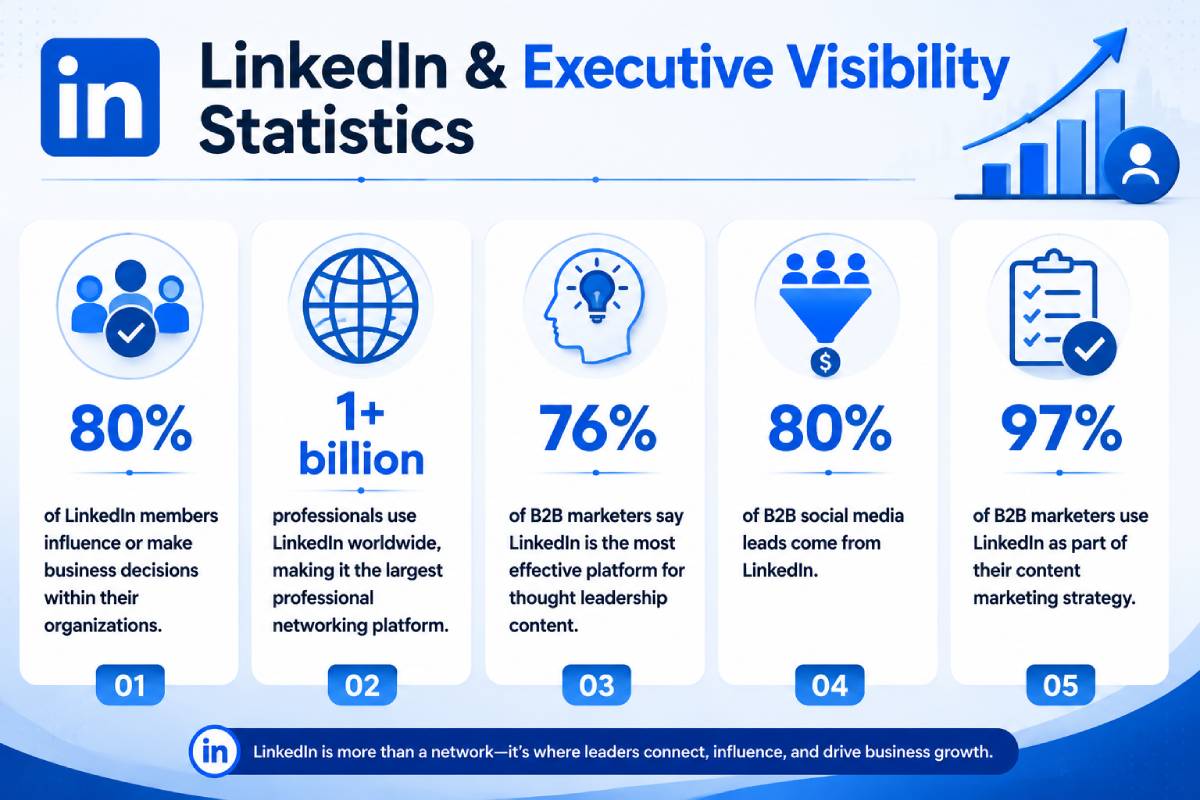
In competitive markets like Toronto, LinkedIn is no longer optional, it is part of the credibility system.
Companies that actively structure executive content:
-
generate more inbound leads
-
build trust faster in sales conversations
-
reduce reliance on paid advertising
-
increase partnership opportunities
This is why LinkedIn personal branding and executive content strategy have become essential growth tools.
For example, when a business owner regularly shares insights about common customer challenges, potential clients often feel they already know and trust that person before the first meeting. This shortens the sales cycle and creates warmer conversations.
Not sure where to start?
We offer a personalized LinkedIn profile and content strategy review to help executives identify opportunities to improve visibility, strengthen positioning, and build lasting authority online.
When You Should Rethink Your LinkedIn Strategy
You likely need a better system if:
-
People don’t clearly understand your expertise
-
Posts don’t lead to conversations
-
Your profile doesn’t reflect your real experience
-
Less experienced competitors look more established online
In most cases, this is not a content issue, it is a positioning issue.
-
Why Are Professional Massage Therapists Still Struggling to Attract Clients Online?
-
The Businesses Winning Online in 2026 Are Doing These 5 Things
-
Why More Toronto Businesses Are Realizing Their Website Was Never Built to Convert
-
Why Some Businesses Keep Posting on Social Media but Still Don’t Get Customers
FAQ
Why is LinkedIn important for executives?
LinkedIn is now a primary credibility layer. People evaluate trust and authority before meetings, partnerships, and hiring decisions.
How often should executives post?
Consistency matters more than frequency. Even 2–3 strategic posts per week can build strong authority.
What type of LinkedIn content helps executives build authority?
Experience-based insights, industry opinions, and leadership lessons perform best.
Why do less experienced people get more attention?
Because they are more consistent and structured in their content strategy.
Can LinkedIn generate leads?
Yes. A strong LinkedIn presence builds trust before sales conversations begin.
Conclusion
LinkedIn has become a visibility system, not just a networking platform.
Executives who build a structured LinkedIn content strategy, define their positioning, and communicate consistently will naturally appear as industry leaders, even in highly competitive markets like Toronto.
Those who don’t will continue to rely only on offline reputation, which is no longer enough.
The good news is that building authority on LinkedIn doesn't require posting every day or becoming an influencer. It starts with a clear message, a consistent strategy, and the willingness to share what you've already learned through years of experience.
About Unlimited Exposure Online
Unlimited Exposure Online is a Toronto-based digital marketing and web development agency helping businesses across Toronto and the GTA build stronger online visibility, authority, and long-term growth.
We work with business owners, executives, and growing companies that have real expertise but struggle to communicate it effectively online. Through strategic LinkedIn content planning, executive personal branding, thought leadership development, SEO, website design, and AI search optimization, we help transform experience into visibility and visibility into business opportunities.
Whether you're looking to strengthen your LinkedIn presence, improve your digital reputation, attract qualified leads, or build a more effective online marketing strategy, our team develops practical solutions designed around your business goals.
If your expertise isn't getting the recognition it deserves, Unlimited Exposure Online can help you build a stronger digital presence that earns trust, creates authority, and generates meaningful business growth.
