
What Makes a Website Chatbot Helpful Instead of Frustrating?
A helpful website chatbot gives visitors fast, accurate answers, understands what they actually need, and guides them toward the next step. A frustrating chatbot gives generic replies, creates more questions, and makes customers leave. The difference comes from thoughtful strategy, customer-focused design, and combining AI automation with human support.
Table of Contents
Why Some Website Chatbots Frustrate Customers
A visitor lands on your website because they need an answer.
Maybe they want to know your price.
Maybe they want to book an appointment.
Maybe they want to know if you serve their area.
Maybe they simply want to confirm one small detail before contacting your business.
But instead of getting help, they see a chatbot.
The chatbot says:
“Hi! How can I help you today?”
The customer asks a simple question.
The answer does not match.
They ask again.
Another generic response appears.
After a few seconds, they leave.
This situation happens every day on business websites across Toronto and the GTA.
The problem is not that chatbots are bad.
The problem is that many businesses add chatbot technology without understanding how customers search, what questions they ask, and what information they need before taking action.
A website chatbot should remove friction.
It should make the customer journey easier, not create another obstacle.
For restaurants, clinics, contractors, retailers, and service businesses, the first interaction often happens online before anyone makes a phone call. A chatbot can become a helpful digital assistant or the reason a potential customer chooses another company.
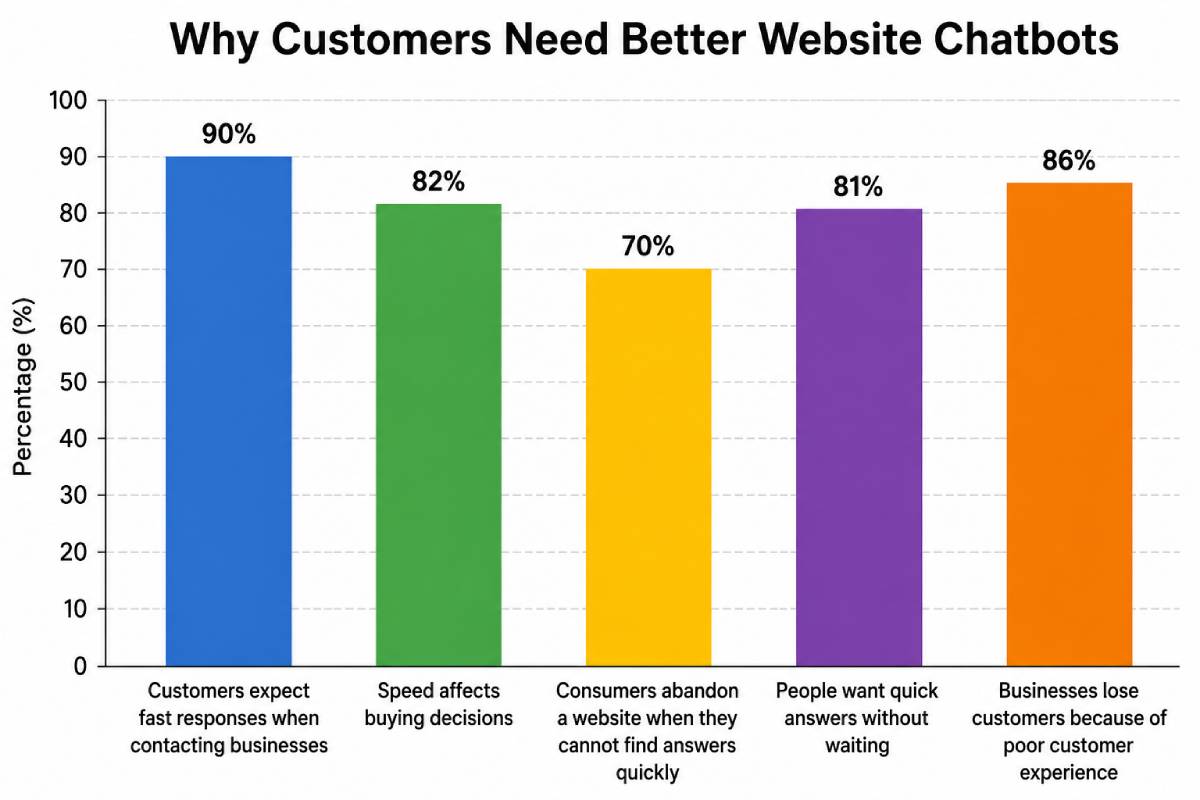
The Real Problem Is Not the Chatbot, It Is the Experience
Many business owners believe:
“We need a chatbot because everyone is using AI.”
But technology alone does not improve customer experience.
A chatbot works only when it understands the customer journey.
Think about a visitor looking for a local service.
They are not thinking:
“I need a residential HVAC service provider with certified technicians.”
They are thinking:
“My furnace stopped working. Who can help me today?”
They are not searching for your internal service categories.
They are searching for solutions to their problems.
That difference matters.
The best AI chatbot development starts with understanding:
-
Common customer questions
-
Website visitor behavior
-
Sales objections
-
Frequently asked questions
-
Booking problems
-
Information customers cannot easily find
Without this foundation, even advanced AI can create a poor experience.
What Makes a Website Chatbot Actually Helpful?
1. It Understands Real Customer Language
Customers do not always ask questions using professional terms.
A customer may search:
“Do you repair air conditioners near me?”
instead of:
“Residential cooling system maintenance.”
Someone looking for dental services may ask:
“How much does teeth whiten cost?”
instead of:
“Cosmetic dentistry pricing.”
A useful conversational AI solution understands different ways people communicate.
It focuses on customer intent, not just keywords.
This is especially important for local businesses because people often search with location-based questions:
-
“Best restaurant near me”
-
“Emergency plumber in Toronto”
-
“Clinic open today near Vaughan”
-
“Contractor for basement renovation in Mississauga”
A chatbot designed around real customer conversations can provide much better answers.
2. It Provides Immediate Value
People do not visit a website chatbot because they want a conversation with technology.
They want answers.
A helpful chatbot should quickly provide:
-
Clear information
-
Relevant recommendations
-
Simple choices
-
Easy next steps
For example:
A frustrating chatbot:
“Please visit our services page for more information.”
A helpful chatbot:
“We provide residential plumbing services across Toronto and the GTA. Are you looking for emergency repair, installation, or a quote?”
The second response feels more natural because it helps the customer move forward.
Helpful Chatbot vs Frustrating Chatbot
|
Helpful Website Chatbot |
Frustrating Website Chatbot |
|
Understands customer questions |
Gives unrelated answers |
|
Provides useful information quickly |
Sends users through endless links |
|
Knows when human help is needed |
Blocks access to real support |
|
Uses business-specific information |
Gives generic responses |
|
Helps customers take action |
Creates more confusion |
|
Supports sales teams |
Replaces human connection |
The difference is not simply the technology.
The difference is how the chatbot is planned, trained, and connected to the overall website experience.
Common Chatbot Mistakes Businesses Make
Mistake #1: Starting With Technology Instead of Customer Needs
One of the biggest mistakes businesses make is asking:
“How do we install a chatbot?”
The better question is:
“What questions are our customers already asking?”
Your chatbot should learn from:
-
Phone calls
-
Customer emails
-
Online reviews
-
Sales conversations
-
Support requests
For example, a Toronto restaurant may discover customers constantly ask:
“Do you have vegetarian options?”
“Do you offer delivery?”
“What time do you close?”
Those questions should become part of the chatbot strategy.
Mistake #2: Creating a Generic Brand Experience
A chatbot that says:
“I can answer your questions.”
but cannot actually answer them damages trust.
Customers expect local businesses to understand their needs.
A useful chatbot should know:
-
Business hours
-
Location
-
Services
-
Appointment process
-
Service areas
-
Basic pricing information when appropriate
A restaurant chatbot should understand restaurant questions.
A clinic chatbot should understand appointment-related questions.
A contractor chatbot should understand project inquiries.
Generic answers create generic experiences.
Mistake #3: Expecting a Chatbot to Fix a Poor Website
A chatbot cannot repair a confusing website.
If visitors struggle because:
-
Pages load slowly
-
Information is difficult to find
-
The mobile experience is poor
-
Calls-to-action are unclear
then the chatbot is only treating a symptom.
Effective chatbot performance depends on strong:
-
Website design and development
-
UX optimization
-
Mobile-friendly structure
-
SEO-friendly content organization
The chatbot and website experience must work together.
How AI Chatbots Help Generate More Leads
Many businesses do not lose customers because people are uninterested.
They lose customers because visitors leave before taking action.
A potential customer might visit your website at 10 PM.
They have a question.
Nobody answers.
They leave.
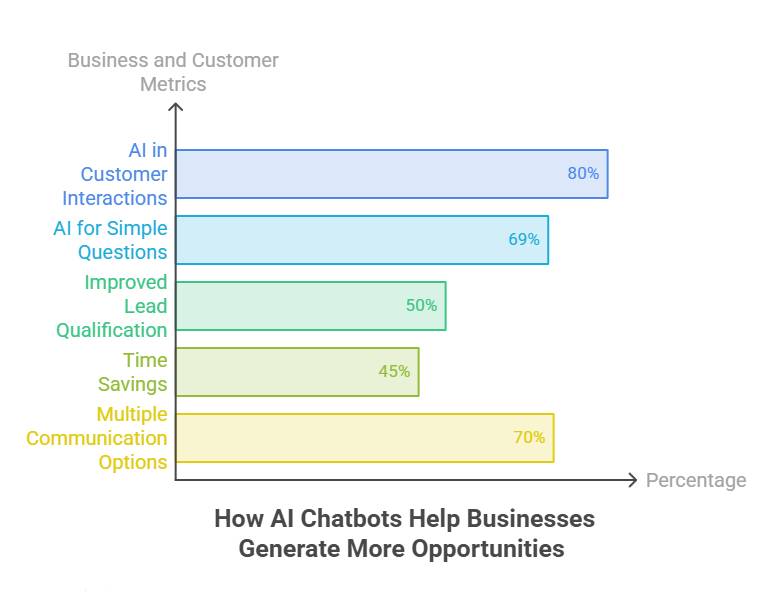
A helpful chatbot can capture that opportunity by:
-
Answering questions after business hours
-
Collecting contact information
-
Understanding customer needs
-
Directing visitors to the right service
-
Supporting lead generation automation
For example:
A contractor in Vaughan may receive a visitor looking for a renovation estimate.
The chatbot can collect:
-
Project type
-
Location
-
Timeline
-
Contact details
The business can follow up with better information.
This creates a smoother sales process.
Why Human Support Still Matters
Automation does not mean removing people.
Customers want speed, but they also want trust.
A chatbot can answer:
“What are your hours?”
But a human may be needed for:
“I am not sure which service is right for my situation.”
“I have a unique problem.”
“I need advice before making a decision.”
The strongest customer experiences combine:
AI Automation + Human Support + Clear Communication
The goal is not replacing people.
The goal is helping people spend more time on valuable conversations.
-
How to Train Your Chatbot to Answer Customer Questions Properly
-
Missed Calls = Missed Money: How AI Chatbots Turn Every Visitor into a Lead
-
Why Integrating Chatbots with Your CRM Can Transform Sales and Marketing
Chatbots, SEO, AI Search, and Local Visibility
Search behavior is changing.
People are no longer only typing short keywords.
They are asking complete questions:
-
“What is the best dental clinic near me?”
-
“How much does basement renovation cost in Toronto?”
-
“Where can I find authentic Vietnamese food in North York?”
This is why businesses need websites that answer real questions clearly.
A well-designed chatbot strategy supports:
-
Better customer experience
-
More useful website content
-
Stronger conversion opportunities
-
Better understanding of customer intent
Chatbots do not replace SEO.
They work alongside:
-
Conversion rate optimization
Businesses that answer customer questions clearly are better positioned for both traditional search and AI-powered search experiences.
Why Toronto Businesses Need Smarter Website Experiences
Toronto and the GTA are competitive markets.
Customers have choices.
Whether someone is searching for a restaurant in downtown Toronto, a clinic in North York, a contractor in Mississauga, or a retailer in Vaughan, they often compare multiple businesses before contacting anyone.
The business that provides the clearest and fastest experience often gets the opportunity.
If your website receives traffic but visitors leave without contacting you, the problem may not be visibility.
The problem may be what happens after people arrive.
This is something Unlimited Exposure Online helps Toronto businesses analyze through better website experiences, AI chatbot strategies, UX improvements, and conversion-focused solutions.
Frequently Asked Questions About Website Chatbots
1. What makes a website chatbot helpful?
A helpful website chatbot understands customer questions, provides accurate answers, and guides visitors toward useful actions. It should reduce the effort required to find information. The best chatbots are built around real customer needs rather than simply adding automated messages to a website.
2. Why do customers get frustrated with chatbots?
Customers usually become frustrated when chatbots provide irrelevant answers, repeat the same responses, or cannot solve simple problems. Many businesses focus on installing chatbot software but forget that successful chatbot experiences require customer research, good website structure, and clear communication.
3. Can an AI chatbot replace customer service employees?
No. AI chatbots are designed to support customer service teams, not completely replace them. They handle repetitive questions and collect information, while employees manage complex situations requiring experience, empathy, and personal attention.
4. Are AI chatbots useful for small businesses?
Yes. Small businesses can benefit from AI chatbots because they help answer customer questions, capture leads, and provide support outside normal business hours. They can be especially useful for restaurants, clinics, contractors, and local service businesses.
5. Do chatbots improve website conversions?
A properly designed chatbot can improve conversions by reducing barriers. When visitors quickly find answers about pricing, services, availability, or booking options, they are more likely to contact the business.
6. Can a chatbot connect with CRM systems?
Yes. Advanced chatbot solutions can connect with CRM and marketing automation platforms. This allows businesses to organize leads, track conversations, and create better follow-up processes.
7. Should every business website have a chatbot?
Not necessarily. A chatbot should solve a real communication problem. Businesses should first understand customer questions, website traffic, and business goals before deciding whether chatbot implementation makes sense.
Final Thoughts
A website chatbot should make customers feel helped, not ignored.
The problem is not automation.
The problem is poor automation.
A successful chatbot understands customer questions, provides useful answers, supports human interaction, and fits naturally into the overall website experience.
For businesses in Toronto and the GTA, the goal should not simply be adding AI technology.
The goal should be creating a better experience for every person who visits your website.
About Unlimited Exposure Online
Our services include AI chatbot development, conversational AI solutions, website design and development, UX optimization, CRM integration, SEO-friendly website development, local SEO, and digital marketing strategies.
We believe technology works best when it solves real business problems, helping companies communicate better with customers, generate more opportunities, and create stronger digital experiences.
If your website visitors are leaving without taking action, we can help improve the experience with smarter chatbot strategies and better website solutions.
