
Does Creating Content in Multiple Languages Help Businesses Get More Customers in Toronto?
Imagine walking down the vibrant streets of Toronto. In a single afternoon, you might hear the rhythmic tones of Cantonese in Spadina, the warmth of Italian in Corso Italia, the energy of Portuguese in Little Portugal, and the familiar cadence of Punjabi in Rexdale. Toronto isn’t just a city; it is a global microcosm. For a business owner, this diversity represents a golden opportunity, but it also poses a significant question: Does creating content in multiple languages help businesses get more customers in Toronto?
The short answer is a resounding yes. However, the path to successfully capturing a multilingual market involves more than just plugging your website into a basic translator. It requires strategy, cultural empathy, and an understanding of how local SEO works in a polyglot environment. In this comprehensive guide, we will explore why linguistic diversity is your greatest asset, the psychological impact of native-language marketing, and how you can implement a multilingual strategy to scale your business in the 6ix.
Table of Contents
The Linguistic Landscape of the GTA: Why It Matters
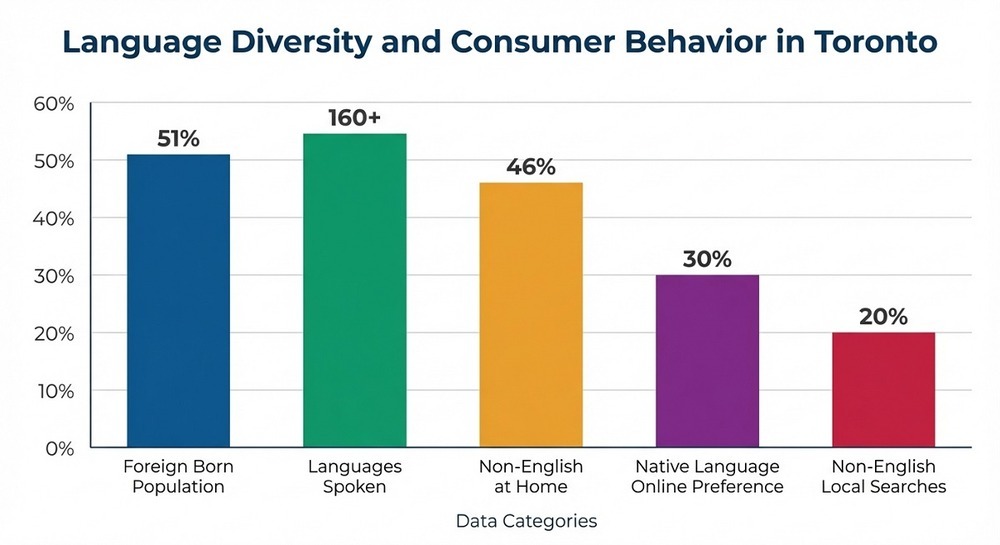
Toronto is frequently cited as the most multicultural city in the world. According to data from the Statistics Canada 2021 Census, nearly half of Toronto’s population was born outside of Canada. Furthermore, over 160 languages are spoken within the Greater Toronto Area (GTA). While English remains the primary language of commerce, it is often not the language of the heart or the home.
When you ask, “Does creating content in multiple languages help businesses get more customers in Toronto?”, you have to look at the numbers. Thousands of potential customers are searching for services in Mandarin, Spanish, Tagalog, and Arabic every single day. If your content is only in English, you are essentially closing your doors to a massive segment of the local population.
Breaking the “English-Only” Barrier
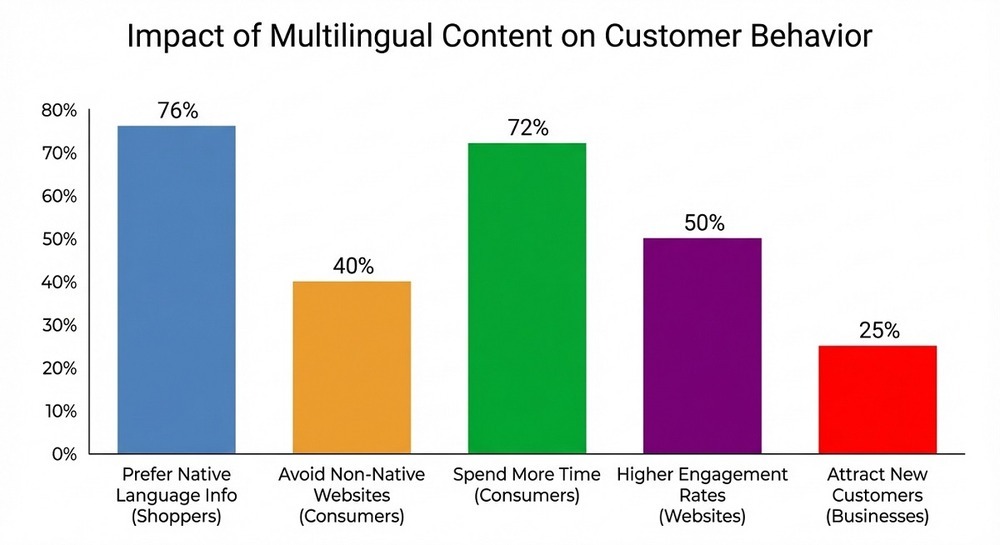
Many entrepreneurs assume that because most Torontonians speak English as a second language, English-only marketing is sufficient. This is a common misconception. Research by CSA Research (formerly Common-Sense Advisory) in their “Can’t Read, Won’t Buy” study found that 76% of online shoppers prefer to buy products with information in their native language. Even more telling, 40% will never buy from websites in other languages.
In a competitive market like Toronto, providing content in a customer’s preferred language isn’t just a “nice-to-have” feature, it is a competitive advantage that builds immediate trust.
The Psychological Power of Native Language Marketing
Marketing is about connection. When you speak to a customer in their mother tongue, you aren’t just conveying information; you are conveying respect. You are signaling that you value their culture and their business enough to meet them where they are.
Building Trust in High-Stakes Industries
In sectors like real estate, law, finance, and healthcare, trust is the primary currency. A newcomer to Toronto looking for a mortgage or legal advice will naturally gravitate toward a professional who provides resources in their native language. It reduces the fear of “fine print” misunderstandings and creates a sense of community.
For instance, if you run a law firm in North York, having a dedicated section of your site in Farsi or Mandarin can be the deciding factor for a client choosing between you and a competitor who only offers English content. By answering the question, does creating content in multiple languages help businesses get more customers in Toronto? through action, you position yourself as a localized expert.
Local SEO and the Multilingual Advantage
From a technical standpoint, multilingual content is a powerhouse for Search Engine Optimization (SEO). When you translate your content, you aren’t just duplicating pages; you are opening up new “keywords” in different languages.
Targeting Low-Competition Keywords
The English-speaking digital space in Toronto is incredibly crowded. Ranking for “Best Dentist in Toronto” is a monumental task that requires a massive budget. However, ranking for the equivalent term in Italian or Portuguese might be significantly easier and cheaper because fewer businesses are targeting those specific long-tail keywords.
By implementing a multilingual SEO strategy, you can:
-
Rank on the first page for non-English queries.
-
Reduce your Cost Per Click (CPC) on Google Ads by targeting less competitive linguistic niches.
-
Increase your Click-Through Rate (CTR) as users are more likely to click on a result that matches their search language.
For businesses looking to dominate the local scene, partnering with an experienced Toronto SEO agency can help you identify which languages are most profitable for your specific niche.
Transcreation vs. Translation: How to Do It Right
One of the biggest mistakes businesses make is relying solely on machine translation like Google Translate. While technology has improved, it often misses the nuance, slang, and cultural context that make marketing effective. This is where transcreation comes in.
What is Transcreation?
Transcreation is the process of adapting a message from one language to another while maintaining its intent, style, tone, and context. It ensures that your brand’s personality isn’t “lost in translation.”
Example:
An English slogan that relies on a pun or a rhyme might sound nonsensical or even offensive when translated literally into Cantonese. A transcreation expert will rewrite the slogan so it carries the same emotional “punch” in the target language.
Cultural Nuance in Toronto
Toronto’s communities are distinct. The way you market to the Greek community in the Danforth might differ from how you approach the Filipino community in Scarborough. Understanding cultural holidays (like Lunar New Year, Diwali, or Eid) and incorporating them into your multilingual content strategy shows that you are an active participant in Toronto’s diverse culture.
Practical Steps to Launch a Multilingual Content Strategy
If you are ready to expand your reach, you don’t have to translate your entire website overnight. Here is a step-by-step approach to help you scale:
-
Analyze Your Current Traffic: Use Google Analytics to see if you are already getting visitors who have their browsers set to different languages. This is a clear indicator of untapped demand.
-
Identify Top Demographics: Based on your physical location in Toronto, which languages are most prevalent? Use City of Toronto Neighborhood Profiles to guide your decision.
-
Start with “Money Pages”: You don’t need to translate every blog post. Start with your landing pages, service descriptions, and contact forms.
-
Use Hreflang Tags: This is a piece of code that tells Google which version of a page to show to a user based on their language and location. This prevents “duplicate content” penalties.
-
Hire Local Professionals: Use local Toronto translators who understand the specific dialect and “Canadianisms” that might be relevant.
The Role of Social Media in Multilingual Growth
Social media is where the “conversational” part of your marketing happens. Platforms like WeChat, WhatsApp, and even Facebook Groups are hubs for Toronto’s various ethnic communities.
Does creating content in multiple languages help businesses get more customers in Toronto through social media? Absolutely. By posting in multiple languages, you encourage shares within specific community circles. A recommendation in a “Toronto Moms” Facebook group that is written in the group’s preferred language carries significant weight.
Overcoming the Challenges of Multilingual Marketing
While the benefits are clear, there are challenges you should be aware of:
-
Maintenance: Every time you update a service in English, you must update it in your other languages to ensure consistency.
-
Customer Support: If you attract a customer through a Mandarin advertisement, you must be prepared to handle their inquiry in Mandarin. If you can’t, you must be transparent about it (e.g., “Our website is in Mandarin, but our phone support is currently in English”).
-
Cost: Quality translation and transcreation require an investment. However, when viewed as a lead-generation tool, the ROI often far exceeds the initial cost.
Case Study: Successful Multilingual Marketing in the GTA
Consider a boutique real estate agency in Markham. By creating a video series on YouTube titled “Buying Your First Home in Canada” and offering versions in English, Mandarin, and Punjabi, they saw a 40% increase in inquiries within six months. The content wasn’t just about selling houses; it was about educating a specific demographic on the complexities of the Canadian market in a language they understood perfectly. This educational approach builds a “brand halo” that lasts for years.
To truly succeed in the Toronto market, your content needs to be backed by a robust digital infrastructure. If you are struggling with how to structure your site, exploring Digital Marketing Services can provide you with the roadmap needed to integrate these languages seamlessly. Furthermore, understanding the nuances of Content Marketing is essential to ensure your message doesn’t just reach people, but resonates with them.
Are you ready to transform your business into a multilingual powerhouse? Contact Unlimited Exposure today to learn how our expert SEO and content strategies can help you reach every corner of Toronto’s diverse market. Let’s start a conversation that everyone can understand.
The Future of Business in Toronto is Polyglot
As we look toward the 2030s, Toronto’s diversity is only expected to grow. The businesses that thrive will be those that view language not as a barrier, but as a bridge.
By answering the question, does creating content in multiple languages help businesses get more customers in Toronto? with a strategic “Yes,” you are doing more than just marketing. You are future-proofing your brand. You are telling the people of Toronto that you see them, you hear them, and you are ready to serve them.
- Beyond Aesthetics: Why a Slow Website is Your Competitor’s Best Friend
- Before You Hire a Web Developer What Business Owners Need to Understand (But Rarely Do)
- How to Add a Chatbot to Your Restaurant Website, Instagram, and Google-Step-by-Step
- AI Built My Website for $5: Why It’s Costing Business Owners Thousands Later
FAQ: Your Multilingual Content Questions Answered
Q: Do I need a separate website for each language?
A: Not necessarily. You can use subdirectories (e.g., yourbusiness.ca/zh/ for Chinese) or subdomains. Subdirectories are generally preferred for SEO as they consolidate your domain authority.
Q: Is it okay to use AI for translation?
A: AI is a great starting point for drafting, but it should always be reviewed by a human native speaker. Marketing copy requires a level of emotional resonance that AI still struggles to replicate perfectly.
Q: Which languages should I prioritize in Toronto?
A: This depends on your location and industry. However, Mandarin, Cantonese, Punjabi, Spanish, Tagalog, Persian, and Arabic are among the most influential languages in the GTA currently.
Q: Will multilingual content hurt my English SEO?
A: No. If implemented correctly with proper hreflang tags, it will actually strengthen your overall site authority and help you capture a wider range of search queries.
Q: How do I measure the success of my multilingual strategy?
A: Track metrics such as organic traffic per language, conversion rates on translated landing pages, and the number of leads coming from non-English search terms.
Conclusion
In a city as dynamic and diverse as the GTA, the answer to “Does creating content in multiple languages help businesses get more customers in Toronto?” is clear: it is one of the most effective ways to drive growth and build lasting brand loyalty. By speaking the language of your customers, you remove friction from the buying process, skyrocket your local SEO, and establish a level of trust that English-only competitors simply cannot match.
Whether you are a small startup or an established enterprise, the multilingual market is waiting. Don’t let your message get lost in the noise of a crowded, English-only inbox. Take the first step toward becoming a truly inclusive Toronto brand.
Unlimited Exposure is a Toronto-based digital marketing and web development company that helps businesses across the city grow their online presence, attract more qualified customers, and increase conversions. In a competitive market like Toronto, many business owners search for terms such as “digital marketing agency near me” or “web development company near me,” hoping to find a partner that prioritizes measurable business growth rather than surface-level metrics.
Since 1997, Unlimited Exposure has worked with companies throughout Toronto and the Greater Toronto Area (GTA), delivering practical digital strategies designed to improve visibility, reach diverse audiences, and drive real results.
