
Stop Blaming Abandoned Carts: The Real Problem Is Your Checkout Experience
Abandoned carts are the business world’s version of being “left on read.” Shoppers were interested. They browsed. They liked what they saw enough to add to cart. Then-poof-gone. You’re sitting there wondering what went wrong, while your analytics look like a graveyard of half-finished purchases.
Here’s the thing: people don’t abandon carts because they’re indecisive children. They abandon carts because you made it hard to say yes. It’s not their lack of discipline-it’s your checkout page.
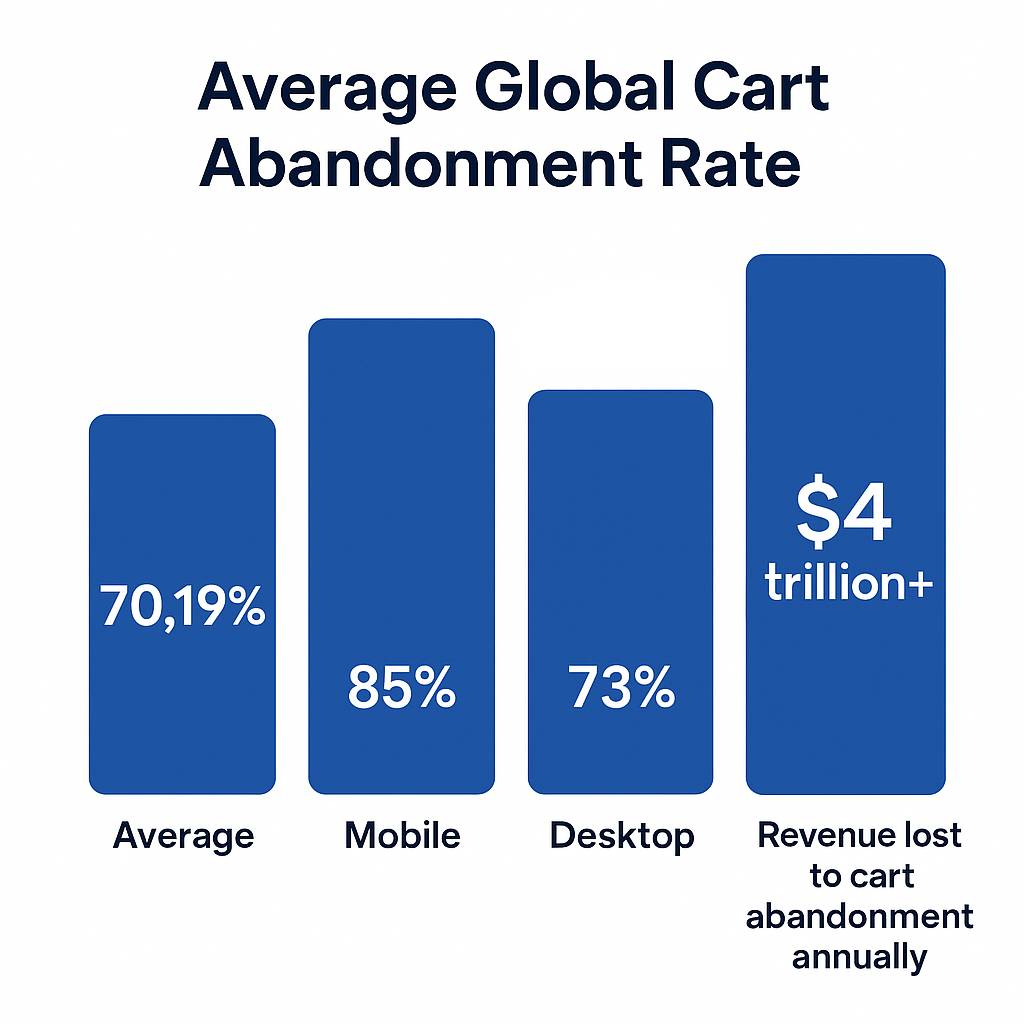
Studies consistently show that the average cart abandonment rate hovers between 65–70%. That’s a staggering amount of lost revenue. And while it’s tempting to blame “customer distraction” or “online window shopping,” most of the damage is self-inflicted. Hidden costs, long forms, clunky design-these aren’t customer quirks. They’re checkout sins.
If your digital storefront is solid but your checkout looks like a relic from 2012, the math is simple: you’re the problem. The good news? You can fix it. And once you do, those “lost” carts turn into real revenue.
Table of Content
Key Takeaways
Complex checkout = dead checkout. Every additional form field, every unnecessary step, and every second of page load increases your abandonment risk.
-
Hidden costs are the top trust killers. People don’t like feeling tricked. If the total jumps at the last second, they’ll walk away.
-
Trust, convenience, and speed are the new baseline. In 2025, smooth checkout isn’t a nice-to-have-it’s the deciding factor between a loyal customer and a lost one.
Streamlining the Checkout Journey
Nobody wakes up thinking, “I’d love to spend 10 minutes filling out forms before I give away my money.” Yet, that’s what many businesses still force on their customers.
-
Reducing unnecessary form fields and steps. Baymard Institute data shows the average checkout has 23 form fields-more than twice the recommended number. Think about it: why do you need someone’s company name when they’re buying a hoodie? Strip it down to the essentials: name, email, shipping, payment. Done.
-
The impact of one-click and biometric solutions. Amazon’s “Buy Now” button isn’t a gimmick-it’s a conversion engine. People are already using Face ID and fingerprint scanning daily. Let them pay with a glance or a thumbprint, and you’ll see abandonment rates drop instantly.
Example: Shopify stores using Shop Pay have seen conversion rates improve up to 1.7x compared to regular checkouts. Why? Because fewer clicks = fewer chances to bail.
Takeaway: If your checkout feels like a government form, fix it before you blame “cart abandonment.”
Looking for Toronto-based experts in local SEO and checkout optimization? Let’s chat about making your website earn more.
Addressing Hidden Costs Transparently
Shoppers can forgive a lot, but not betrayal. And nothing feels more like betrayal than clicking “checkout” and watching your total explode with hidden fees.
-
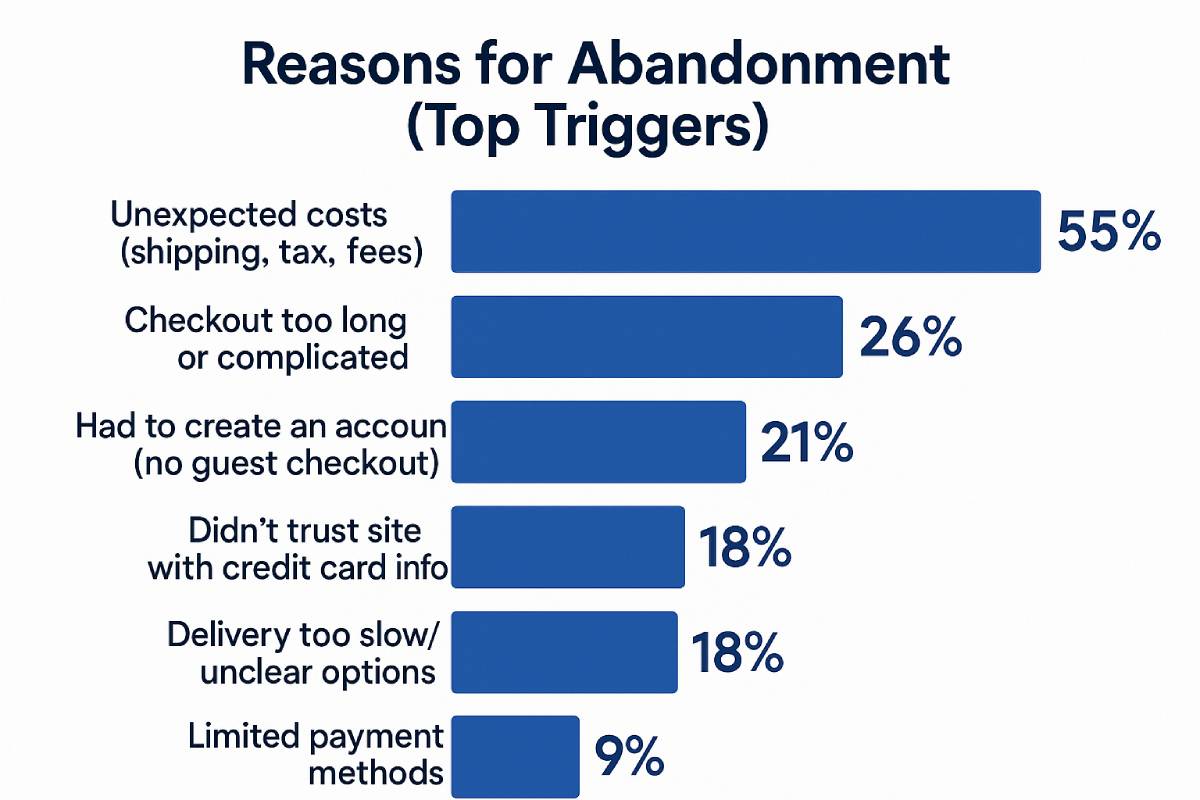
The effect of surprise fees on customer trust. Research shows that 55% of abandoned carts happen because of unexpected costs. Customers expect tax. They expect shipping. They don’t expect you to add an $8 “handling fee” that looks suspiciously like greed.
-
Strategies for integrating shipping and tax estimates upfront. Show shipping calculators on product pages. Offer free shipping thresholds (“Spend $50, shippings on us”). Or roll it into your pricing. The psychology is simple: customers prefer paying $40 with free shipping than $35 plus $5 shipping-even though the total’s the same.
Example: ASOS famously moved to a flat shipping rate and saw a sharp reduction in abandoned carts because buyers knew what to expect from the start.
Takeaway: Hidden fees don’t just cost you sales-they cost you trust. And once trust is gone, so is loyalty.
Expanding Payment Flexibility
Imagine walking into a store, handing over cash, and being told, “Sorry, we only take Amex.” That’s what your customers feel when your site doesn’t support their go-to payment method.
-
Why diverse payment options are essential. In 2025, consumers expect choice: PayPal, Apple Pay, Google Pay, Klarna, Afterpay, even crypto in certain industries. Restricting options means restricting revenue.
-
Digital wallets and BNPL. Buy Now Pay Later isn’t just a fad-it’s reshaping consumer behavior. Klarna reports 45% of U.S. shoppers used BNPL in the past year. Offering it means capturing those “I want it now but don’t want to drop $300 today” buyers.
Example: After integrating BNPL, Urban Outfitters saw a measurable spike in average order value because shoppers felt more comfortable adding an extra item.
Takeaway: Payment flexibility isn’t “extra.” It’s mandatory.
Building Trust at the Point of Purchase
Shoppers don’t just ask, “Do I want this?” They ask, “Do I trust this?” Your checkout page answers that question in milliseconds.
-
Security signals. SSL badges, encrypted gateways, and “secured by [trusted provider]” messages calm buyer nerves. They may look small, but they’re silent confidence boosters.
-
Reviews and testimonials. A well-placed testimonial- “Loved how fast this shipped!”-can stop last-second hesitation. People want proof others have risked their credit card info and lived to tell the tale.
Example: Adding simple trust badges on a checkout page increased conversion by 42% in a Blue Fountain Media test.
Takeaway: Trust doesn’t end when they click “Add to Cart.” It peaks when they’re about to hand you, their money.
Optimizing for Mobile Transactions
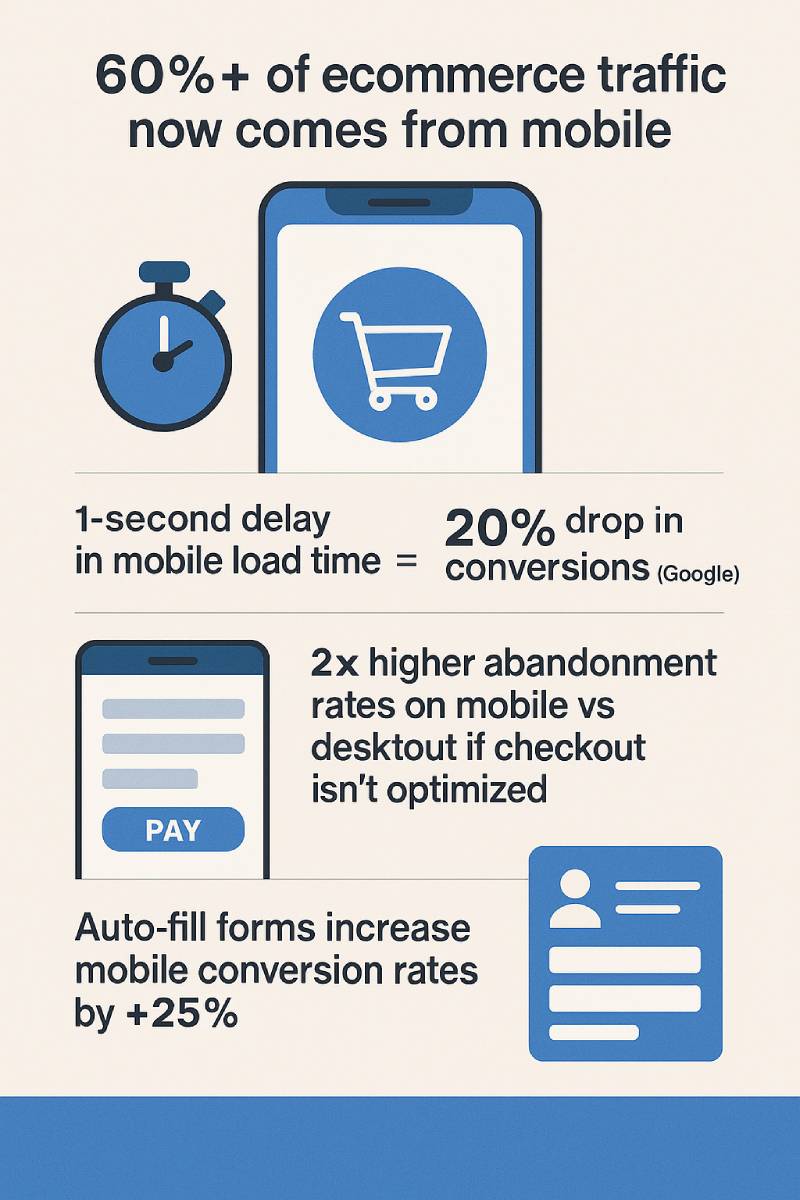
Here’s the reality: over 60% of ecommerce traffic comes from mobile. But mobile also sees the highest abandonment rates. Why? Because mobile checkout often feels like playing Tetris with your thumbs.
-
Mobile-specific friction points. Tiny buttons. Slow-loading pages. Checkout flows that require zooming. These are instant bounce triggers.
-
Design considerations. Make your checkout single-column, big-buttoned, and auto-fill friendly. Keep forms short, and let people use saved payment info from their wallet apps.
-
Speed. Google found that a one-second delay in mobile load time can drop conversions by 20%. One second.
Example: Walmart reduced checkout load time by one second and boosted conversions by 2%. At scale, that’s millions.
Takeaway: If your mobile checkout sucks, your business is bleeding revenue.
If you’re a Toronto or GTA business, don’t let a clunky checkout drain your sales. Let’s fix the leaks and turn browsers into buyers with a mobile-first ecommerce strategy that actually works.
Effective Recovery Strategies Post-Abandonment
Even the smoothest checkout will lose some buyers-it’s human nature. But the way you follow up makes the difference between a lost sale and a recovered one.
-
Emails that help, not harass. Send a reminder within 24 hours. Keep it short, maybe include a small incentive. Don’t spam-two or three gentle nudges max.
-
SMS and push notifications. These cut through the clutter better than email, but timing matters. A push notification an hour later (“Hey, your cart’s still here-ready when you are”) often works wonders.
-
Personalization. Keep it light. “We saved your cart for you” feels good. “We noticed you looked at size M in red” feels invasive. Respect the line.
Example: Adidas saw a 28% recovery rate when combining personalized emails with time-sensitive offers.
Takeaway: Recovery is about reminding, not stalking.
Frequently Asked Questions
1. What are the most common reasons customers abandon checkout in 2025?
Unexpected costs, long checkout flows, poor mobile design, and lack of trust are still the biggest culprits.
2. How many steps should a streamlined checkout process ideally include?
Two to three. Anything more and your dropout rate skyrockets.
3. Are mobile checkout abandonment rates higher than desktop?
Yes, by as much as 10–15%. Mobile users are more impatient and distracted, so friction hits harder.
4. How many payment methods should businesses realistically offer?
At least 3–4 digital-first options beyond credit cards. PayPal, Apple Pay, Google Pay, and one BNPL service are baseline.
5. What timeframe is most effective for cart recovery emails or reminders?
Within the first 24 hours. After that, interest drops fast.
6. Is free shipping still the most effective way to reduce abandonment?
Yes. Customers will even spend more to unlock it. Free > cheap, psychologically.
7. Can AI-driven personalization improve checkout completion rates?
Yes-when used to make checkout faster and easier, not creepier. Think smart reminders, not overbearing surveillance.
Additional resources
- How to Get Alexa, Siri, and Google Assistant to Recommend Your Business
- Canadian E-Comm Brands Are Using AI to Slash Ad Costs-Here’s How
- SEO for Manufacturers & Ecommerce Websites: The 2025 Guide to Dominate Search
- How to Use Predictive Analytics to Improve Customer Retention in E-commerce
Conclusion – Turning Checkout into a Competitive Advantage
Abandoned carts aren’t the disease-they’re the symptom. The real disease is a messy, outdated, or untrustworthy checkout process.
Businesses that fix this-by streamlining forms, being transparent with fees, offering diverse payments, earning trust, and optimizing for mobile-will see abandonment rates drop and sales climb. Those who keep blaming “customers being flaky” will keep leaking revenue.
In 2025, checkout is no longer just the end of a funnel. It’s the heartbeat of your ecommerce business. Get it right, and everything else gets easier.
Why Partner with UnlimitedExposure.com – Toronto’s Go-To Team for Checkout Optimization, SEO, and Local Growth
For nearly 30 years, we’ve been helping Toronto businesses stop losing sales online. Not just “keeping up,” but standing out where it matters: in search results, on social feeds, and most importantly-at checkout.
At Unlimited Exposure Online, we mix the brains of AI with the instincts of real humans to build digital experiences that convert. No jargon. No cookie-cutter promises. Just clear strategies that turn browsers into buyers.
What We Deliver:
-
Mobile-First Web Design & Checkout Optimization – Speed, simplicity, and trust baked into every page so you stop leaking sales at the finish line.
-
AI-Driven Local SEO – Get found in Toronto “near me” searches, on Maps, and by voice assistants like Alexa and Siri.
-
Smart Social Media Campaigns – Content that cuts through the scroll and actually connects with Toronto and GTA audiences.
-
Video & Short-Form Marketing – Reels, explainers, and quick-hit stories that grab attention and build credibility fast.
-
AI Chatbots & Automation – 24/7 lead capture and customer support that feels human, not robotic.
-
Conversion-Ready Content – Blogs, FAQs, and landing pages optimized for Google and voice search while still sounding like a real person wrote them.
-
Email Marketing That Performs – Campaigns that bring customers back-without sounding spammy.
-
E-Commerce That Converts – Streamlined online stores with checkout flows that cut friction, build trust, and turn abandoned carts into completed sales.
Whether you’re tired of abandoned carts, struggling with broken rankings, or launching a new brand, we make sure your business gets discovered-and chosen-in real time, by real people, in the places that matter most.
