
Basic Digital Marketing
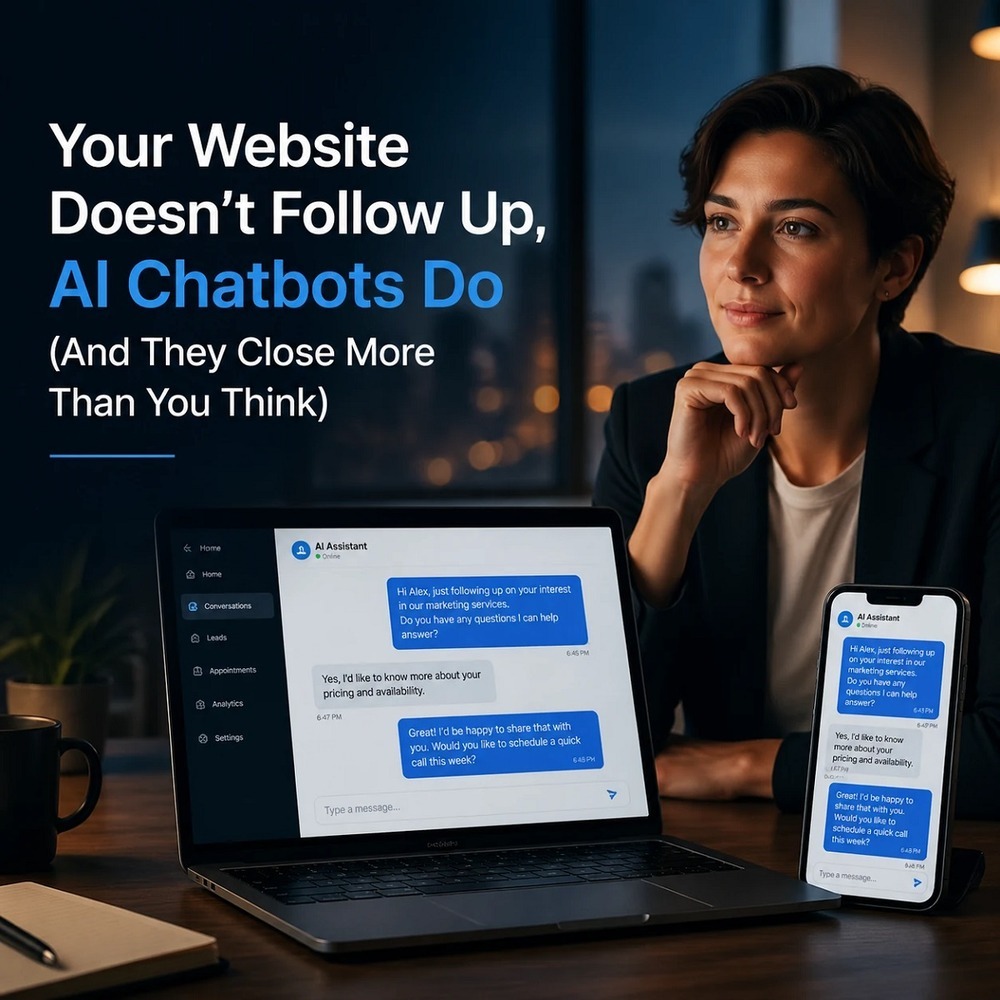
Imagine this scenario: a potential customer visits your website at 11:30 p.m. They browse your services, read a blog post, and consider contacting you, but they hesitate. Maybe they have a quick question about pricing, availability, or whether you serve their area in Toronto. With no immediate response available, they leave.
By morning, they’ve likely contacted a competitor.
This is one of the biggest hidden problems with traditional websites: they don’t follow up in real time. While your site may contain helpful information, it usually waits passively for visitors to take action. And unfortunately, many visitors don’t.
That’s where AI chatbots are transforming online business. Instead of letting potential customers slip away, AI chatbots can greet visitors, answer questions instantly, qualify leads, and even guide people toward making a purchase or booking a service.
In fact, businesses are discovering that AI-powered website chatbots don’t just improve customer experience, they actually help close more deals.
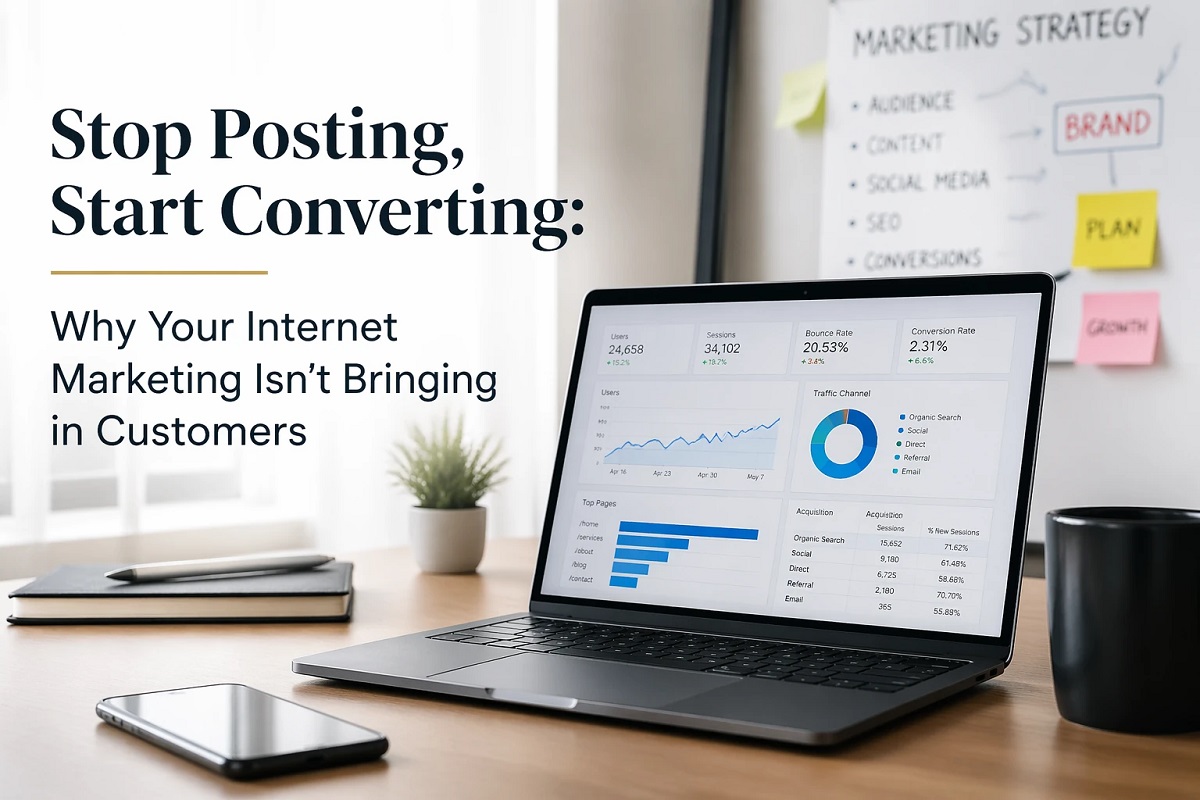
You’re posting.
You’re showing up online.
Maybe even getting likes and views.
But… customers aren’t coming in.
That gap is frustrating, and it’s more common than you think.
This article breaks down why your marketing isn’t turning into real business, and what actually needs to change.
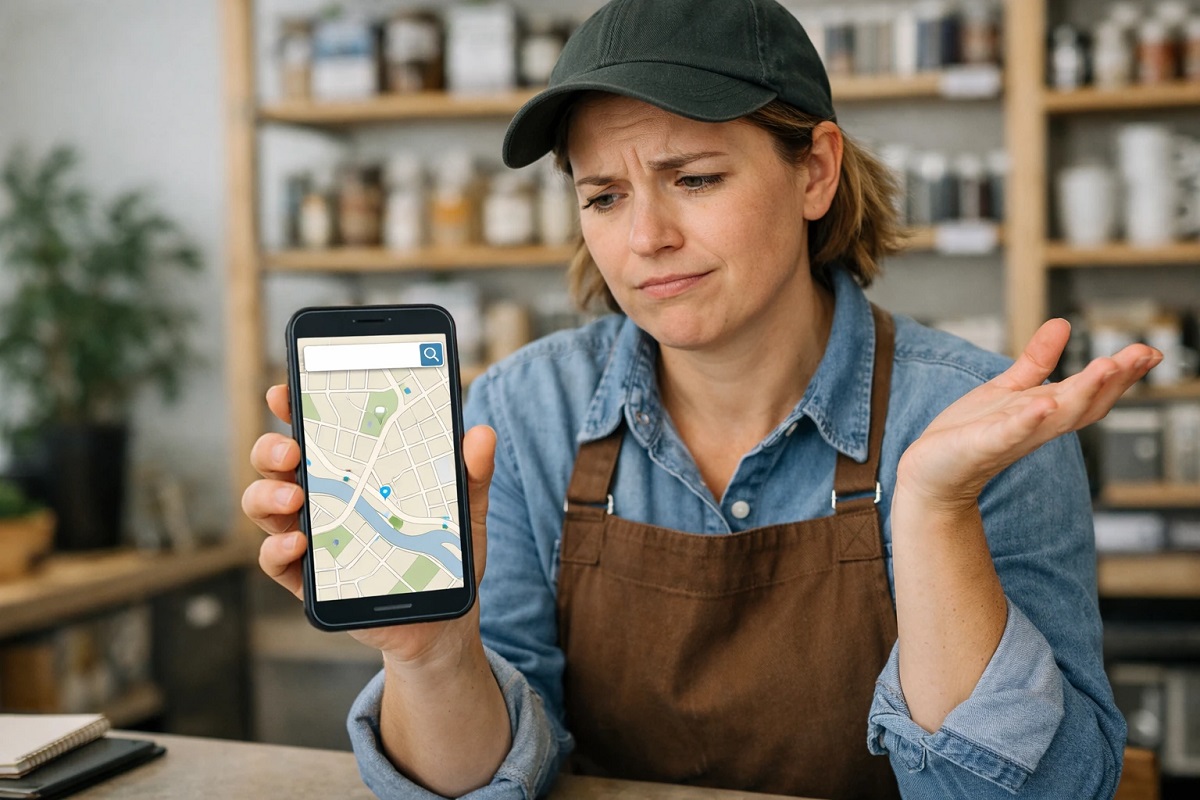
If you’ve ever searched for your own business on Google Maps and couldn’t find it, or worse, saw your competitors instead, you’re not alone.
This is one of the most frustrating (and expensive) problems business owners face today.
Because here’s the truth:
people are searching for your service right now.
Not next week. Not next month. Today.
And if you’re not showing up, you’re not just missing visibility…
you’re losing real customers, real calls, and real revenue.
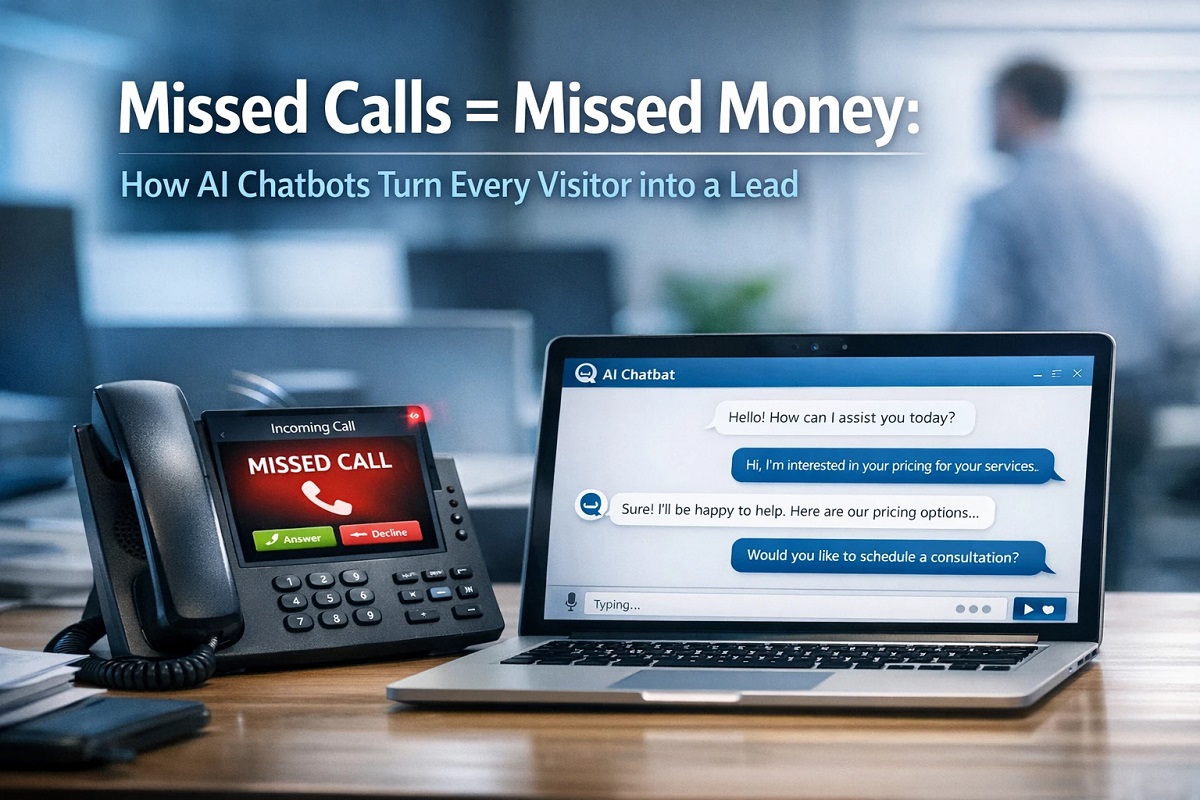
Every business owner knows the feeling.
Your phone rings at a busy moment. A customer fills out a form you don’t see until later. Someone visits your website but leaves before getting help.
By the time you respond, the customer has already moved on.
Missed calls and slow replies don’t always feel like a big deal, but they quietly drain potential revenue. Most people reach out when they’re ready to learn more, request a quote, or buy, and if no one answers, they choose someone who will.
AI chatbots solve this problem by giving every visitor fast, friendly help, 24 hours a day.
In this article, we’ll break down what chatbots really do, why they matter, how they capture leads, and what business owners should know before using one.

If you’ve ever invested in SEO, or even considered it, this question has probably crossed your mind.
You hear one business owner say, “We saw results in 4–6 months,” while another says, “It took over a year before anything really moved.” That kind of inconsistency can feel frustrating, especially when you’re trying to plan growth, budget marketing spends, or simply understand what to expect.
Here’s the truth: SEO is not a fixed timeline; it’s a variable process.
Some businesses gain traction quickly because everything is aligned from the start. Others take longer because they’re fixing deeper issues behind the scenes.
Imagine having an employee who works 24 hours a day, never takes a break, never forgets a task, and instantly responds to customers. For many service businesses today, that employee already exists. It’s called an AI agent.
Across industries, from marketing agencies and law firms to HVAC companies and dental clinics, business owners are discovering that AI agents can dramatically improve efficiency while protecting profit margins. In a time when labour costs are rising, customer expectations are increasing, and competition is fierce, these intelligent systems are becoming essential.
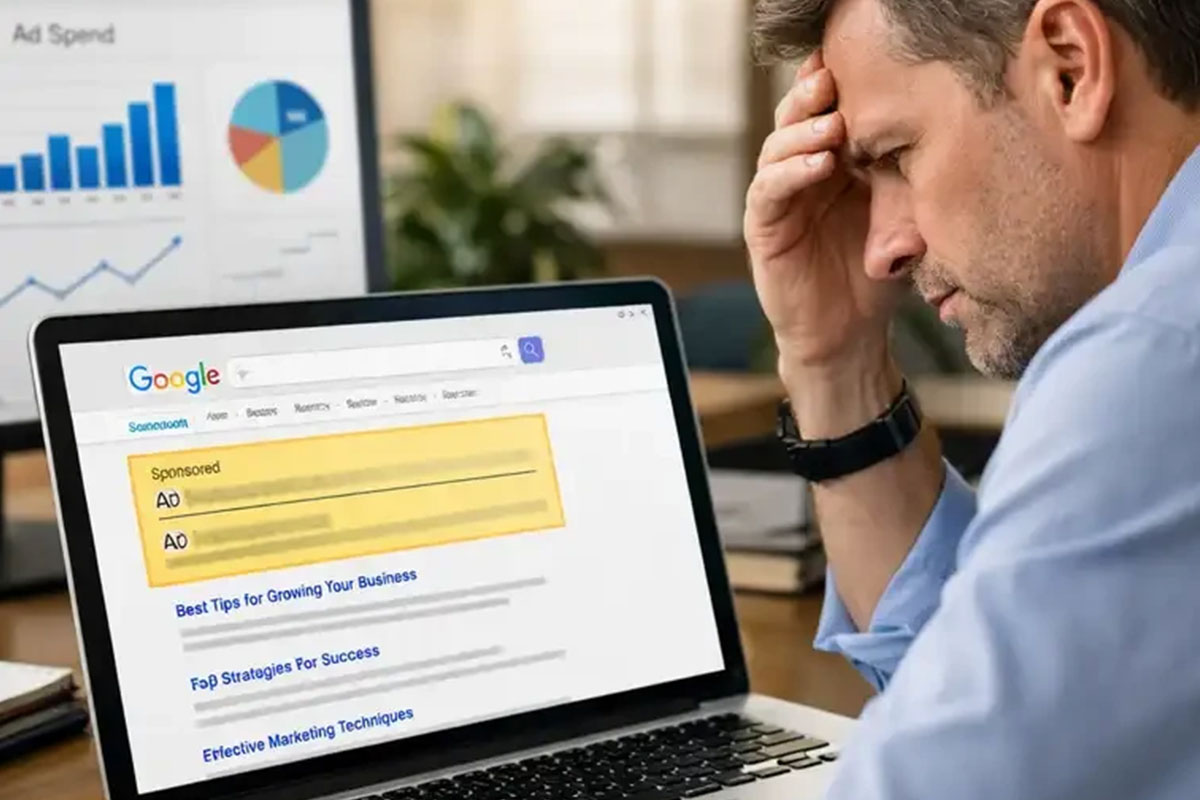
Many business owners assume that if they spend enough on Google Ads, they’ll automatically dominate Google search results.
But that’s not always what happens.
Some companies invest thousands every month in ads and still struggle to appear prominently when customers search for their services.
This can be confusing, and expensive.
In this article, we’ll break down why this happens, what Google Ads actually does (and doesn’t do), and how businesses can improve their overall visibility online.
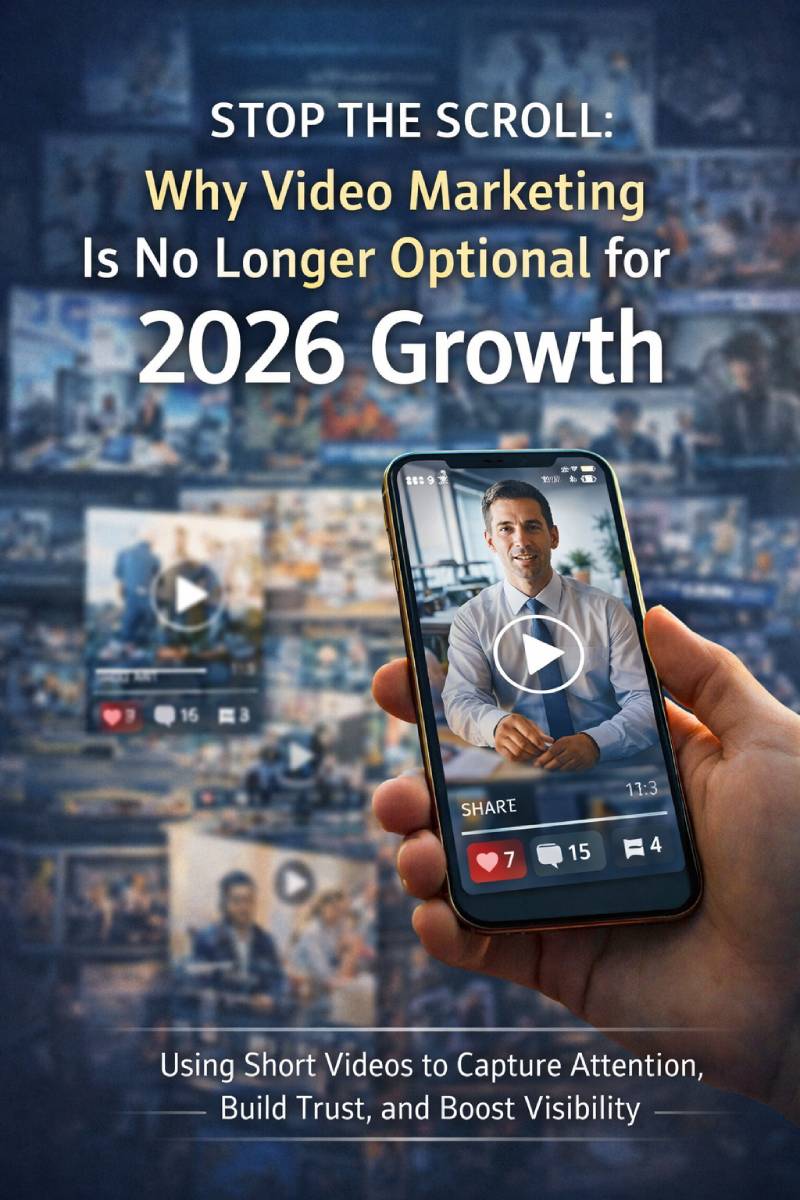
Stop the Scroll: Why Video Marketing Is No Longer Optional for 2026 Growth
Every day, people scroll through hundreds of posts, ads, and websites.
Most of that content gets ignored.
Attention online is shorter than ever, and businesses only have a few seconds to capture interest before someone moves on.
This is where video marketing makes a major difference.
Video can stop the scroll, explain your services quickly, and build trust much faster than text alone. Instead of asking potential customers to read long descriptions, you can show them what your business does and why it matters.
In this article, we’ll explain what video marketing really means, why it has become essential for businesses in 2026, and how you can start using it without making your marketing complicated.
What Video Marketing Actually Means
Video marketing simply means using video content to explain, promote, or demonstrate your business.
Instead of relying only on written descriptions or photos, businesses use short videos to communicate their value more clearly.
For example:
· A landscaping company posts a short before‑and‑after transformation of a backyard.
· A dentist records a quick video explaining teeth whitening options.
· A restaurant shares a behind‑the‑scenes clip of a new dish being prepared.
Within seconds, viewers understand what the business does and what makes it valuable.
That clarity is one of the main reasons video marketing has become so powerful.
Quick summary: Video helps customers understand your business faster than text or images alone.
Why Business Owners Should Care
Customer behavior has changed significantly over the past few years.
People prefer quick, visual information instead of reading long explanations.
If customers have to work too hard to understand a service, they often move on to another option.
Video marketing helps solve this problem.
Here are some reasons it matters for businesses:
· Saves time – A 45‑second video can communicate information that would take several paragraphs to explain.
· Answers customer questions – Videos can address common questions before someone even contacts your business.
· Improves online visibility – Platforms like Google, Instagram, TikTok, and YouTube prioritize video content.
· Builds trust faster – Seeing a real person explain a service feels more authentic and human.
· Helps customers make decisions – Watching how something works often makes people more confident about choosing a business.
For many companies, video has become the fastest way to communicate value.

How Video Marketing Works in Real Life
Many business owners assume video marketing requires expensive equipment or a professional production team.
In reality, most successful business videos are simple and practical.
A basic process often looks like this:
Step 1: Identify common customer questions
Think about the questions customers ask most often when they call or visit your business.
Step 2: Record a short explanation
Create a quick video answering one of those questions.
Step 3: Show real work
Before‑and‑after clips, product demonstrations, or behind‑the‑scenes moments are especially effective.
Step 4: Share the video across platforms
Videos can be used on your website, social media platforms, your Google Business profile, and even in advertising campaigns.
Step 5: Build a content library
Over time, these videos become a valuable collection of information that helps customers understand your business more easily.
Even a small library of helpful videos can significantly improve how clearly people understand your services.

Types of Videos Businesses Should Create
If you’re starting with video marketing, some formats work particularly well for small and local businesses.
· Service explanation videos
· Short videos explaining what a service includes and who it’s best for.
· Frequently asked questions (FAQ videos)
· Answer the most common questions customers ask.
· Before‑and‑after videos
· Especially powerful for industries like landscaping, construction, beauty, and home services.
· Behind‑the‑scenes videos
· Show how products are made or how your team works.
· Quick tips and advice
· Educational videos that help customers solve small problems.
· Customer stories or testimonials
· Real customer experiences help build strong credibility.
These types of videos are simple to create and highly valuable for potential customers.
Key Benefits of Video for Businesses
Video marketing offers several advantages that other types of content struggle to match.
Instant attention
Movement naturally catches the eye when people scroll through feeds.
Faster explanations
Customers can understand a concept quickly without reading large blocks of text.
Higher engagement
Videos often generate more comments, shares, and interactions online.
Stronger trust
Seeing real people builds confidence in your brand.
More personality
Video allows customers to get a sense of your company’s culture and approach.
Reusable marketing assets
A single video can be used on websites, email campaigns, social media posts, and advertising.
Over time, these benefits can significantly improve a business’s overall marketing effectiveness.

How Video Marketing Helps SEO and Online Visibility
Video content also plays an important role in search engine optimization (SEO).
Search engines increasingly prioritize content that keeps users engaged, and video tends to do exactly that.
Video can help SEO by:
Increasing time spent on your website
Visitors often stay longer when they watch a video.
Improving engagement signals
Likes, comments, and shares indicate valuable content.
Appearing in video search results
Google often displays video results prominently.
Enhancing Google Business profiles
Businesses that upload media and video often stand out more in local search.
Supporting multiple platforms
A single video can be used across YouTube, Instagram, TikTok, LinkedIn, and websites.
Because of these factors, video marketing can improve both visibility and user engagement online.
If you’re in Toronto or the GTA and want to understand how video marketing could support your growth, we’d love to talk. We offer simple, honest guidance to help you choose the right direction. When you’re ready, you can book a consultation or just send a quick message to start the conversation.
Common Mistakes and Misunderstandings
Many businesses hesitate to start video marketing because of common misconceptions.
“Video is too expensive.”
Many effective videos today are filled with smartphones.
“It needs to look perfect.”
Authentic and natural videos often perform better than overly polished ones.
“We don’t know what to talk about.”
Start with the questions customers ask every week.
“Our industry is boring.”
Customers still want clarity. Even simple explanations can be extremely helpful.
The biggest mistake is simply waiting too long to begin.
Additional resources
· Facebook vs. Instagram: Which is Better for Your Business
· You’re Doing Video Marketing Wrong - Here’s the Fix
· Social Media Marketing for Small Businesses: What Actually Works in 2026
· Stop Boosting Posts: 3 Meta Ad Funnels That Actually Get You Leads
How to Get Started with Video Marketing
If you’re interested in trying video marketing, start small and keep things simple.
Write down your top five customer questions.
Record short videos answering each question (30–60 seconds).
Film one “day in the business” style video.
Share the videos on your website and social platforms.
Track which topics generate the most interest.
You don’t need dozens of videos immediately.
Consistency matters more than volume.
Frequently Asked Questions
Do small businesses really need video marketing?
Yes. Many customers prefer watching short explanations instead of reading long pages, especially when learning about services.
What types of videos work best?
Simple and practical videos tend to perform best, such as service explanations, FAQs, before‑and‑after clips, behind‑the‑scenes footage, and helpful tips.
How long should business videos be?
Most effective marketing videos are between 30 and 90 seconds.
Short and clear content usually performs best.
Do I need professional equipment?
No. Many successful business videos are filmed using smartphones with good lighting.
Where should businesses post videos?
Common platforms include:
· Your website
· Google Business profile
· Instagram
· TikTok
· LinkedIn
· YouTube
How often should businesses post videos?
Consistency is more important than frequency. Even two to four videos per month can make a meaningful difference.
Summary
Online attention is becoming harder to capture.
Video marketing helps businesses explain their services quickly, build trust faster, and stand out in crowded digital spaces.
The good news is that getting started doesn’t require expensive equipment or complex strategies.
Often, the most effective videos simply answer real customer questions and show real work.
For businesses looking to improve their visibility and communicate their value more clearly, video marketing has become one of the most powerful tools available today.
About Unlimited Exposure Online
If you’re a business owner in Toronto or the GTA looking for practical ways to grow online, Unlimited Exposure Online is here to help. Our team works with local businesses to turn their websites, content, and social media into real growth channels—not just online presence, but measurable results.
Here are some of the ways we support local businesses:
· Video & Influencer Marketing – Create engaging content that builds trust and connects your brand with the local community.
· Local SEO – Help your business appear in Google search and Google Maps when customers in Toronto and nearby areas are looking for your services.
· Web Development – We design fast, user‑friendly websites that make it easy for visitors to book services or make a purchase.
· AI Chatbots – Capture more leads with smart chatbots that answer questions and handle inquiries 24/7.
· Google Ads Management – Reach people who are actively searching for your services and turn clicks into real customer calls.
If you’d like to explore how these strategies could support your business growth in Toronto or the GTA, you’re always welcome to reach out and start a conversation with our team.
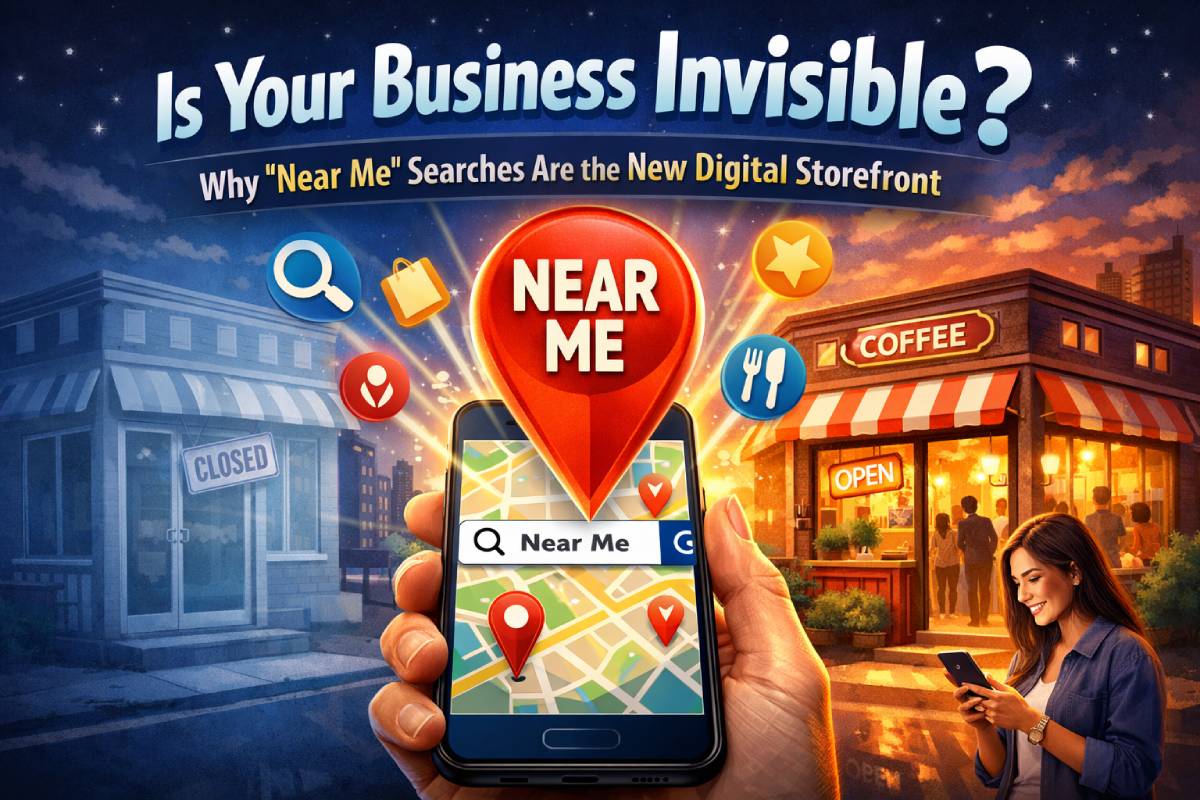
If your customers don’t see you online, it doesn’t matter how good your business is.
Today, most people don’t search by typing a business name- they search by typing a need. Something like:
· “Coffee shop near me”
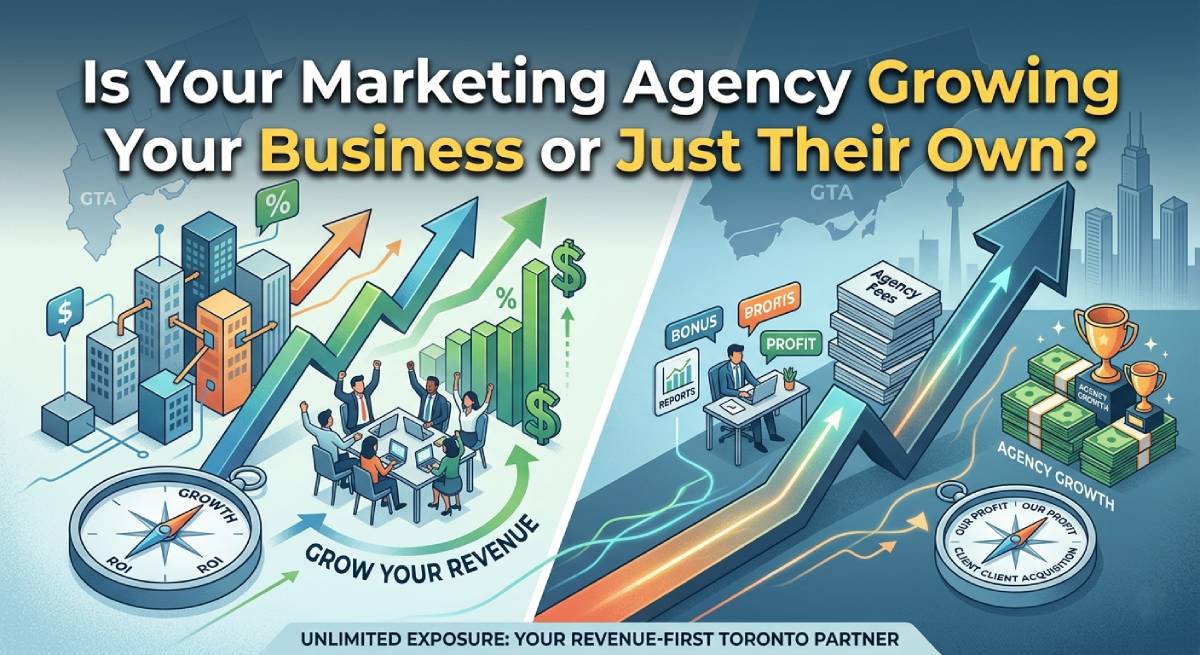
Introduction: Is Your Marketing Agency Growing Your Business or Just Their Own?
You just received your monthly report from your digital marketing agency, and the charts are all pointing up. They are telling you about "brand awareness," "impressions," and "engagement," yet your phone hasn't rung in three days. You feel a pit in your stomach because while the agency is celebrating, you are wondering how you’re going to justify next month’s retainer.
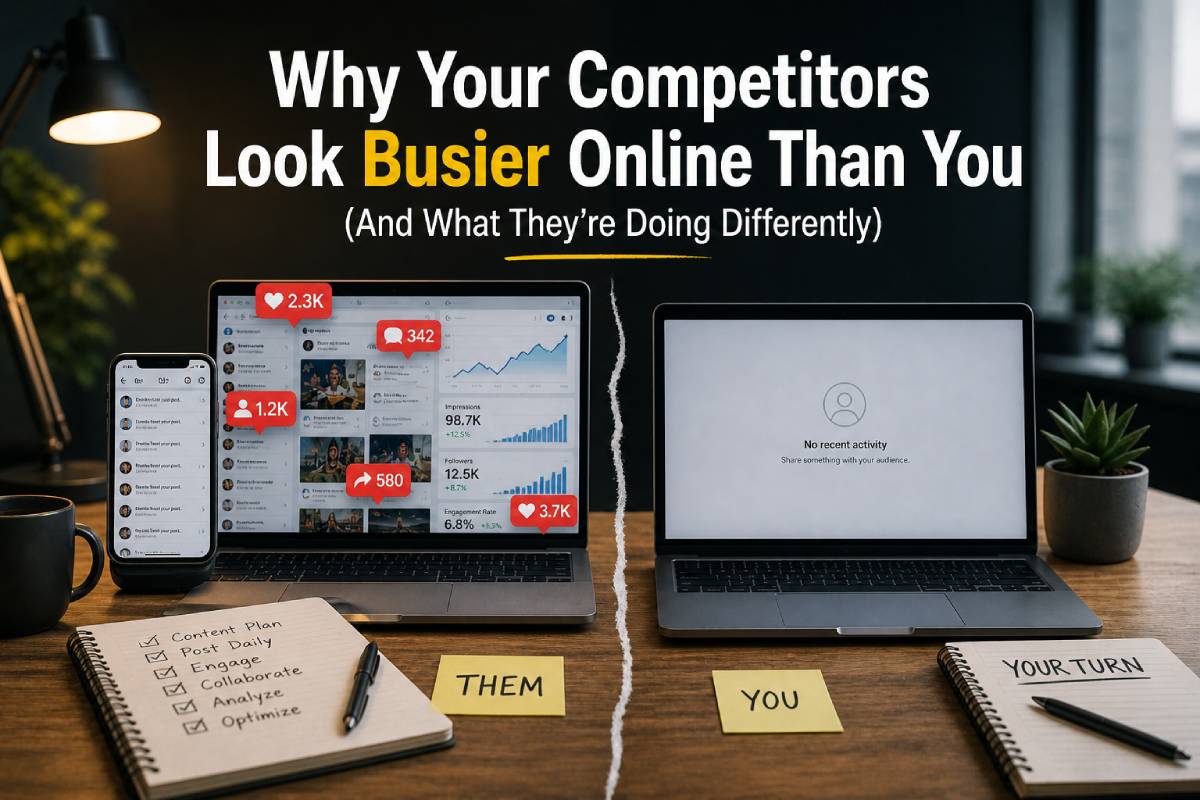
If your competitors look busier online than your business, it is rarely because they are spending more money on advertising. Most of the time, they are simply building trust more effectively. In Toronto, customers often choose businesses they recognize from reviews, local creators, or trusted recommendations. When a business appears repeatedly in places people trust, it naturally looks more active and more popular—even if the marketing budget behind it is not much larger.

Many business owners in Toronto and the GTA have a similar fear. They think that if they want to start video marketing, they need to hire a Hollywood-level film crew. They worry about lighting, expensive cameras, and professional editing. This fear leads to "The Perfection Trap."
While you are waiting for the "perfect" time or the "perfect" budget to film a commercial, your competitors are already winning. While you delay for polish, they are capturing attention daily with imperfect but visible content.
They are using their smartphones to record quick, 30-second updates. They are showing behind-the-scenes looks at their shops or clinics. Every day you stay silent because you want to be "perfect," you are leaving money on the table. In a fast-paced market like ours, being first is often better than being perfect.
Let’s say this clearly.
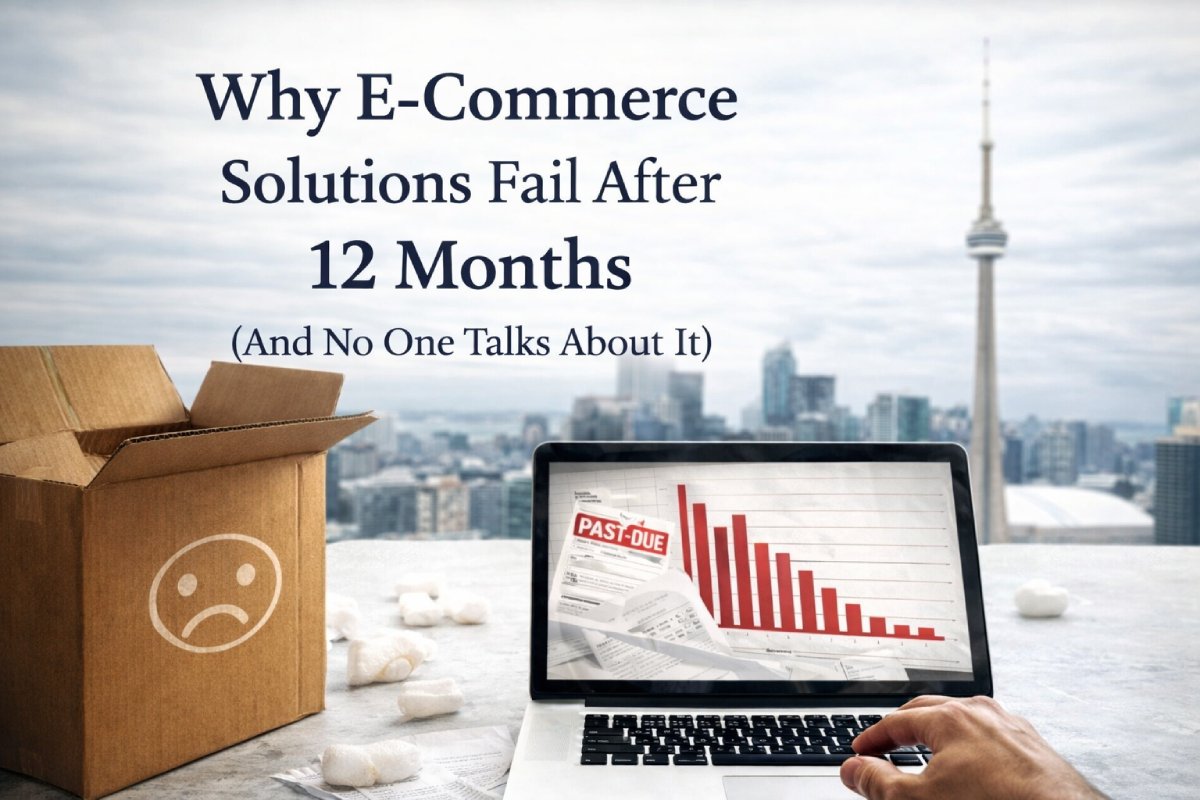
Most e-commerce solutions don’t fail at launch.
They fail quietly… about a year later.
Not with drama.
Not with a crash.
Just slow leaks.
Conversions dip.
Ad costs rise.
Customers hesitate longer.
Margins tighten.

In early 2026, my video process was a mess. It felt like I was running a marathon in hiking boots. To get one simple video out, I had to:
-
Wait days for a script.
-
Wait weeks for an editor.
-
Pay thousands of dollars before I even knew if the video would "click."
The "Human-Only" way was becoming a luxury my bank account didn't like. I realized that if I didn't try AI, my competitors who were posting 10 times more than me would simply drown me out. I wasn't trying to "replace" people for fun; I was trying to keep my business alive.

Something strange is happening to business visibility online.
Many brands are posting more often, creating more content, even experimenting with AI tools yet their reach keeps shrinking. Engagement feels unpredictable. Posts that once performed well suddenly disappear into the void. Audiences that took years to build barely see updates.
Most businesses assume the problem is competition, budget, or “the algorithm acting weird.”
But the uncomfortable truth is simpler:
Your 2025 strategy is colliding with a completely different 2026 ecosystem.
The rules didn’t just change the entire logic of discovery, distribution, and attention shifted.

You’re busy.
People recommend you.
Customers are happy.
Your phone rings. Your inbox fills up. Someone says,
“My friend wouldn’t stop talking about you.”
So why does Google act like you don’t exist?
Here’s the uncomfortable truth most businesses don’t like admitting:
being good at your job and being visible online are two completely different games.
And most local businesses are winning the first one…
while quietly losing the second without realizing it.
You didn’t do anything wrong.
You just assumed Google would eventually catch on.
It doesn’t.

For years, businesses were told the goal of SEO was simple: rank higher on Google.
Get more keywords.
Build more links.
Reach page one.
That advice is no longer enough and, in many cases, it’s misleading.
Today, Google isn’t just ranking businesses.
It’s choosing which businesses to recommend, surface, and trust often without users ever seeing a traditional list of results.
If your business isn’t being chosen, rankings won’t save you.

If you feel like AI tools are multiplying faster than you can keep up, you’re not imagining it.
In 2026, businesses aren’t asking whether to use AI anymore - they’re asking which AI actually helps them work faster, smarter, and cheaper without creating new problems.
ChatGPT, Gemini, Grok, and DeepSeek all promise productivity. But the real question is simple:
Which one actually fits your business?

Social media marketing didn’t stop working - the rules changed.
For small businesses in Toronto and the GTA, success in 2026 isn’t about posting more or chasing trends. It’s about being clearly understood by customers, platforms, and AI-driven search and recommendation systems that now influence which Toronto and GTA businesses get discovered.
This guide breaks down what actually works for small businesses today, focusing on clarity, trust, and consistency instead of hype, hacks, or influencer-style tactics that don’t fit real operations.

For years, backlinks were treated like traffic pipes.
More links meant more clicks. More clicks meant better rankings.
That logic worked… until it didn’t.
In 2026, customers don’t always click anymore. They ask.
They ask ChatGPT. They ask voice assistants. They ask AI-powered search engines to recommend a business.
And that changed what backlinks are actually for.

Most businesses think their website is doing its job when it gets traffic.
But traffic doesn’t pay bills. Conversations do.
People visit your site with questions, uncertainty, and intent.
If no one responds in that moment, they leave - and often never come back.
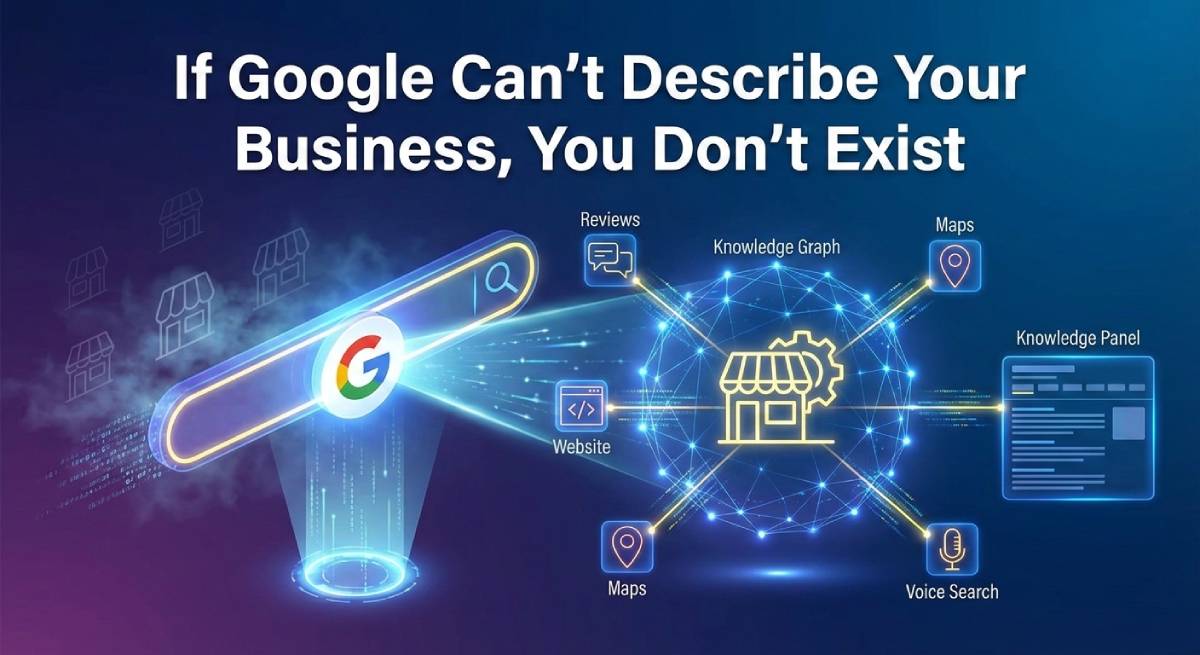
Most business owners assume that if their company is on Google, they exist.
They have a website.
They show up on Maps.
They even have a few reviews.
Yet customers still don’t call.
Or Google recommends a competitor instead.
So why does this happen?

Why Posting More Isn’t Working Like It Used To
For years, content marketing followed a simple formula:
create content, post it consistently, and wait for engagement.
That approach worked for a while.
So why does marketing feel harder now, even when you’re posting more?

Sales and marketing teams are expected to work faster, respond smarter, and operate with precision. Yet hours are often lost answering repeated questions, logging data manually, and chasing follow ups.
That’s were integrating chatbots with Customer Relationship Management (CRM) systems changes everything.

In today’s fast-paced digital landscape, businesses in the Greater Toronto Area (GTA) are constantly looking for new ways to build trust, connect with their audience, and boost conversions. Enter User-Generated Content (UGC)-the game-changing marketing strategy that’s revolutionizing how brands engage with their customers.
But here’s the catch: not all UGC is created equal. While the idea of letting local creators share their experiences with your brand sounds great, many businesses struggle to find the right influencers, brief them effectively, and repurpose their content for maximum impact. This is where strategy comes in.
In this blog, we’ll walk you through the steps to find, brief, and repurpose local GTA creators’ content, so you can harness the full power of UGC. Whether you’re a restaurant in Toronto, a clinic in Vaughan, or a fitness brand in Markham, learning how to tap into authentic, locally-generated content can help you gain the trust of your target audience and drive real results. Let’s dive in!
