
Basic Digital Marketing

Yes, it’s true. The rules of influencer marketing are expiring. What we’ve known for years to work with influencers online is changing a little bit, as more influencers than ever are out there promoting on social media. As good as this sounds, opportunities to fail and spend more money than you need to has never been more present. Don’t believe too-good-to-be-true promises by influencers who probably won’t deliver. Here’s what to watch out for and how to avoid failure.
The challenge
There’s a lot of influencers out there, some micro and others macro, some who deliver and a lot who won’t. Tapping into influencer marketing is no “get rich quick” scheme. It takes research and having realistic expectations about what you can accomplish.
Finding the right influencer is a brand’s biggest challenge. They should have someone who is relevant and trendy among said brand’s intended audience. A brand can also encounter a challenge in whether an influencer is actually who they say they are. A lot of influencers will promote high ROI however not all can deliver on this.
As the weather changes, so does consumer behaviour. Any experienced marketer will tell you, your marketing should match consumer behaviour and so as the weather changes, so should one’s marketing.
As we embark on what’s sure to be a hot August, the temperature rise is a chance to revitalize your summer digital marketing plans and bring in a strong finish on the season. Regardless of whether you run a swimsuit company and are in your busiest months, or are a winter coat manufacturer in a slow buying period, summer’s an opportunity.
What changes in the summer? Consumers are taking more vacation time, they’re outdoors, they’re spending more time on the mobile than they are at their desk, they’re traveling, and they’re looking for fun, entertainment, and new experiences. Where should your brand start in summer digital marketing? Well, there are 3 adjustments we think every business should make.

Twitter and other social media sites exist as universes in a sea we know to be the Internet. Within each, there are landmines waiting to be blown. Brands have to carefully navigate in tone, reactions, and general best practices any time they post a marketing message, a customer service reply, or a message of any variety.
How a brand avoids falling trap to a social media PR nightmare comes down to knowing what you need to do when there’s a panic and knowing what’s appropriate or inappropriate in a situation. The right tone can nip an issue in the bud before it becomes a larger problem or can avoid it altogether.
Hire a social media expert.
The best approach to managing your social media marketing and responses? Hire someone experienced. Don’t put someone unqualified to handle your public brand perception. Who you choose to oversee your social media will have full control over your brand’s responses to customers, brand marketing, and have the ability to mess things up BAD. Be sure you have someone you trust or a digital marketing agency in that role.
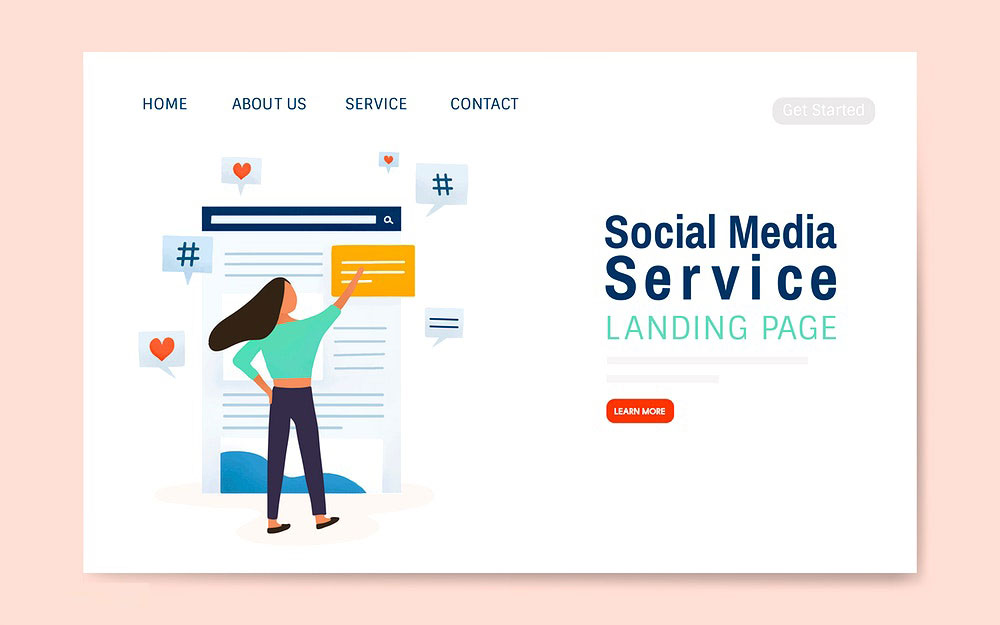
Once a customer’s arrived at your landing page, your job is to take someone who isn’t ready to buy and to show them the value a given product, service, or brand can provide. Landing pages are very important in driving revenues and work best when brands are able to entice their customer with an enticing offer that’s too good to pass up.
A great landing page will accomplish any 1 of 5 things.
Get a user to make a purchase.
Encourage a user to click onto another page.
Get a user to learn something or leave feedback, such as rating a product or service, or posting a comment.
Get a user to tell a friend about your brand, products, or services, or to share your brand’s page on social media.
Encourage a user to give their permission for you to follow up with them, usually by phone, email, or otherwise.

A lot goes into crafting a creative, effective content marketing strategy. For example, Google’s algorithm strategy is based around the trust and authority of the host domain, link popularity of a page, anchor text of external links to the page, on-page keyword usage, site speed and mobile responsiveness, and more. It’s easy to get carried away with everything that goes into it. Sometimes, the best approach is one that’s back-to-basics. Here are 7 SEO mistakes your blog is probably making or has made in the past and how to fix them.
Paid links
Accepting paid links on your site is a bad idea. Search engines see it as a strategy to artificially increase SEO rank and they won’t hesitate to penalize your site based off that. Avoid shortcuts. Use SEO blog marketing strategies you know aren’t putting your site at risk.

Powerful and results-driven, influencers are a marketing strategy a lot of brands love to tap into. Influencer marketing is using social media personalities, bloggers, industry analysts, and trendy online accounts to push your brand, products, or services to their followers. ‘Word-of-mouth’ is more or less offline influencer marketing, as a comparison. About 94 percent of influencer marketing campaigns are considered effective.
For yourself, or someone who’s new to influencers, look at who’s getting attention online and develop relationships with influencers you think you can use. Offer them a sample. You can introduce your brand to a whole new subsets of people and whole new audiences by partnering with the right influencer. They don’t need to be world-famous celebrities with millions of social media followers. Even micro-influencers work, as long as their followers are engaged with their content.
Half of millennials are using an Ad Blocker
Every year, the number of people using ad blocking increases which means less and less ads get seen. Even when ads show up, people are so accustomed to seeing marketing that it just gets ignored. In fact, ad-block extensions are blamed for an estimated loss of $22 billion in global revenues, as of 2015. Influencer marketing cuts through the noise of digital marketing and the inundation of ads the general consumer has to contend with. This is one reason to consider it for your brand.

Brands who don’t fully embrace a results-driven marketing plan aren’t going to see any sort of success. Any short-term spike in the numbers, if there even are any, will fade and with that, you will be essentially stuck with an underperforming marketing strategy. To rise to the top and move beyond the limitations you may be experiencing with your current digital marketing, here’s change in a nutshell.
Customer segmenting.
Every business has different segments in their customer base. Recognize the differences in your audience and create segmented marketing to target them the correct way. For example, you wouldn’t market to a 17-year old the same you would a 47-year old. Depending on how segmented your audience is, you may have a lot of work ahead in getting to know your customers, building out consumer personas, and pursuing them with the most effective method.
Brand reputation.
Part of the reason why brands can fail can have to do with a lack of awareness and a negative brand reputation. It’s easier than ever to start a business which means consumers are more doubtful about unknown companies. They’re also hesitant to commit, due to the number of options as competitors crop up monthly. To bring success, you must prioritize growing awareness in the marketplace that you exist and in creating a positive atmosphere around your brand. Accomplish this through starting an email subscriber list, multi-platform social media marketing, and re-focused content marketing.

Whether people share the content you’re putting out can make or break a social media page. At worst, if content’s inappropriate, offensive, or outdated, it can give your brand a permanent mark against it. Ideally, great content will not only connect with an audience but build positive associations to you which in turn, increases your revenues. Is your content not shareable – here’s how to change that.
Is there any value?
Bottom line, is your social media content useful? If it doesn’t provide value to your customer, they won’t hesitate to ignore it. People want to share what’s helpful to others. In fact, 90% of social media users will assess the usefulness of a piece of content prior to sharing it. Understand what your customers want and what’s of value to them. With this information, you can then identify social content marketing strategies to deliver that to them.
Inspire emotion.
Write and deliver content that sparks an emotional reaction. Think of the ads that resonate with you. Chances are those ads either tug on the heartstrings, enrage you, or motivate you in some way at an emotional level. Content on social media evoking emotion is always more likely to be shared, even if what you’re tapping into is anger or anxiety. That said, know that content that’s angry is less likely to be shared than content which is amusing. All in all, work to people’s emotions.

More video sharing platforms are popping up with every year that passes. Video is the future of content. There’s no arguing that. As Internet speeds increase and tech advances, there will be more video conferencing and video communication than ever before.
From a marketing standpoint, now’s a premiere opportunity to create and post videos that resonate with your audience. Interested in learning more about video marketing? Here’s some expert advice to get you started.
Using your analytics
Before you post your first video, all the data you’ll need to judge a video’s performance on will come from its analytics. Note who’s watching it and monitor engagement levels between multiples. You may have some videos that are runaway hits while others struggle. Within months, you can drastically improve a video marketing campaign just by following the basics of what analytics are saying.
With no expiration or time sensitivity to it, evergreen content is content that continues to be relevant for an extended period of time. From the moment you publish and it’s live, evergreen content begins getting clicks, and on and on it goes. To build a site with enough content momentum to get traffic to your brand for potentially years, here’s exactly how you do it.
Why to make evergreen content
There are 5 key reasons why evergreen content should be a priority, no matter the category your brand is in. Evergreen content will drive sales prospects, continually drive traffic to your site, improve search engine rankings and help tremendously with SEO marketing strategies, help to position your brand as an authority and provide you with a growing collection of content to post across social media.
What’s the best type of evergreen content?
Evergreen content needs to be always relevant and fresh for the reader. Not all content is. A lot of content that goes trending is relevancy with a deadline, sometimes lasting as little as a few hours. To build evergreen content, it needs to have value. Lists, tips, how-to and instructional content, product reviews, and videos in this same vein contributes a value that can span six months, a year, two years, or longer. This is what you want to work with as a starting point.

Updated algorithms on search engines like Google, Bing, and Yahoo have made SEO more complex and complicated than ever. Add to that key influences on SEO algorithms like site structure, site speed, whether a site is mobile optimized, and the quality of one’s content marketing, and you have a varied web of things that can play a role in where you rank.
A lot of marketers and brands get caught up on the details, leaving behind general SEO basics. Unfortunately, it’s usually the basics that will sink you or sabotage a campaign. If you’re missing even one of the basics, this can have a negative draw on your search engine optimization. Needless to say, these are 3 things you’ve absolutely got to get right. No excuses!
High quality, engaging, and unique content.
Content makes or breaks a campaign. If it’s all paint-by-numbers, low quality, and stuff others have written about, you’re not in good company. Some general tips to creating effective SEO content marketing is to write for the people and not for search engines, to write long and meaningful articles, and to forget about keyword density. Remember, you are competing for clicks. Build content that is comprehensive, that takes a different spin on a subject, that fills in content gaps others have forgotten about, or on content formats that aren’t widely explored.

You may be nervous about tapping into email marketing automation and you’re not alone. Automating anything sounds bad but not only will it save time and money, but it also works with the right messaging.
For eCommerce businesses using email to sell product, there’s significant opportunity here to acquire leads, convert those to sales, and cultivate repeat customers, but again you need the right messaging. By programming these messages into your eCommerce email marketing campaign, you’ll be ready to leverage your subscribers to generate more revenues.
Welcome message
When someone joins your email subscriber list, set up a ‘welcome message’ to send right away. This is the first email your subscriber will receive from your brand. It’s first contact. Explain things such as how often email messages will be sent, what kind of content they may find, any advantages or benefits to being a subscriber, and how to contact if they have a question. In addition to a website link, include social media links and maybe, a special discount as a thank you!

If your web design isn’t jiving with your SEO, that could be a problem. Too many brands unknowingly sabotage all the work they put into their SEO with poor web design. If you’re inexperienced with SEO or web design, to rank high on search engines like Google and Bing, design on the back-end and site infrastructure is just as important as what you put on the page.
What do SEO ROI analytics say about how well your strategy is working? If numbers are low, the problem may be with the design of your page. For example, is your bounce rate high? That’s indicative that people are clicking but they’re not necessarily finding what they came to your website for. Are certain pages performing better than others? Is there a spike somewhere in referral traffic? These are signs your SEO is working. Are you noticing any difference between devices? Is your website mobile responsive? If not, you could be giving away a lot of traffic on smartphones, tablets, and other mobile devices.
Web design is all about connecting the dots. That’s how easy it should be to navigate. The navigational menu should be intuitive, as should the site infrastructure. Subtle design choices influence SEO in a big way. The impact all this has on-site speed is also something to be noted. Slow websites aren’t going to rank well on SEO, even if your content marketing is top notch and keywords optimized. You want your site to be easy to crawl, use, read, access, and find. When any of these elements are out-of-place, this makes your SEO targets more difficult to achieve. Recommendations with your web design for SEO include the following.

Before there was Instagram, there was Pinterest. Still going strong, Pinterest is an image-driven social platform with over 100 million active users. In terms of reaching audience, Pinterest is a promising social media marketer’s playground. Here are some of the secrets of Pinterest marketing, from the experts who use the platform on a daily basis reaching literally hundreds of thousands of people.
Interesting, high quality content
To succeed in social media marketing, you need your posts to be high quality and interesting. Publish images people want to see and engage with. There’s a lot of noise online. Don’t simply add to it. Be unique. Think of your followers and build a niche you know they’ll love. Your photos should also always align with the link you associate them with.
The basics of a Pinterest post
Three things make up a successful Pinterest social post – an eye-catching headline that’s easily searchable, a high-resolution image, and engaging copy. Ensure your image is properly sized, appropriate for your brand, and specific to your Pinterest audience. Just like with Instagram, no one’s going to click on a Pinterest post that doesn’t immediately catch their attention.
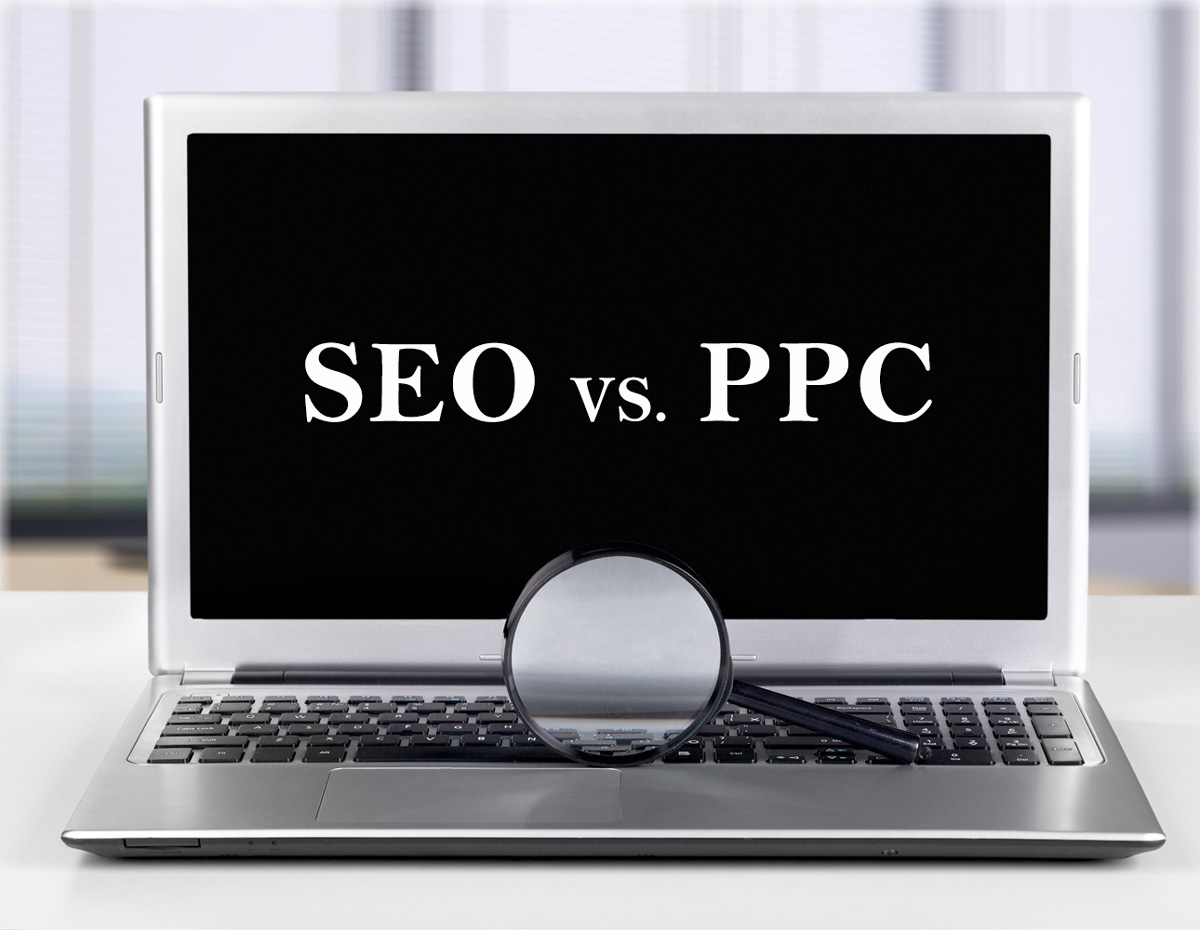
Search engine optimization (SEO) or pay-per-click advertising (PPC) both have their place but which is better for your business – well, this depends. PPC pops a number in the immediate but SEO provides long-term momentum that you’ll never find paying for every click unless your budget’s bottomless.
The primary difference between SEO and PPC is that SEO relies on organic traffic that you don’t need to pay for while a PPC strategy essentially pays Google to prioritize your web page at a higher search engine rank than it deserves. PPC is pretty self-explanatory, in this sense. You pay them, you give them the ad, and they post it relevant to your audience.
SEO’s a little more complex, relying on algorithms to rank your website. SEO relies on website quality, the quality of your content, whether you are mobile responsive, and product or service ratings and reviews. With SEO, everyone wants to get to the top spot on search results. In fact, more than 50% of people will click on either the first or second search result when searching a term.
Thankfully, if you pick the right SEO keywords, you can accomplish a lot with this. As you zero in on certain keywords and incorporate location-based keywords, you can find SEO strategies to successfully get you to top spots. It’s not all keywords though. A lot goes into ranking websites. Google wants the best, most accurate search results and they invest a lot into getting this, considering factors like backlinks, site speed, image optimization, and language markup to decide the quality of your website.

Within the next year, Netflix is going to see an increase in competition – in a big way – with new platforms launching and existing competitors beefing up their content offerings. HBO Max, Apple TV+, Disney+, DC Universe, Comcast’s unnamed service, and others are readying to go to war with Netflix.
Subsequently, Hulu, Amazon, and YouTube are already firmly established as streaming services. There’s also streaming components in development at NBC, ABC, CBS, FX, Showtime, and elsewhere. It’s no secret that every week, Netflix has another show pulled from its archives further reducing the platform to its homegrown collection of content.
Naturally, you may think things don’t look good for Netflix. You’re not entirely wrong. We simply don’t know what’s going to happen once these services have launched and the uncertainty surrounds Netflix’s market share being threatened.

Social media marketing is easily the most competitive category of digital marketing. The rules change, trends move quickly, and what works now may not work the same six months from now. This summer, there’s a lot of new social media data coming out highlighting how users are behaving on platforms like Instagram and Facebook. Here’s the most important social media marketing statistics to keep in mind when building your social media plan.
77% of consumers are more likely to buy from a brand they follow on social media
Consumers familiar with a brand on social media are more likely to buy from it compared to a brand that isn’t on social media. Do yourself a favor and register accounts across popular platforms relevant to your audience. Start building brand awareness through social media marketing.

Promos, sales tactics, and coupons don’t work today like they did with audiences fifty years ago. Telling a story and sharing your brand’s narrative, authentically and openly, matters a whole lot more. Some estimates suggest when a brand tells their story well, they can increase value on a product or service by up to 20 times over. From video to social media, storytelling in digital marketing encompasses a lot. Here are a few different storytelling types to compel your future customers with.
Short videos
Fresh, inventive videos are trending in digital marketing because of their effectiveness at appealing to consumers. Deliver your message in short ads of 6 to 12 seconds. Don’t bank on attention spans being longer than that. Use short videos like this on Facebook, YouTube, and Instagram. Don’t hesitate to experiment with slightly longer videos to see what works for your customers.

An entangled web of endless complexities. That’s digital marketing in a nutshell. Everyone’s an expert and there are literally hundreds of strategies one can push to resonate with your audience. While there’s always lots of advice to give on digital marketing, you really need to trust who’s giving it. There are a number of strategies that either don’t work, never worked, or shouldn’t be used. As a small business or brand looking to make a good impression on interested parties, marketing strategies like these should be avoided.
Generic video
If you’re going to do video marketing, make it mean something. Don’t use stock content, generalized business language, and overproduced background music. Over 91 percent of consumers have watched a video about a brand they care about. Consumers know what’s a good video. Create video content that’s unique and which accurately represents your brand.

Instagram is a digital marketer’s dream, with instant access to millions of people ready to communicate and connect with brands. Instagram marketing is growing, as brands seek new ways to make use of the platform and to reach the most amount of people. Looking ahead a little bit, there’s a lot to look forward to.
Instagram is expected to continue growing for the foreseeable future, accommodating more users and bring more social media marketing opportunities to it. For the vast majority of Toronto digital marketing agencies, Instagram is very much being seen as the most competitive battleground there is. Twitter’s struggling to stay popular except for in a small collection of industries and interests, LinkedIn’s great for B2B marketing but doesn’t have the built-in B2C appeal, Facebook continues to be in the news for privacy breaches and issues with its news content, and sites like Snapchat continue to struggle to break through to the next level. Instagram’s succeeded where others have failed, supplanting Facebook as the #1 social platform.
So what does this all mean for digital marketing? If you haven’t yet established an Instagram presence, do it now. No matter what industry you’re in, an Instagram account is a must-have if you’re invested in your success online. Among the Instagram tools that are expected to see increases in marketing value, where a lot have focused on is in Instagram Stories. Instagram Live is also growing although few brands are using the live stream element. Shopping tags, checkouts, and IGTV are all proving to be undercurrents where some brands may find success as well.

Are you looking to get the most from your SEO digital marketing campaign? A lot of people hear about search engine optimization and they think it’s not something they have to pay for. Unfortunately, they find out the hard way how wrong this attitude is. A weak SEO effort provides you a weak result – the same thing can be said about various other aspects of digital marketing. If you want results, it’s going to cost either in time, money, or effort.
A recent study analyzing clients of SEO services found that those that spent more were more satisfied with the results than clients who spent less. The average American small business spends approximately $497/monthly on SEO. Consider this to what your budget is for SEO and subsequently, the results you may or may not have experienced. Let’s be clear, if you’re completely satisfied with your SEO numbers right now, don’t change a thing. Just keep going. If you’re not happy with what you’re seeing though, it’s likely a case of not doing enough.
A study like this may communicate a message of, ‘if you spend more, there are bigger results achieved.’ This isn’t automatic though. Even on a small budget, you can do a lot if you’re willing to work. You need to know-how, which means you need to hire a Toronto digital marketing agency that knows what they’re doing with your money.

Seniors don’t get their fair shake in digital marketing. So much focus is on users in their 20s and teens that older audiences are consistently ignored by a lot of the talk and trends. Regardless, they exist and seniors are using the Internet in bigger numbers than ever before. Businesses targeting seniors have a lot to gain by chasing seniors.
Here are two statistics to keep in mind. More than 25 percent of people over the age of 75 are using tablets regularly, and more than half of seniors between 65 and 75 have social media profiles. Senior populations are plugged in way more than we think they are and they’re ready to spend their money. If you have products or services appropriate for a senior audience, here are a few results-driven digital marketing strategies to put to use for yourself.

We go to bed and we set our smartphone beside ourselves. We go to work, we take our phone. We leave the house to go pick up some groceries on the weekend or to run some errands and we take our cell phone. It’s with us wherever we go, acting as our watch, our alarm clock, our notebook, and smartphones continue to be a major social tool allowing us to stay in touch with friends at the press of a thumb.
From a marketer’s perspective, smartphones are a goldmine. Here’s why. Over half of all website traffic globally comes from mobile devices, surpassing desktop usage. Digital marketing success involves going where your audience is. If they’re on mobile, the focus needs to be on creating mobile content to reach said audience. Here are a few simple ways to take your website or marketing materials and to flip them to become more mobile-friendly.
Text that can actually be read on mobile devices.
Optimize your text. On desktops, it’s common to follow an F-shape in web page design where your written content is set up in an ‘F’ across the screen. On a mobile device, 68 percent of smartphone users look to the center and top half of a mobile page while 86 percent look across the upper two-thirds. This is where your text should sit.
You also want a headline that doesn’t take up the whole of the screen, have a summary at the start and use images, sub-headers, white space, and simple words. Unlike a desktop user, you don’t know where a person will be when they are reading your page. It could be on a bus, at work, in the washroom, or at the kitchen table. They may only have a few seconds to glance. That’s why your text needs to instantly capture attention.

About 65 percent of the world’s most successful social media marketers are using a mix of approximately 65 percent of self-created content and about 25 percent curated content. Curation has become more important for brands looking to succeed online. Thankfully, it’s inexpensive to do and can build significant value if you do it well.
Looking on social media, you’ll find a lot of people sharing content that isn’t self-created. Much of social media is exactly this. From a business perspective, it might seem dishonest to take someone else’s content and posting it to generate your own awareness. Curation isn’t about passing off someone else’s work as your own though. It’s about sharing something that is passionate, relevant, and meaningful to you and your audience. All you need to do is find it, aggregate it, and post it.
The most difficult part of social media content curation is actually choosing the right content to share. There are a lot of ways to get it wrong. If you’re not following your brand’s personality, relationships, culture, and values, that’s a recipe for a waste of time when it comes to content curation.
 Creating your very first digital marketing campaign for your brand is an opportunity to make a splash. There’s a lot that goes into making a marketing success though. It takes not only time, money, and effort, but also luck. The more you have the elementary working parts where they need to be, however, the more likely you are to succeed and in a big way – luck or no luck. Here’s a little guidance on how to plan a digital marketing campaign for beginners.
Outlining the marketing goals.
If you know what you’re looking to achieve, you know what to target with every decision you make surrounding a digital marketing strategy. Think SMART – Specific, Measurable, Attainable, Realistic, and Timely. Your goal can be anything from to gain 20 customers a month to selling 10 units per week. It can be based around sales, customer satisfaction, or profits as well. Just know what it is.
- 7 Steps in How to Create Your Own Digital Marketing Brand as a Business Owner or Entrepreneur
- Why eCommerce is not Just About Selling but Should Cultivate Leads from Prospect to Long-Term Customer
- Top Digital Marketing Tactics to Promote Complex Tech and Hard-to-Explain Products
- Learn Content Marketing ROI to Increase Brand Promotion and Lead Generation Efforts
